


Table of Contents

- 1. Snowsight Dashboards Sunset June 22, 2026: A Migration Guide for Teams Without Engineers
- 2. Snowflake Data Integration Tools That Won’t Blow Your Budget
- 3. 7 Best Snowflake Data Visualization Tools in 2026 (With Pricing)
- 4. Datameer Pricing 2026: What It Actually Costs (And What They Don’t Tell You)
-
5. Snowflake Intelligence Cost: What You Actually Pay in 2026
- What Is Snowflake Intelligence?
- Snowflake Pricing: The Base Model
- Snowflake Semantic Views: The Governance Layer Under Intelligence
- How Snowflake Intelligence and Cortex AI Are Priced
- Typical Monthly Spend Ranges
- Costs Teams Frequently Overlook
- Negotiating Snowflake Pricing
- Coefficient + Snowflake: A Lower-Cost Path for Business Teams
- Is Snowflake Intelligence Worth the Cost?
- 6. Bridging the Last Mile: How Coefficient Brings Live Snowflake Data to Your Spreadsheets
- 7. Top 5 Snowflake Reporting Tools for 2026
- 8. Snowflake Partners with Coefficient to Solve the Last Mile of the Modern Data Stack
- 9. 5 Best Snowflake ETL Tools for 2026 [w/ Feature Comparison Table]
- 10. How to Migrate Data from SQL Server to Snowflake
- 11. How to Connect Snowflake to Power BI
- 12. How to Connect BigQuery to Snowflake? Top 3 Methods
- 13. Connect Google Ads to Snowflake – Step-by-Step Guide
- 14. How to Connect Mailchimp to Snowflake? Top 3 Methods
- 15. How to Connect Freshdesk to Snowflake
- 16. How to Connect Klaviyo to Snowflake
- 17. How to Migrate from Redshift to Snowflake: A Comprehensive Guide
- 18. How to Connect Razorpay to Snowflake
- 19. How to Connect Chargebee to Snowflake?
- 20. How to Connect MongoDB to Snowflake? Top 3 Methods
- 21. How to Migrate from BigQuery to Snowflake
- 22. How to Connect Outreach to Snowflake
- 23. How to Connect Zoho CRM to Snowflake
- 24. How to integrate Shopify to Snowflake? 3 Simple ways explained


Snowflake Intelligence reached general availability in November 2025. Since then, data and finance teams have been asking a practical question: what does it actually cost to run AI queries against Snowflake data?
The answer is more complicated than the standard Snowflake compute. Intelligence is built on Cortex AI and Snowflake’s semantic layer, which introduces token-based billing on top of the credit model most teams already know. The two billing systems run in parallel, and without monitoring from day one, costs can move fast.
This guide breaks down Snowflake’s pricing structure, how Intelligence and Cortex AI are billed, realistic monthly spend ranges, the role of Snowflake Semantic Views, and how Coefficient’s Snowflake connector and AI layer fit for teams that need governed, predictable reporting without routing every query through Cortex.
What Is Snowflake Intelligence?

Snowflake Intelligence is Snowflake’s built-in AI agent, GA as of November 2025. It lets users query structured and unstructured data in plain English without writing SQL. Under the hood it runs on Cortex AI (Snowflake’s LLM and ML function suite), Semantic Views that define business concepts like Revenue and Churn, and virtual warehouse compute.
Key capabilities include natural language querying, automated visualization, multi-source data reasoning, and integration with external knowledge via Cortex Knowledge Extensions. In 2025, Snowflake secured a $200M partnership with Anthropic to power Intelligence with Claude models for agentic analytics workflows.
There is no separate Intelligence subscription fee. Pricing runs through Snowflake’s existing credit and token consumption model. The AI functions Intelligence relies on are billed at token rates that differ from standard warehouse compute, and the cost per query can be orders of magnitude higher for heavy usage.
Snowflake Pricing: The Base Model
Per Snowflake’s official pricing page, Snowflake charges across three dimensions:
- Compute: Measured in Snowflake Credits, consumed when virtual warehouses run. Billed per second with a 60-second minimum per start.
- Storage: Charged per terabyte per month on compressed data. Approximately $23 to $40/TB/month depending on cloud provider and region.
- Data transfer: Fees apply when moving data between regions or cloud providers.
Compute pricing varies by Edition:
| Edition | On-Demand Credit Rate | Key Capability Added | Best For |
| Standard | ~$2.00/credit | Core warehouse, 1-day Time Travel | Startups, basic analytics |
| Enterprise | ~$2.50/credit (approx. 25% more) | 90-day Time Travel, multi-cluster warehouses | High-growth and mid-market teams |
| Business Critical | ~$3.00/credit (approx. 50% more) | Enhanced security, customer-managed encryption | Regulated industries: HIPAA, FINRA |
| Virtual Private Snowflake | Custom | Fully isolated environment | Government and financial institutions |
On-demand rates sourced from the Snowflake Service Consumption Table; real-world pricing ranges confirmed by Vendr’s 2026 Snowflake pricing analysis and Mammoth Analytics’ pricing guide.
Snowflake offers two purchasing models: on-demand (pay-as-you-go at higher per-credit rates) and Capacity Agreements (committed spend with discounts, typically 30 to 40% below on-demand pricing). Organizations with predictable workloads use Capacity Agreements for cost control.
Snowflake Semantic Views: The Governance Layer Under Intelligence
Snowflake Intelligence uses Semantic Views data definitions to understand the data, a schema-level object introduced to general availability at Snowflake Summit 2025. Semantic Views define business metrics like Total Revenue or Gross Margin, dimensions like Product Category or Region, and the relationships between tables. Store them natively in the database alongside the data they describe.
When a user asks Snowflake Intelligence a question in plain English, Cortex Analyst reads the Semantic View definition and generates SQL against the physical tables. The semantic layer is what makes the AI answer trustworthy rather than guesswork. Without it, LLMs writing raw SQL against enterprise schemas frequently return incorrect answers because they have no knowledge of how a company defines its business terms.
Semantic Views contain three categories of objects:
- Facts: Row-level quantitative data (individual sale amounts, quantities, costs).
- Dimensions: Categorical attributes (customer name, product category, order date) that provide context for filtering and grouping.
- Metrics: Aggregated measures like Total Revenue (SUM of sale amounts) that represent KPIs. The metric definition lives in the Semantic View so every tool and user sees the same number.
This matters for cost too. Queries routed through a well-defined Semantic View tend to be accurate on the first attempt, reducing retry queries and the token spend that comes with them.
How Snowflake Intelligence and Cortex AI Are Priced
Cortex AI functions, which power Intelligence queries, use token-based billing rather than credit-based compute billing. A token is approximately 4 characters of text. Both input and output tokens are billable for generative functions.
Three cost layers run in parallel:
- Warehouse compute: Standard credit charges for the virtual warehouse executing AI queries.
- AI token charges: Separate token-based fees for each Cortex function call, billed per million tokens consumed.
- Cortex Search serving: An always-on charge billed per GB of indexed data per month, regardless of whether any queries are running.
| Cortex Function | Billing Unit | Example Rate (AWS US East) |
| Cortex Analyst / Intelligence queries | Credits per query (warehouse + tokens) | Varies by model and query complexity |
| AI_COMPLETE (LLM completion) | Credits per 1M tokens (input + output) | $0.0116 to $0.58 per 1M tokens depending on model |
| AI_CLASSIFY / AI_SENTIMENT | Credits per 1M tokens | ~$0.08 per 1M tokens (smaller models) |
| Cortex Search (serving/indexing) | Credits per GB indexed per month | ~315 credits/month for 50GB index at $3/credit |
| Embeddings (AI_EMBED) | Credits per 1M tokens | ~$0.05 per 1M tokens (arctic-embed-l-v2) |
| Storage | Per TB/month | $23 to $40/TB depending on cloud and region |
Rates sourced from the Snowflake Service Consumption Table (updated February 2026), Angela Harney’s Cortex AI cost analysis on Medium, and Cortex Search cost breakdown from select.dev.
| Cortex Search runs continuously even when idle. A 50GB search index costs roughly 315 credits/month at $3/credit regardless of query volume. Suspend unused Cortex Search services to avoid this ongoing charge.A single query processing over a billion records with an expensive LLM model can cost thousands of dollars. Seemore Data documented a single query costing nearly $5,000 in credits. Snowflake has no native resource monitors for AI services — build custom monitoring using CORTEX_FUNCTIONS_USAGE_HISTORY from day one. |
Typical Monthly Spend Ranges
| Team Size / Use Case | Typical Monthly Spend | Notes |
| Small analytics team (1 to 5 users, 1 to 5TB) | $500 to $2,000 | Basic dashboards and reporting workloads |
| Mid-market (10 to 50 users, data pipelines) | $2,000 to $10,000 | Daily ETL plus BI queries plus light Cortex usage |
| Enterprise (100+ users, ML workloads) | $10,000 to $50,000+ | Complex pipelines, Cortex AI, real-time processing |
| Heavy Cortex AI usage (LLM at scale) | Add $5,000 to $20,000+ | Token-based billing scales fast at high volume |
Ranges based on Mammoth Analytics’ Snowflake Pricing Guide 2026, Vendr’s anonymized transaction data, and Julius AI’s Snowflake pricing breakdown. Actual costs vary based on warehouse sizing, query patterns, Cortex AI usage, and whether a Capacity Agreement is in place. Organizations committing to annual spend typically see 30 to 40% discounts off list pricing.
Costs Teams Frequently Overlook
- Cortex Search idle charges: Serving compute runs continuously regardless of query volume. At scale this becomes a fixed overhead line item on every bill.
- ETL double-billing: Snowflake’s ETL tools often charge credits on both raw data ingestion and the subsequent transformation, so the same dataset can effectively cost twice.
- Cross-region data transfer: Moving data between clouds or regions adds fees not always visible in initial cost estimates.
- Gen2 warehouse gaps: Snowflake’s Generation 2 warehouses improve performance but are not yet available for 5XL and 6XL sizes.
- No hard budget caps: Unlike AWS or Azure, Snowflake does not support hard credit limits. Overages accumulate and appear at billing time.
Negotiating Snowflake Pricing
Snowflake pricing is negotiable, particularly for organizations committing to annual or multi-year Capacity Agreements.
- Volume commitments: Teams spending $50K or more per year regularly achieve 30 to 50% below on-demand list pricing through upfront commitments.
- Multi-year agreements: Two or three-year contracts secure additional discounts and lock in pricing against future rate increases.
- Edition selection: Evaluate whether Enterprise features like multi-cluster warehouses and 90-day Time Travel justify the roughly 25% premium over Standard for your actual workloads.
- Cortex AI scope: If Intelligence use cases are limited, negotiate Capacity Agreements that cap or exclude AI token consumption to avoid open-ended billing.
Negotiation benchmarks from Vendr’s 2026 Snowflake pricing analysis.
Coefficient + Snowflake: A Lower-Cost Path for Business Teams
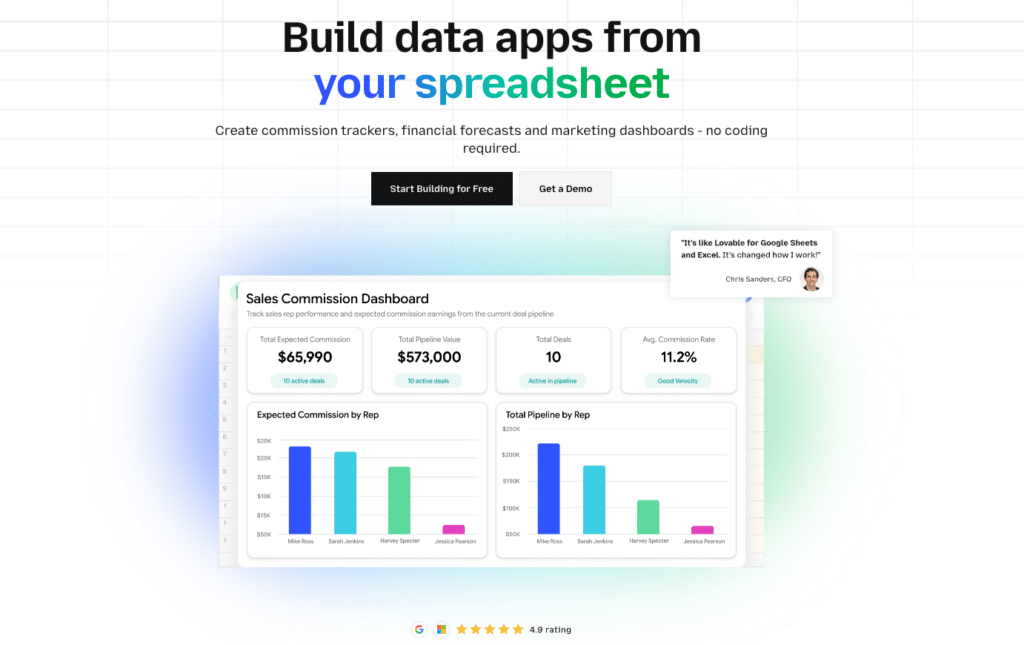
Much of the demand for Snowflake Intelligence addresses a basic need: giving finance, RevOps, and non-technical teams access to governed data without filing analyst tickets. Running every ad-hoc business query through Cortex AI is one way to solve that. Coefficient’s Snowflake connector is another. By pulling live Snowflake data directly into Google Sheets or Excel, with a full AI layer on top, at predictable compute cost.
Snowflake Semantic Views in Coefficient
Coefficient surfaces Snowflake Semantic Views directly in its import interface. When a Semantic View has been defined in your Snowflake environment, business users can select metrics and dimensions from a visual picker rather than writing SQL or constructing Cortex AI queries. They pick the metrics they want like Total Revenue, Gross Margin, Customer Count and the dimensions and Coefficient imports that data into Google Sheets..
This means governed, semantically consistent metrics land in a spreadsheet without a single Cortex AI token being consumed. The Semantic View definition in Snowflake remains the single source of truth. Any change to a metric definition in Snowflake flows through to Coefficient’s output on the next refresh.
Coefficient AI Features
Once Snowflake data is live in your spreadsheet, Coefficient’s AI layer handles the analysis work that would otherwise require Cortex AI queries or analyst time:
- AI Sheets Assistant: A conversational AI assistant inside the spreadsheet. Generate formulas, create charts, analyze data, build pivot tables and produce full multi-component dashboards from a plain-English description.
- GPT SQL Builder: Generate correct SQL against Snowflake tables or Semantic Views from plain-English input. The query runs against standard Snowflake warehouse compute, not Cortex AI token charges, keeping costs predictable for teams that need custom queries. Learn more about the SQL Query Builder.
- GPTX Functions: A family of GPT-powered spreadsheet functions for cleaning, classifying, extracting, and formatting data inside cells. Useful for unstructured data that arrives from Snowflake and needs transformation before reporting.
- Live Web Dashboards: Describe the dashboard you want in plain English. Coefficient builds a live, shareable web dashboard directly from your Snowflake data in the spreadsheet with no BI tool license required. The dashboard updates automatically on your refresh schedule and can be shared via link with anyone inside or outside your organization. See the full Coefficient product features.
Getting Data In and Out of Snowflake with Coefficient
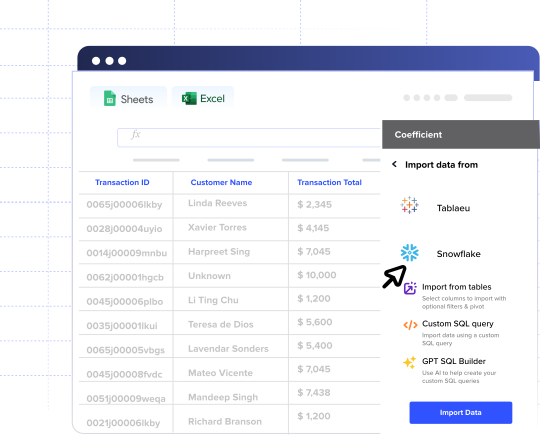
For teams new to the Snowflake and Sheets workflow, Coefficient has step-by-step guides covering both directions: how to export Snowflake data into Google Sheets and how to upload data from Sheets back to Snowflake. Two-way sync means the spreadsheet is not a static extract. It stays current on a schedule and can write changes back to the warehouse.
What This Means for Cost
Routine reporting, pipeline dashboards, financial models, and weekly operational reports happen in Sheets at predictable compute cost. The AI work like chart creation, routine data analysis, dashboard publishing, data cleaning can be run on Coefficient’s AI layer rather than using expensive Cortex AI tokens.
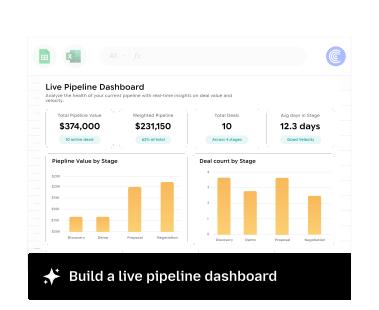
Snowflake Intelligence handles the complex, multi-source analytical queries where its agentic reasoning adds value that standard SQL cannot replicate. That combination keeps token spend focused on high-value use cases rather than routine data access.
| Coefficient’s Snowflake connector connects to Google Sheets or Excel in minutes. Import data directly from Snowflake Semantic Views using a visual Metrics and Dimensions picker — no SQL, no Cortex AI token charges for routine queries.Use the AI Sheets Assistant, GPT SQL Builder, and Vibe Reporting to analyze, visualize, and publish live Snowflake data without leaving the spreadsheet. |
Is Snowflake Intelligence Worth the Cost?
Snowflake Intelligence is a serious product for enterprises with large, complex data environments where governed AI access changes what analysts can do. The Anthropic partnership and Semantic View architecture put it ahead of most competing enterprise AI analytics offerings.
The cost reality is also serious: token-based billing is less predictable than credit-based compute, Cortex Search idle charges are easy to miss, and a single heavy query can produce a surprise bill. Any team adopting Intelligence needs active cost monitoring from day one, not as an afterthought.
For routine business reporting, Coefficient with Snowflake delivers live, governed data to spreadsheets at lower and more predictable cost with the AI layer needed for analysis, visualization, and dashboard publishing built in. Snowflake Intelligence handles the work that genuinely requires it.
Get started with Coefficient’s Snowflake connector at coefficient.io/get-started.