

Cost of Equity Formula Explained
Cost of Equity = Risk-Free Rate + (Beta × Equity Risk Premium)
Let’s break this down.
Risk-Free Rate: The return on safe government bonds. This is what you’d earn with zero risk. Most finance teams use the 10-year Treasury yield. As of Q1 2025, this sits around 4.2%.
Beta: How much your stock moves compared to the market. A beta of 1.0 means your stock moves with the market. Above 1.0 means more swing. Below 1.0 means less. Tech firms often show betas of 1.25 or more due to high growth and risk.
Equity Risk Premium: The extra return investors want for picking stocks over bonds. You find this by taking the expected market return (typically 7-10% long term) and subtracting the risk-free rate. If the market return is 8% and the risk-free rate is 4%, your premium is 4%.
Why these parts? The risk-free rate sets your floor. Beta scales your risk up or down. The premium captures what investors demand for taking that risk. Together, they show what return your equity holders expect.
What Is Cost of Equity?
Cost of equity is the return investors require to own your stock. Think of it as the hurdle rate for equity financing. If your cost of equity is 9%, investors expect at least a 9% return to justify the risk of buying your shares instead of safer bonds.
This metric guides major decisions. Should you fund growth with debt or equity? Is a project worth pursuing? What’s your weighted average cost of capital? All these questions start with knowing your cost of equity.
Who uses this metric?
CFOs and Controllers use it to evaluate funding options and set capital structure targets for the company.
Fractional CFOs track it across client portfolios to advise on capital raising and valuation discussions with investors.
Financial Analysts build models for equity valuation, project evaluation, and investment recommendations based on required returns.
Investment Bankers calculate it when pricing IPOs, secondary offerings, and advising on mergers where equity is part of the deal.
Private Equity Firms use it to set return thresholds for portfolio companies and determine if exits will meet investor expectations.
How to Calculate Cost of Equity: Step-by-Step
Let’s walk through a real calculation.
- Find the current risk-free rate
Check the 10-year U.S. Treasury yield. You can find this on treasury.gov or financial news sites. For this example: 4.2%.
- Get your company’s beta
Look this up on Bloomberg, Yahoo Finance, or your stock research platform. We’ll use a tech company with beta: 1.30.
- Determine expected market return
Use historical market data or analyst forecasts. The S&P 500 has returned about 10% annually over the long term. We’ll use 9% to be conservative.
- Calculate the equity risk premium
Subtract the risk-free rate from expected market return:
9.0% – 4.2% = 4.8% equity risk premium
This 4.8% represents what investors demand beyond safe bonds.
- Multiply beta by the equity risk premium
Take your beta and multiply:
1.30 × 4.8% = 6.24%
This adjusts the market premium for your company’s specific risk level.
- Add the risk-free rate
Now combine the pieces:
4.2% + 6.24% = 10.44%
- Interpret the result
A cost of equity of 10.44% means investors expect this annual return. For every project or investment you pursue with equity financing, you need to beat this hurdle rate. If you’re considering a new product line that projects 8% returns, it doesn’t clear the bar. You’re destroying value for shareholders.
How to Interpret Your Cost of Equity Number
Understanding your cost of equity requires industry context and risk assessment.
| Ratio Range | Interpretation | Recommended Actions |
| Below 6% | Very low cost – Extremely stable company or outdated assumptions. Utilities and mature, dividend-heavy firms land here. | • Verify your beta is current<br>• Check if risk-free rate is up to date<br>• Consider if market expectations have changed |
| 6% – 9% | Moderate cost – Typical for established, lower-risk firms. Oil/gas, utilities, and stable consumer goods often fall in this range. | • Maintain current capital structure<br>• Evaluate debt vs equity mix<br>• Monitor for sector shifts |
| 9% – 11% | Average cost – Most companies land here. Reflects normal market risk and growth expectations. | • Standard capital planning applies<br>• Projects must beat this hurdle<br>• Track quarterly against industry peers |
| 11% – 14% | Elevated cost – Higher growth sectors like software, retail, and auto. Investors expect more return for higher volatility. | • Focus on high-return projects only<br>• Consider debt financing for lower rates<br>• Communicate growth strategy clearly to investors |
| Above 14% | High cost – Very high risk or growth companies. Early-stage tech and volatile retail see these levels. | • Scrutinize all equity financing decisions<br>• Look for ways to reduce beta<br>• Build track record to lower perceived risk |
Cost of Equity Benchmarks by Industry
Your cost of equity means little without context. Here’s what different sectors typically show.
| Industry | Typical Range | Notes |
| Software (Internet) | 10.5% – 12.5% | High growth expectations and market volatility drive these rates up. Beta often exceeds 1.2. |
| Semiconductors | 10.0% – 11.5% | Capital intensity and cyclical demand create moderate to high cost. Tech exposure adds risk. |
| Retail | 10.5% – 14.0% | Consumer spending volatility and thin margins push costs higher. Building supply retail tops 12%. |
| Auto & Truck | 10.5% – 12.0% | Cyclical sales, supply chain risks, and capital needs drive elevated costs compared to stable sectors. |
| Utilities | 6.0% – 7.5% | Regulated, predictable cash flows create the lowest costs. Beta often sits below 0.8. |
| Oil/Gas | 6.5% – 8.5% | Despite commodity risk, integrated firms show stability. Established infrastructure lowers perceived risk. |
| Real Estate | 8.0% – 10.0% | Leverage and interest rate sensitivity create moderate costs. REITs often show lower betas. |
| Healthcare Services | 8.5% – 10.5% | Regulatory factors and reimbursement models affect risk. Established providers see lower costs. |
The market average sits around 8.9% to 9.3% depending on whether you include financials. Software leads the pack at 11.88% average cost, while utilities anchor the bottom at 6.28%.
Why such variation? Business model stability matters most. Utilities have regulated returns and steady cash flow. Software firms chase growth with uncertain outcomes. Auto makers face cyclical demand swings. Each factor shows up in beta, which directly impacts cost of equity.
Benchmark Citations
NYU Stern Cost of Equity by Industry
KPMG Cost of Capital Study 2024
McKinsey Cost of Equity Analysis
Automating Cost of Equity Tracking with Coefficient
Stop pulling stock price data and financial metrics into spreadsheets by hand each quarter.
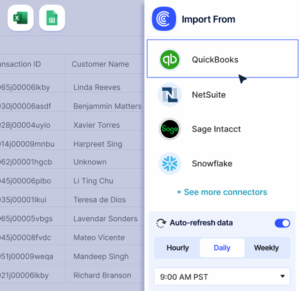
Coefficient connects your financial data sources to Excel or Google Sheets automatically.
Pull beta from your market data provider, treasury rates from economic data feeds, and company financials from your ERP. Your cost of equity updates itself with live data. Set a refresh schedule and the numbers stay current without manual work.
This matters when you track multiple portfolio companies or run frequent scenario analysis. Finance teams save hours per reporting cycle. Try Coefficient free and eliminate manual data entry.
How to Improve Your Cost of Equity
A high cost of equity makes financing expensive. Here’s how to bring it down.
Lower your beta through business stability
Diversify revenue streams, lock in long-term contracts, and reduce earnings volatility. When your stock swings less than the market, beta drops. That directly cuts your cost of equity. Some firms have reduced beta by 0.2 points through strategic shifts, saving 1-2% in equity costs.
Increase dividend payouts consistently
Regular, predictable dividends signal stability to investors. This can lower perceived risk and nudge down your cost of equity over time. Firms that maintain steady dividend growth often trade at lower risk premiums.
Improve transparency and investor communication
Quarterly earnings calls, detailed guidance, and clear strategy updates reduce uncertainty. When investors understand your business better, they demand less risk premium. Tech firms that adopted detailed segment reporting saw cost of equity improvements.
Build a stronger balance sheet
Pay down debt to reduce financial risk. While this doesn’t directly change the CAPM formula, it can improve credit ratings and lower overall perceived risk. The market may reward this with a lower beta over time.
Execute on strategic milestones consistently
Hit your targets quarter after quarter. Deliver on product launches, margin goals, and revenue growth. Track record matters. Companies that consistently meet or beat guidance trade with lower volatility and better cost of equity.
Cost of Equity vs. Cost of Debt vs. WACC
These three metrics work together in capital structure decisions.
Cost of Equity
Measures what shareholders demand. It’s the most expensive form of capital because equity holders take the most risk. They get paid last if things go wrong. Our tech company example showed 10.44%.
Cost of Debt
Reflects what lenders charge for loans or bonds. It’s cheaper than equity because debt holders get paid first and interest is tax deductible. A firm might borrow at 6% pre-tax, or about 4.5% after tax with a 25% tax rate.
WACC (Weighted Average Cost of Capital)
Blends both based on your capital structure. If you’re 60% equity and 40% debt, you’d calculate:
WACC = (0.60 × 10.44%) + (0.40 × 4.5%) = 6.26% + 1.80% = 8.06%
This 8.06% becomes your hurdle rate for project evaluation. Any investment must return more than this to create value.
When to use each
Pro tip for fractional CFOs: Show clients both their cost of equity and WACC side by side. A firm might see 11% cost of equity and panic, but their WACC of 8% tells the real story. The capital structure matters as much as the component costs. This helps frame discussions about taking on debt to fund growth versus diluting equity.
Optimize your capital structure
Cost of equity reveals what shareholders expect. Use it alongside cost of debt and WACC to make smarter financing decisions and maximize value creation.
Get started with Coefficient to automate your cost of equity tracking and focus on strategic capital allocation.
 Sync Live Finance Data into Your Spreadsheet