

Return on Assets = Net Income ÷ Total Assets
This free return on assets calculator cuts out the math work. You can run a quick check for one month or build a full tracking system. You’ll learn how to calculate, read, and track ROA fast.
Your assets should work for you.
We’ve added a free Excel and Google Sheets template you can grab and use right away.
Return on Assets Formula Explained
Return on Assets = Net Income ÷ Total Assets
Here’s what each part means:
Net Income: The profit left after all costs. This includes what you made from sales minus costs of goods sold, operating costs, taxes, interest, and any other charges. It’s the bottom line on your income statement.
Total Assets: Everything your company owns. Cash sits in the bank. Equipment runs your work. Real estate holds your shops. Inventory waits to sell. Accounts receivable comes from sales you made. Add it all up from your balance sheet.
Why divide income by assets? You’re checking how well each dollar of stuff you own makes profit. A factory with $10 million in machines should produce more profit than one with $5 million. ROA tells you if your assets earn their keep.
Some analysts use average total assets instead. They add assets from the start and end of a period, then divide by two. This smooths out big changes during the year.
What Is Return on Assets?
Return on assets shows how well you turn your stuff into profit. It’s a test of management skill. Good teams make assets work hard. Weak teams let assets sit idle or work poorly.
Think of it this way: two shops own the same gear. One makes $100,000 in profit. The other makes $50,000. The first has better ROA. They use what they own more wisely.
ROA works best when you compare companies in the same field. A software firm needs less gear than a steel mill. So software will show higher ROA numbers. Always check against similar businesses.
Who uses this metric?
CFOs and Controllers track it monthly to spot when assets stop paying off.
Fractional CFOs use it to compare clients and find weak performers fast.
Equity Analysts build models to find stocks that use capital well.
Credit Analysts check if a borrower can service debt from asset earnings.
Private Equity Firms screen deals and find ways to boost returns after buying.
How to Calculate Return on Assets: Step-by-Step
Let’s walk through a real example with actual numbers. You’ll see how the calculation works.
- Pull your income statement
Get your most recent annual or quarterly statement. You need the final line: net income.
- Find net income
Look at the bottom of your income statement. For our example: $850,000 in net income for the year.
- Get your balance sheet
You need total assets from the same time frame as your income number.
- Find total assets
Your balance sheet lists this clearly. Current assets (cash, receivables, inventory) plus long-term assets (property, equipment, intangibles). For our example: $12,000,000 in total assets.
- Divide net income by total assets
$850,000 ÷ $12,000,000 = 0.0708
- Convert to percentage
0.0708 × 100 = 7.08%
- Read your result
A 7.08% ROA means you made 7 cents in profit for every dollar of assets you own. This sits in the solid range for most industries. Your assets work fairly well, though there’s room to push higher.
How to Interpret Your Return on Assets Number
Context matters when evaluating ROA. Compare your number to industry benchmarks and track trends over time.
| ROA Range | Interpretation | Recommended Actions |
| Below 2% | Weak performance – Assets barely earn their cost | • Review asset base for idle or obsolete items<br>• Cut underused equipment or property<br>• Boost sales from current capacity |
| 2% – 5% | Below average – Room for gains | • Study top performers in your field<br>• Find bottlenecks in production or service<br>• Train staff to use tools better |
| 5% – 10% | Good performance – Assets work well | • Keep current practices<br>• Look for small efficiency gains<br>• Track trends each quarter |
| 10% – 20% | Strong performance – High efficiency | • Share best practices across teams<br>• Consider growth with new assets<br>• Watch for market changes that could shift results |
| Above 20% | Exceptional – Or asset-light model | • Verify calculations are correct<br>• May indicate tech or service business<br>• Could mean time to invest in growth assets |
Return on Assets Benchmarks by Industry
Your ROA means little until you compare it to others in your field. Asset needs vary wildly across sectors.
| Industry | Typical ROA Range | Notes |
| Technology/Software | 7% – 12% | Low physical assets, high margins, mostly labor and cloud costs |
| Retail | 3% – 5% | Heavy inventory and real estate, thin margins from competition |
| Banking | 0.8% – 1.1% | Massive asset base, highly regulated, steady but low returns |
| Manufacturing | 2% – 4% | Capital intensive, equipment and inventory tie up cash |
| Beverages | 8% – 10% | Strong brands allow pricing power and efficient production |
| Building Materials | 9% – 11% | Specialized products command better margins despite equipment costs |
Why such big gaps? Asset intensity drives the differences. Banks hold billions in loans (assets). Manufacturers own factories. Software firms rent servers and hire people. A 1% ROA kills a software firm but works fine for a bank.
Business models matter too. Low margin, high volume businesses (like grocery stores) show lower ROA than high margin businesses (like luxury goods).
Benchmark Citations
FullRatio Return on Assets by Industry
Investopedia Return on Assets Guide
Automating Return on Assets Tracking with Coefficient
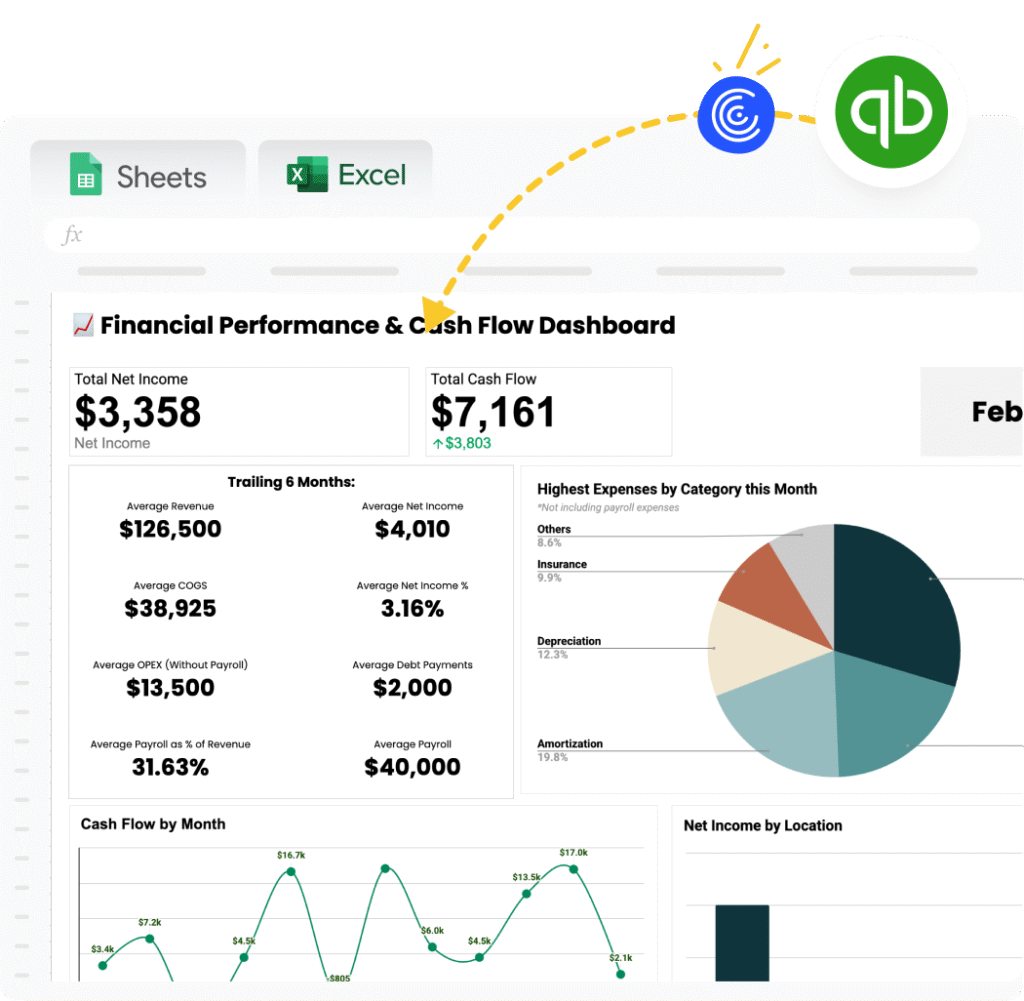
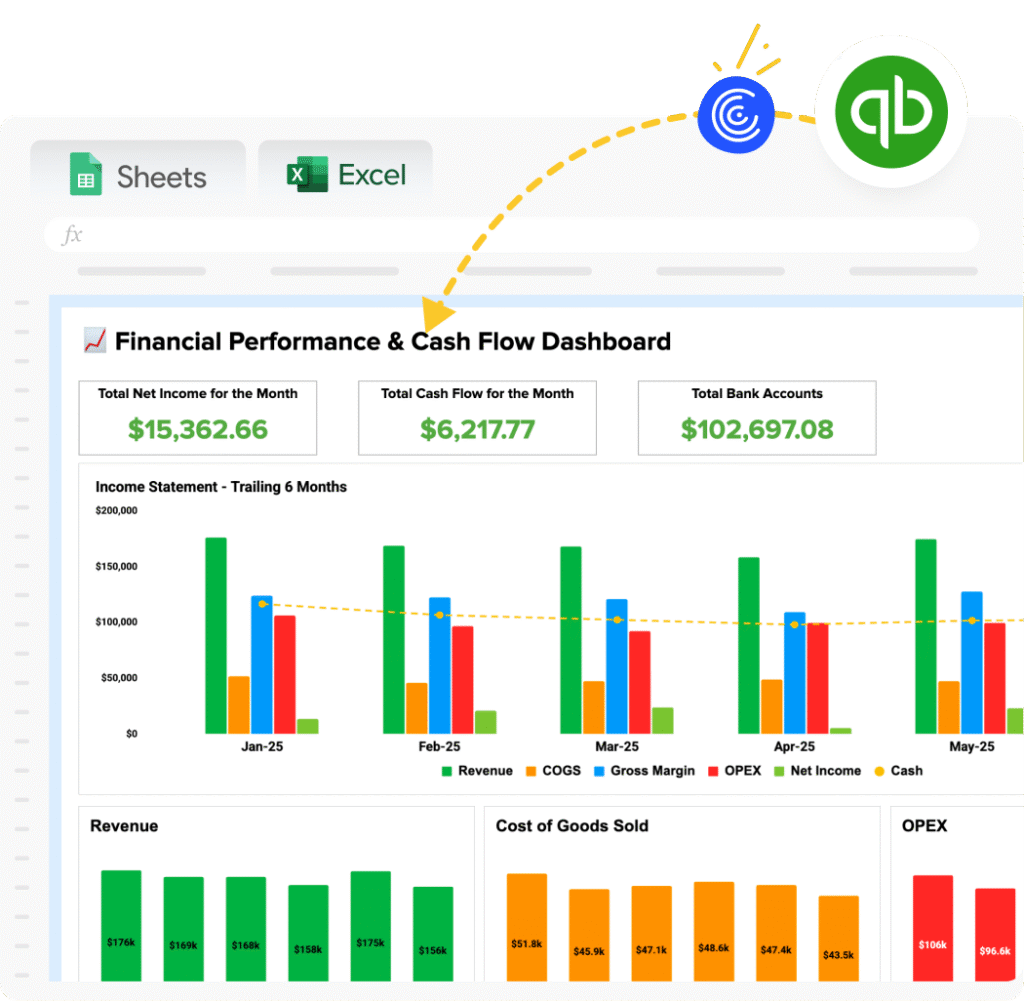
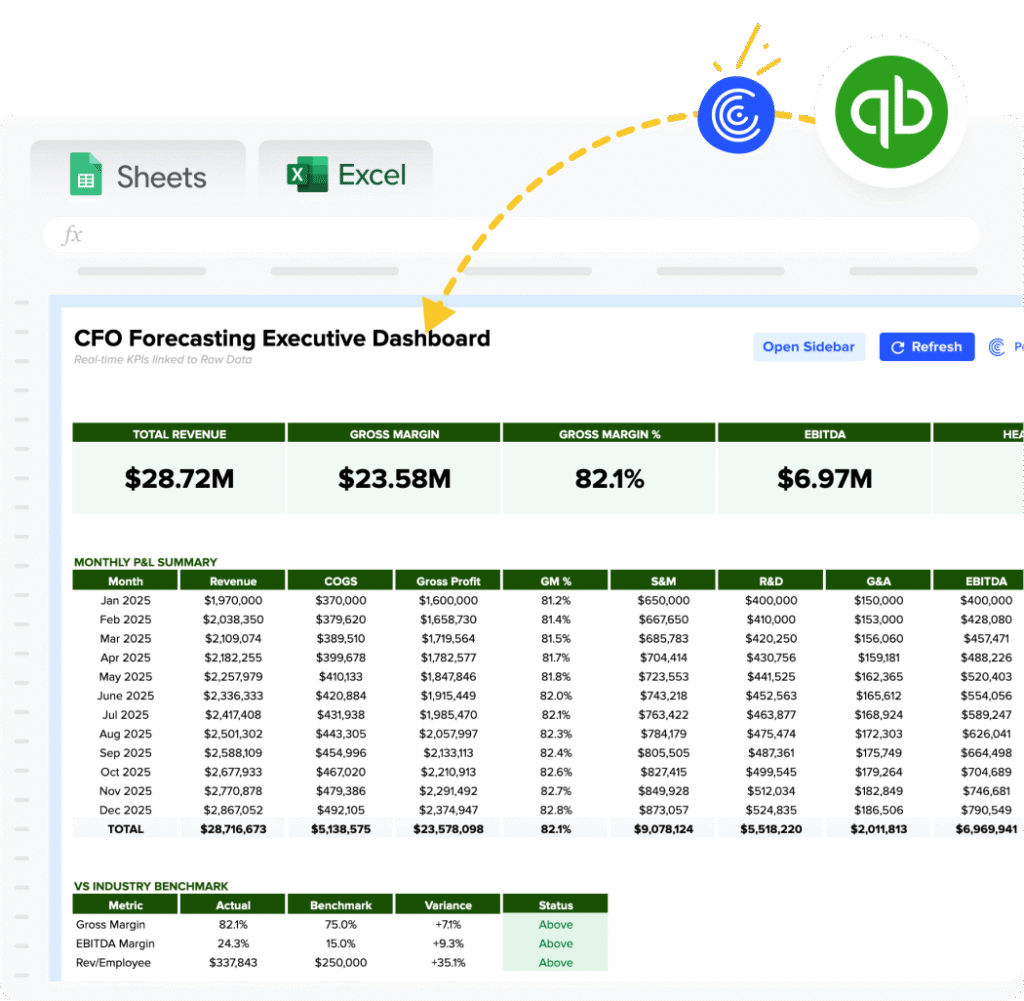
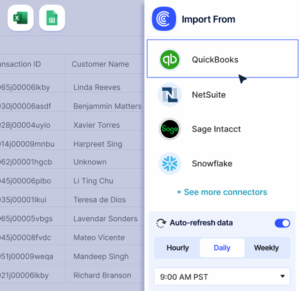
Stop pulling CSV files from NetSuite or QuickBooks each month. Coefficient links your accounting system straight to Excel or Google Sheets. Net income and total assets flow in live. Your ROA calculates itself.
Set it once. Your dashboard updates daily, weekly, or monthly. No manual work. No copy errors. Perfect for fractional CFOs who track dozens of clients.
Get started with Coefficient to automate your ROA tracking today.
How to Improve Your Return on Assets
Boosting ROA requires either increasing profit or reducing assets. Here are five proven strategies.
Sell idle or underused assets
Walk your facility. Note gear that sits unused. Old trucks. Excess real estate. Outdated machines. Sell them. You cut your asset base and free up cash. Even small sales of $50,000 can lift ROA by 0.5% for a $5 million company.
Boost revenue without buying more assets
Push your current capacity harder. Add a shift. Cross-train workers to reduce downtime. Raise prices where the market allows. Service firms can bill more hours from the same team. Manufacturers can run equipment longer.
Cut costs to lift net income
Audit spending line by line. Rework supplier terms. Cut waste in production. Reduce energy use. Lower overhead. Every dollar you save in costs flows to net income and raises ROA.
Speed up inventory turns
Inventory is an asset that sits on your balance sheet. Move it faster. Order smarter. Promote slow items. Better turns mean you need less inventory to support the same sales. Your asset base drops while profit stays steady.
Improve accounts receivable collection
Receivables count as assets too. Collect faster. Send invoices the same day. Call on past due accounts weekly. Offer 2% discounts for payment in 10 days. When customers pay fast, you can operate with less working capital.
Return on Assets vs. Return on Equity vs. Return on Investment
These three metrics confuse many people. They all measure returns, but from different angles.
Return on Assets (ROA)
ROA = Net Income ÷ Total Assets. Measures how well you use everything you own to make profit. Shows operating efficiency.
Return on Equity (ROE)
ROE = Net Income ÷ Shareholders’ Equity. Measures profit made on owner investment only. Ignores debt. A company with lots of borrowing can have high ROE but low ROA.
Return on Investment (ROI)
ROI = (Gain – Cost) ÷ Cost. Measures profit from one specific investment. Used for projects, not whole company performance.
When to use each
Use ROA when you want to see total asset efficiency. Use ROE when you care about shareholder returns. Use ROI when you judge a single project or campaign.
Pro tip for fractional CFOs: Show clients all three. A business with ROE of 25% but ROA of 4% runs on heavy debt. That’s risky. Point it out before banks or investors notice.
Make your assets work
Return on assets reveals whether you’re squeezing value from what you own. A high ROA means efficient operations. A low ROA signals waste – idle equipment, slow inventory turns, or poor pricing.
Track ROA monthly. Compare it to your industry benchmarks. Use it to make smarter decisions about asset purchases, pricing, and operations.Get started with Coefficient to automate your ROA tracking and focus on what drives results.
 Sync Live Finance Data into Your Spreadsheet