

Price to Earnings Ratio Formula Explained
P/E Ratio = Share Price / Earnings Per Share (EPS)
Or alternatively:
P/E Ratio = Market Capitalization / Net Income
Let’s break down each component:
Share Price: The current market price per share of the company’s stock. This is the price at which the stock trades on exchanges like NYSE or NASDAQ. Share price reflects what investors are willing to pay right now based on expectations, sentiment, and company performance.
Earnings Per Share (EPS): Net income divided by the weighted average shares outstanding. EPS shows how much profit the company generates for each share of stock. Companies typically report EPS quarterly and annually in their financial statements.
Market Capitalization: The total value of all outstanding shares. Calculated by multiplying share price by total shares outstanding. This represents the company’s total equity value as determined by the market.
Net Income: The company’s total profit after all expenses, taxes, and costs. Found on the income statement as the bottom line. This is the actual earnings that flow to shareholders.
What Is a Price to Earnings Ratio?
A price to earnings ratio measures what investors pay for each dollar of a company’s earnings. It answers the question: “How many years of current earnings would it take to pay back the share price?”
Also called the P/E ratio or earnings multiple, this metric helps investors value stocks and compare companies. A P/E of 20 means investors pay $20 for every $1 of annual earnings. The ratio comes in three forms: trailing P/E uses the last 12 months of actual earnings, forward P/E uses projected future earnings, and blended P/E combines both historical and forecast data.
Who uses this metric?
CFOs and Finance Teams track their company’s P/E ratio to understand how the market values their business and compare against competitors.
Equity Analysts use P/E ratios to screen stocks, build valuation models, and make buy or sell recommendations to clients.
Fractional CFOs leverage P/E analysis when advising clients on fundraising, mergers, or strategic planning decisions.
Portfolio Managers compare P/E ratios across sectors and companies to identify undervalued or overvalued investment opportunities.
Investment Bankers rely on P/E multiples to value companies for IPOs, M&A transactions, and fairness opinions.
How to Calculate Price to Earnings Ratio: Step-by-Step
Let’s walk through calculating a P/E ratio with a practical example:
- Gather current share price
Check the latest trading price for the stock. You can find this on any financial website or trading platform. For our example: $84.50 per share.
- Find earnings per share
Look at the company’s most recent annual or quarterly report. The EPS is typically listed in the financial statements summary. For our example: $4.25 per share (trailing 12 months).
- Apply the P/E ratio formula
Divide the share price by earnings per share:
$84.50 ÷ $4.25 = 19.88 P/E ratio
- Round to standard format
P/E ratios are typically expressed with one decimal place or as whole numbers:
19.88 rounds to 19.9x or 20x P/E ratio.
- Verify using market cap method
As a check, you can also calculate using total market cap divided by net income. If this company has 100 million shares outstanding:
Market cap: $84.50 × 100M = $8.45 billion
Net income: $4.25 × 100M = $425 million
$8.45B ÷ $425M = 19.88 P/E ratio (matches our calculation)
- Choose your P/E type
Decide if you need trailing P/E (actual past earnings), forward P/E (projected future earnings), or blended P/E. Our example used trailing 12-month earnings.
- Interpret your result
A P/E of 20x means investors pay $20 for every $1 of annual earnings. This suggests moderate growth expectations and fair valuation compared to the market average of 20-25x.
How to Interpret Your P/E Ratio Number
| Ratio Range | Interpretation | Recommended Actions |
| Below 10 | Potentially undervalued – May signal distress, declining business, or hidden opportunity in out-of-favor sectors. | • Research why P/E is low<br>• Check for debt problems<br>• Look for turnaround catalysts<br>• Compare to industry peers |
| 10 – 20 | Fair valuation – Moderate growth expectations, typical for mature, stable companies with consistent earnings. | • Compare to industry average<br>• Analyze earnings trends<br>• Review growth projections<br>• Assess competitive position |
| 20 – 30 | Above average valuation – Investors expect solid growth, common for companies with strong track records. | • Verify growth justifies premium<br>• Monitor earnings quality<br>• Watch for margin pressure<br>• Track guidance updates |
| Above 30 | Premium valuation – High growth expectations or minimal current earnings. Common for tech, biotech, high-growth companies. | • Scrutinize growth assumptions<br>• Assess sustainability<br>• Check for profitability path<br>• Consider forward P/E |
Context matters more than the number itself. A P/E of 50 might be cheap for a software company growing 40% annually but expensive for a retailer growing 5%. Look at the company’s growth rate, profit margins, competitive position, and industry norms.
Cyclical companies often show low P/E ratios at peak earnings and high P/E ratios at trough earnings. This happens because investors look ahead to normalized earnings. A construction company with a P/E of 8 during a boom might trade at 25 during a downturn as investors anticipate recovery.
Negative P/E ratios occur when companies lose money. These aren’t useful for valuation. Switch to other metrics like price-to-sales or EV/EBITDA for unprofitable companies. Many high-growth startups fit this category.
Price to Earnings Ratio Benchmarks by Industry
P/E ratios vary dramatically by industry. Understanding your sector’s typical range is critical for accurate valuation.
| Industry | Typical P/E Range | Notes |
| Software & Technology | 60 – 180 | High growth expectations, scalable business models, strong margins justify premium valuations |
| Healthcare & Pharmaceuticals | 40 – 130 | Drug development pipelines and patent protection drive higher multiples |
| Retail (General) | 20 – 30 | Moderate growth, competitive pressure, thin margins lead to market-average valuations |
| Financial Services | 30 – 90 | Banks trade lower (10-15x), while fintech and specialized services command premiums |
| Manufacturing | 20 – 45 | Capital intensive, cyclical earnings, varies by sub-sector and automation level |
| Real Estate | 35 – 45 | REITs trade on different metrics, but real estate companies show stable multiples |
| Hospitality & Gaming | 30 – 60 | Cyclical business, high fixed costs, sensitive to economic conditions |
| Construction | 30 – 40 | Project-based earnings, economic sensitivity, varies with backlog quality |
Industry benchmarks reflect fundamental business characteristics. Software companies trade at premium multiples because of their scalable revenue models, 70-90% gross margins, and recurring subscription revenue. Once built, software can serve millions of customers with minimal incremental cost.
Traditional industries trade lower due to capital intensity and competition. Manufacturing requires heavy equipment, buildings, and inventory. Every new customer means more costs. Retail faces constant competitive pressure from e-commerce and operates on thin 2-5% net margins.
Growth potential drives valuation gaps. Technology and healthcare offer high growth from innovation and market expansion. Construction and manufacturing grow slower, tied to economic cycles and capacity constraints. Investors pay premium P/E ratios for sectors with long growth runways.
These benchmarks reflect January 2025 data. Technology and healthcare sectors command the highest multiples due to growth potential and innovation. Traditional sectors like retail and manufacturing trade closer to market averages.
Benchmark Citations
NYU Stern School of Business – P/E Ratios by Sector
Eqvista P/E Ratios by Industry 2025
Automating P/E Ratio Tracking with Coefficient
Stop manually exporting stock price and earnings data from your financial systems every quarter.
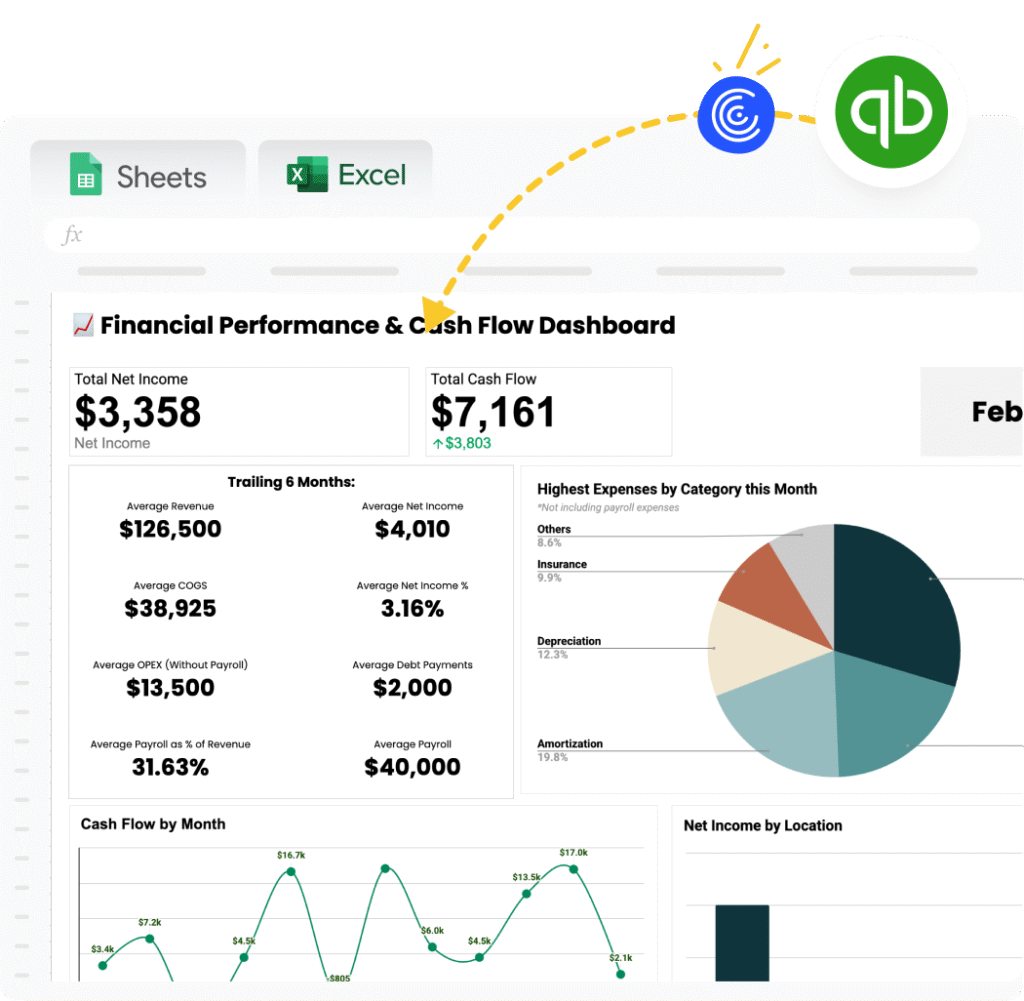
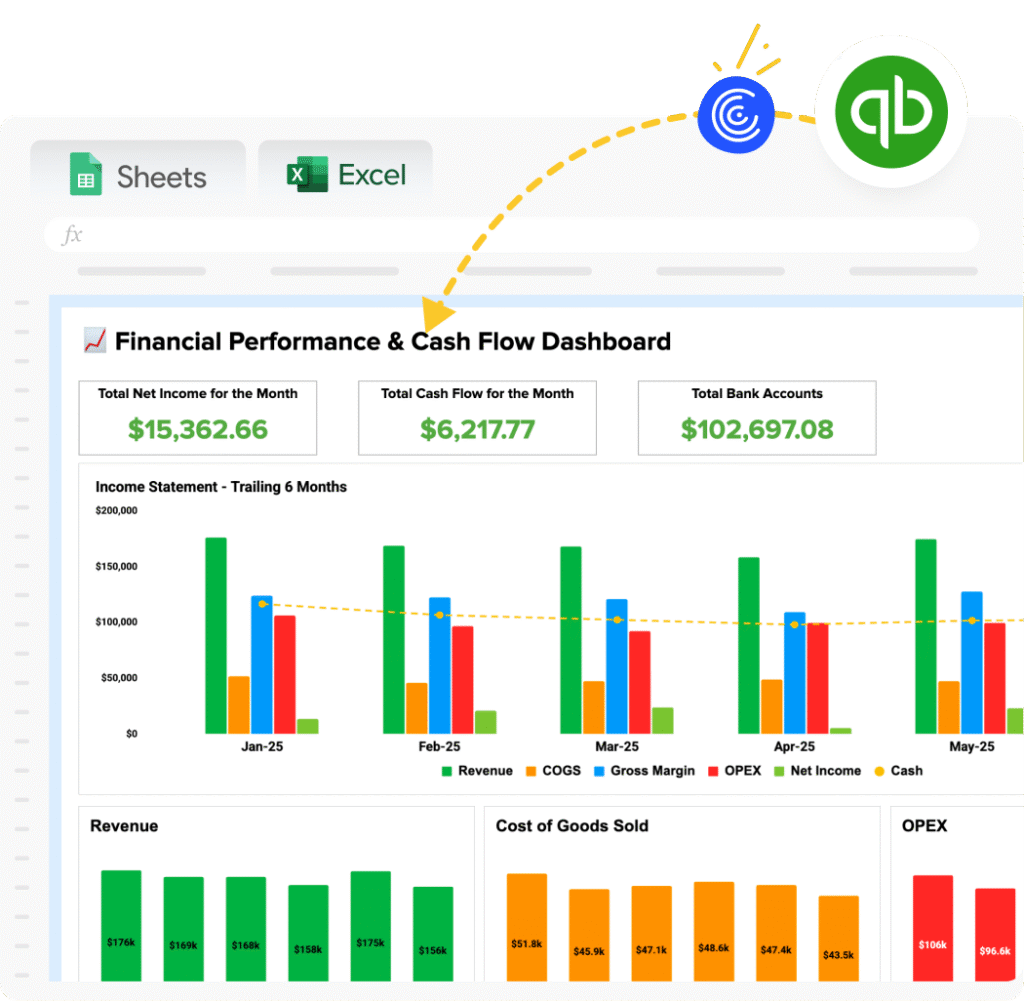
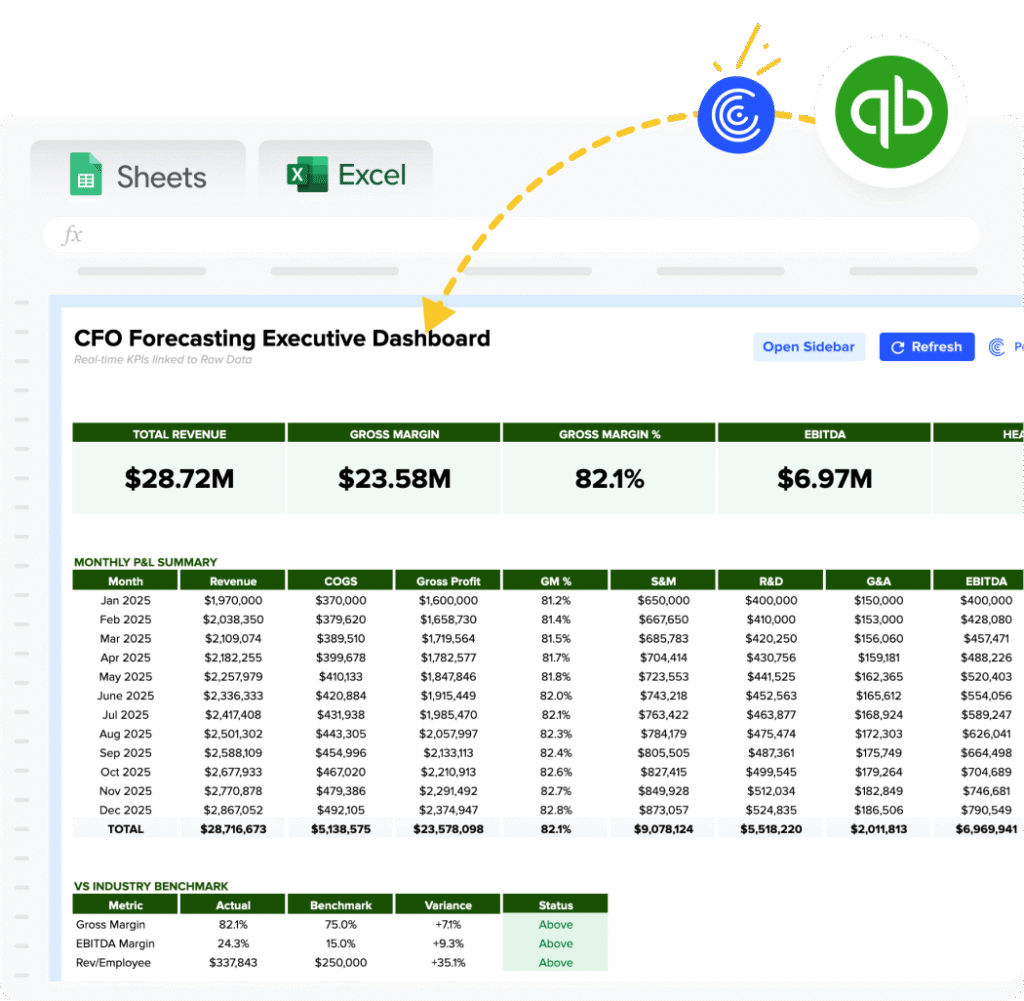
Coefficient connects your financial databases, market data feeds, and accounting systems directly to Excel or Google Sheets. Your P/E ratios calculate automatically from live data.
Set up once, and your valuation models update in real time. Perfect for finance teams tracking multiple portfolio companies or conducting peer group analysis.
Get started with Coefficient for free.
How to Improve Your P/E Ratio
A low P/E ratio signals opportunity. Here are five proven strategies to increase your company’s valuation multiple.
Accelerate earnings growth
Focus on high-margin revenue streams, cut low-profit products, and invest in scalable growth initiatives. Consistent 15-20% earnings growth typically drives P/E expansion of 30-50% over 2-3 years. Companies that beat earnings guidance for three consecutive quarters often see immediate 10-15% multiple expansion.
Improve earnings quality
Shift from one-time gains to recurring revenue. Investors pay premium multiples for predictable, repeatable earnings. SaaS companies with 90%+ recurring revenue trade at 2-3x higher P/E ratios than transactional businesses. Remove non-recurring items from your earnings presentation to highlight sustainable profit.
Enhance investor communication
Clear quarterly guidance, transparent reporting, and consistent messaging reduce uncertainty. Companies with strong IR programs trade 10-20% higher than peers with similar fundamentals. Host quarterly earnings calls, maintain updated investor presentations, and respond quickly to analyst questions.
Expand profit margins
Cost discipline and operational leverage drive margin expansion. Each 1% margin improvement can lift P/E by 1-2 points as investors reward efficiency and pricing power. Focus on automation, process improvement, and value-based pricing strategies.
Demonstrate competitive advantages
Build moats through brand, network effects, switching costs, or proprietary technology. Investors pay premium multiples for sustainable competitive positions that protect future earnings. Document your advantages clearly in investor materials and quarterly updates.
P/E Ratio vs. PEG Ratio vs. EV/EBITDA
One common challenge is knowing which valuation metric to use. Let’s clarify the differences.
P/E Ratio
(Price / Earnings) measures current valuation based on earnings. Best for comparing companies within the same industry with similar growth rates. Weakness: ignores growth rates and capital structure.
PEG Ratio
(P/E / Growth Rate) adjusts P/E for growth. A PEG of 1.0 suggests fair value. Best for evaluating growth stocks. If a company has a P/E of 30 and 30% growth, the PEG is 1.0 (fairly valued). Below 1.0 suggests undervaluation relative to growth.
EV/EBITDA
(Enterprise Value / EBITDA) measures total company value including debt. Best for comparing companies with different capital structures or for M&A analysis. Useful when companies have significant debt differences or non-cash charges.
When to use each
Use all three metrics together. Present P/E for quick valuation context, PEG to justify growth premiums, and EV/EBITDA when discussing acquisition value or capital structure changes.
Pro tip for fractional CFOs: Use all three metrics together. Present P/E for quick valuation context, PEG to justify growth premiums, and EV/EBITDA when discussing acquisition value or capital structure changes. For example: “Your P/E of 25x looks high, but your PEG of 0.8 shows you’re undervalued relative to 30% growth. Your EV/EBITDA of 12x is also below the 15x industry average, making you an attractive acquisition target.”
Value stocks smarter
Price to earnings ratio shows what the market pays for each dollar of profit. Track it quarterly. Compare it to industry peers. Use it to find undervalued opportunities.
Get started with Coefficient and automate your P/E ratio tracking today.
 Sync Live Finance Data into Your Spreadsheet