

Price to Book Ratio Formula Explained
Price to Book Ratio = Market Price per Share ÷ Book Value per Share
Let’s break down each part:
Market Price per Share: The current stock price where shares trade on the open market. You can find this on any stock site or exchange listing. This number changes all day as buyers and sellers trade.
Book Value per Share: The company’s net asset value on paper, split across all shares. You get this by taking total assets, subtracting total debts, then dividing by shares in the market. This comes from the balance sheet and shows what each share would be worth if the company sold all its assets and paid all its debts today.
The ratio compares what you pay for each share to what that share owns in assets. A P/B of 2.0 means you pay $2 for every $1 of book value. A P/B of 0.5 means you pay $0.50 for every $1 of book value.
What Is Price to Book Ratio?
The price to book ratio shows you what the market thinks a company is worth compared to its book value. It tells you if you’re paying more or less than the company’s net assets are worth on paper.
This ratio works best for banks, real estate firms, and other asset-heavy companies where book value means something. It works less well for tech companies or service firms where value comes from brands, patents, or people rather than hard assets.
Who uses this metric?
Value investors hunting for stocks that trade below book value.
Financial analysts building models to value banks and financial firms.
Portfolio managers screening for undervalued stocks across sectors.
CFOs and finance teams tracking how the market values their company.
Fractional CFOs comparing client companies to industry benchmarks.
How to Calculate Price to Book Ratio: Step-by-Step
Let’s walk through a real example with Tech Corp.
- Find the current stock price
Check any stock site or exchange listing. Tech Corp shares trade at $45 per share today.
- Get total assets from the balance sheet
Look at the most recent quarter or year. Tech Corp has $500 million in total assets.
- Find total debts from the balance sheet
This includes all liabilities. Tech Corp owes $200 million.
- Calculate book value
Subtract debts from assets: $500M – $200M = $300M
This is the company’s book value, also called shareholder equity.
- Find shares outstanding
Check the company’s latest filing or stock site. Tech Corp has 10 million shares in the market.
- Calculate book value per share
Divide book value by shares: $300M ÷ 10M shares = $30 per share
- Apply the formula
Divide stock price by book value per share: $45 ÷ $30 = 1.5
A ratio of 1.5 means you pay $1.50 for every $1.00 of book value. The market values Tech Corp 50% above its net asset value.
How to Interpret Your Price to Book Ratio Number
The right P/B ratio depends on the industry and company. Here’s how to read your number.
| P/B Ratio | What It Means | What To Do |
| Below 1.0 | Trading below book value. Could be undervalued or facing real problems. Stock costs less than net assets. | • Check why it’s cheap<br>• Review financial health<br>• Look for value traps |
| 1.0 – 3.0 | Fair range for most companies. Market values the firm near or above book value. Common for stable, asset-heavy firms. | • Compare to industry peers<br>• Check profit trends<br>• Review growth rate |
| 3.0 – 10.0 | High valuation. Market expects strong growth or has big faith in brand value, patents, or other assets not on the books. | • Verify growth prospects<br>• Check if price is justified<br>• Watch for overvaluation |
| Above 10.0 | Very high valuation. Common for tech and growth stocks where value comes from ideas, not assets. Could signal bubble risk. | • Understand the business model<br>• Assess if hype is real<br>• Use other metrics too |
Remember that no single number tells the whole story. A low P/B could mean a great buy or a company in real trouble. A high P/B might signal overpricing or justified optimism about growth. Always dig deeper to understand the why behind the number.
Price to Book Ratio Benchmarks by Industry
P/B ratios vary a lot by sector. Compare your number to these industry standards.
| Industry | Typical P/B | Why This Range |
| Banks & Financial Services | 1.1 – 2.3 | Large asset bases make book value key. P/B shows if the bank trades at a discount or premium to equity. |
| Technology & Software | 5.0 – 13.0 | Few hard assets but high growth. Value comes from code, brands, and ideas not on the balance sheet. |
| Real Estate | 0.8 – 3.0 | Property values show up on the books. P/B near 1.0 means market values match asset values. |
| Manufacturing | 1.5 – 6.4 | Heavy equipment and plants on the books. Range depends on tech level and growth rate. |
| Healthcare & Pharma | 3.0 – 4.9 | Patents and R&D create value not on books. High P/B reflects future drug sales and pipeline. |
| Retail | 2.0 – 5.0 | Brand value and customer base drive premium. Grocery chains stay low, luxury brands go high. |
| Energy | 1.0 – 2.0 | Tied to oil and gas prices. P/B swings with commodity cycles and reserve values. |
| Utilities | 1.0 – 2.2 | Stable cash flows and heavy assets. Low growth keeps P/B modest despite reliable profits. |
Book value matters more in capital-heavy industries like banks, real estate, and utilities. It matters less in tech, services, and brands where assets don’t show up on paper. Always compare companies within the same sector.
The gap between sectors tells you a lot. Banks with a P/B of 1.2 might be fairly priced, while a tech firm at 1.2 could be a steal if peers trade at 8.0 or higher. Context is key. Check not just the number but how it compares to past years for the same company and current peers in the same space. A P/B of 3.0 today means more if it was 5.0 last year than if it was 2.0.
Benchmark Citations
Eqvista Price-to-Book Ratio by Industry 2025
NYU Stern Price and Value to Book Ratio by Sector
Siblis Research P/B Ratio by Sector
Automating Price to Book Ratio Tracking with Coefficient
Stop pulling stock data by hand each week.
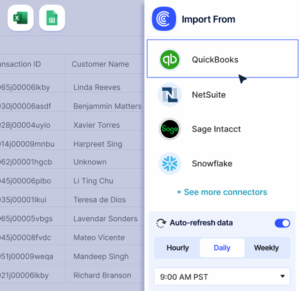
Coefficient connects your spreadsheets to live financial data sources, so P/B ratios and other metrics update on their own.
Set your data pull once and schedule it to refresh daily, weekly, or monthly. Track multiple stocks at the same time without any manual work. This is ideal for portfolio managers and fractional CFOs who monitor dozens of companies.
Your finance team saves hours each week. No more copy-paste from data sites. No more broken links in old sheets. Just clean, current data that flows right into your models and charts. Set alerts to flag when ratios cross key levels, so you never miss a move in stocks you track. Get started with Coefficient today.
How to Improve Your Price to Book Ratio
If your company’s P/B is low, these moves can help.
Boost profits and ROE
Higher returns on equity make your book value work harder. Cut costs, raise margins, or grow revenue to lift net income. The market often rewards better profits with a higher P/B multiple.
Buy back shares
Reduce shares in the market to lift book value per share. If you buy back 10% of shares, each remaining share owns a bigger piece of the company. This can push your P/B ratio up if the market price stays flat or rises.
Improve your story
Tell investors why your company has more value than the books show. Highlight brands, customer lists, patents, or tech that don’t show up as assets. Better communication can close the gap between market value and book value.
Sell or write down bad assets
Old equipment, failed projects, or money-losing divisions drag book value down. Clear them out to show a cleaner balance sheet. This can make your book value more real and lift the P/B ratio if it removes doubts.
Grow the business
Expand sales, enter new markets, or launch better products. Growth makes investors pay more per dollar of book value. A P/B of 0.8 can climb to 1.5 or higher if the market sees real momentum.
Price to Book Ratio vs. Price to Earnings Ratio vs. Price to Sales Ratio
These three ratios measure value in different ways. Here’s when to use each.
Price to Book
Market value vs. net assets. Best for banks, real estate, asset-heavy firms. Weakness: Misses value from brands, tech, people.
Price to Earnings
Market value vs. profit. Best for any firm with stable earnings. Weakness: Can’t use if no profit or loss-making.
Price to Sales
Market value vs. revenue. Best for startups, high-growth firms, loss-making companies. Weakness: Ignores profit margins and efficiency.
When to use each
Use P/B when assets matter. Use P/E when profit is steady. Use P/S when the company isn’t profitable yet but has sales. For the full picture, check all three plus growth rates and industry context.
Pro tip for fractional CFOs: Show clients how they stack up against peers using all three ratios. A tech client with a P/B of 12 might look expensive until you show that sector averages run 8-15, while their P/E of 25 beats the sector’s 40. Context turns numbers into strategy.
Find true value
Price to book ratio reveals whether you’re paying a fair price for a company’s assets. Use it alongside earnings and growth metrics for complete valuation analysis.
Get started with Coefficient to automate your P/B tracking and identify undervalued opportunities faster.
 Sync Live Finance Data into Your Spreadsheet