

Labor Cost Percentage = (Total Labor Costs / Total Revenue) × 100
This free labor cost calculator cuts through the manual work. You’ll learn how to track your labor costs as a share of revenue, spot when they’re too high, and take steps to fix the problem.
Most teams spend hours each month pulling data from payroll and finance systems just to answer one question: are we spending too much on labor?
Excel and Google Sheets template you can download and use right away.
Labor Cost Formula Explained
Labor Cost Percentage = (Total Labor Costs / Total Revenue) × 100
Let’s break down each part:
Total Labor Costs: This includes all money spent on your team. Gross wages and salaries make up the base amount you pay employees. Employee benefits cover health insurance, 401(k) matching, and paid time off. Payroll taxes include your share of Social Security, Medicare, and unemployment taxes. Workers’ compensation insurance protects against workplace injuries. Finally, training and onboarding costs add up when you hire and develop staff.
Total Revenue: This is your gross sales before any deductions. Use the same time frame as your labor costs—if you’re looking at monthly labor costs, use monthly revenue. Don’t subtract returns, discounts, or cost of goods sold. This keeps your percentage accurate and comparable to industry benchmarks.
Why This Formula Matters: We express labor cost as a percentage because it scales with your business. A $50,000 payroll means something very different for a company with $200,000 in revenue versus one with $1 million in sales. The percentage shows the real story.
What Is Labor Cost Percentage?
Labor cost percentage shows what share of your revenue goes to paying your team. This metric answers a key question for any business: how much does it cost us to operate?
Your labor cost percentage works like a health check for your business model. Too high and you’re spending more than you should on staff, which eats into profit. Too low might mean you’re understaffed, which can hurt service quality and sales.
This metric is not the same as gross wages. A company with $100,000 in monthly payroll could have a labor cost of 20% or 60%, depending on revenue. The percentage tells the real story.
Who uses this metric?
CFOs and Controllers track labor cost percentage monthly to spot trends before they become problems and make staffing decisions that protect margins.
Fractional CFOs monitor this metric across all their clients to benchmark performance and identify which businesses need help managing costs.
Operations Directors use labor cost data to set scheduling rules, plan for busy seasons, and decide when to hire or cut hours.
Restaurant and Retail Managers check this number weekly or even daily during peak seasons to stay on budget and hit profit targets.
HR Leaders rely on labor cost metrics to build hiring plans, set compensation budgets, and justify headcount requests to executives.
How to Calculate Labor Cost Percentage: Step-by-Step
Let’s walk through a real example for a small retail business calculating their labor cost for March.
- Gather your payroll data
Pull your payroll report for March. You’ll need total gross wages paid to all employees. For our example, the business paid $45,000 in gross wages.
- Add employee benefits
Next, add all benefits costs for the month. This includes health insurance premiums ($3,500), 401(k) matching ($1,800), and paid time off ($2,200). Total benefits: $7,500.
- Include payroll taxes and insurance
Add your employer portion of payroll taxes. For this business, that’s $3,442 (7.65% of gross wages). Workers’ compensation insurance added another $900. Total taxes and insurance: $4,342.
- Calculate total labor costs
Add everything together: $45,000 (wages) + $7,500 (benefits) + $4,342 (taxes and insurance) = $56,842 in total labor costs.
- Find your total revenue
From your March financials, total revenue was $240,000. This is gross sales before any deductions.
- Apply the formula
Divide total labor costs by total revenue, then multiply by 100: ($56,842 / $240,000) × 100 = 23.7%
- Interpret your result
A labor cost of 23.7% falls in the healthy range for retail. This business is spending less than a quarter of revenue on labor, which leaves room for other costs and profit.
How to Interpret Your Labor Cost Percentage Number
Your percentage reveals efficiency and profitability potential.
| Percentage Range | Interpretation | Recommended Actions |
| Below 20% | Excellent efficiency – You’re operating lean with strong margins. May indicate automation, high productivity, or premium pricing. | • Verify service quality isn’t suffering<br>• Consider strategic hires for growth<br>• Benchmark against competitors<br>• Document what’s working |
| 20% – 30% | Healthy range – Good balance between staffing and profitability. Most service businesses aim for this zone. | • Monitor monthly for trends<br>• Fine-tune scheduling practices<br>• Track productivity metrics<br>• Plan for seasonal swings |
| 30% – 35% | Concerning levels – Higher than ideal but manageable. Common during growth phases or for labor-intensive industries. | • Review overtime costs immediately<br>• Audit staffing levels vs. demand<br>• Renegotiate benefit costs<br>• Consider process improvements |
| Above 35% | Critical situation – Labor costs are eating too much revenue. Urgent action needed to protect profitability. | • Cut unnecessary overtime now<br>• Adjust schedules to match traffic<br>• Freeze new hires temporarily<br>• Explore technology solutions |
Labor Cost Percentage Benchmarks by Industry
Your target labor cost depends heavily on your business model. Here’s what typical ranges look like across different industries.
| Industry | Typical Range | Notes |
| Restaurants (Full-Service) | 30% – 37% | Higher due to servers, bartenders, and kitchen staff. Fine dining can run even higher. |
| Restaurants (Quick-Service) | 25% – 30% | Lower than full-service with fewer servers and simpler operations. |
| Retail | 15% – 20% | Lean staffing works when inventory turnover is high and stores are well-located. |
| SaaS / Software | 25% – 35% | Engineering and customer success teams drive costs, but margins are strong. |
| Healthcare Services | 45% – 55% | Licensed professionals command high wages, and staffing ratios are strictly regulated. |
| Manufacturing | 15% – 25% | Automation keeps labor costs down, though skilled trades cost more. |
| Professional Services | 40% – 50% | Consulting, legal, and accounting firms invest heavily in highly paid experts. |
| Construction | 20% – 30% | Mix of skilled trades and project-based staffing. Weather and seasonality affect costs. |
Service-heavy businesses naturally run higher labor costs. A consulting firm with deep expertise will spend 50% on labor and still be profitable. But a retail store hitting 40% needs to make changes fast.
Location matters too. A San Francisco restaurant faces higher wages than one in rural Ohio, but their revenue per customer is typically higher too. That’s why comparing yourself to businesses in similar markets gives better context than national averages alone.
Benchmark Citations
National Restaurant Association Operations Data
Rippling Payroll Percentage Analysis
Automating Labor Cost Tracking with Coefficient
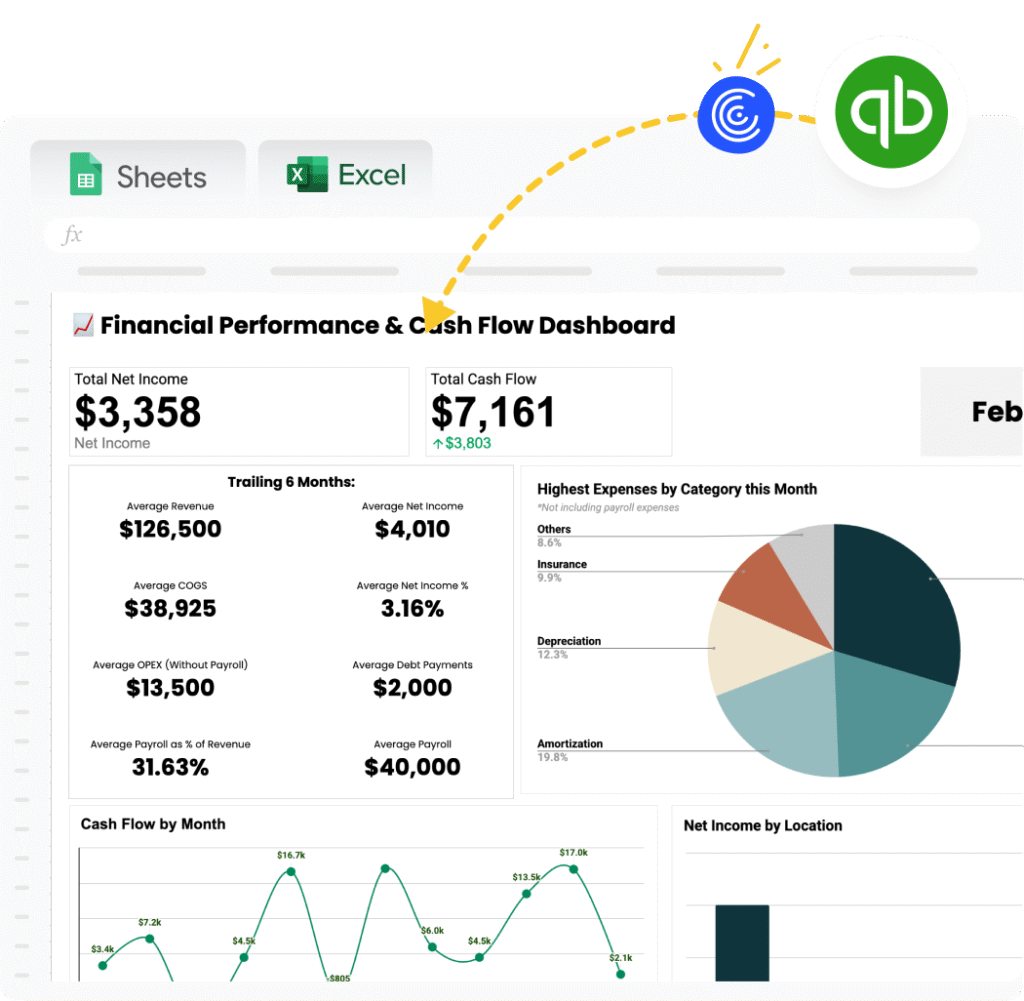
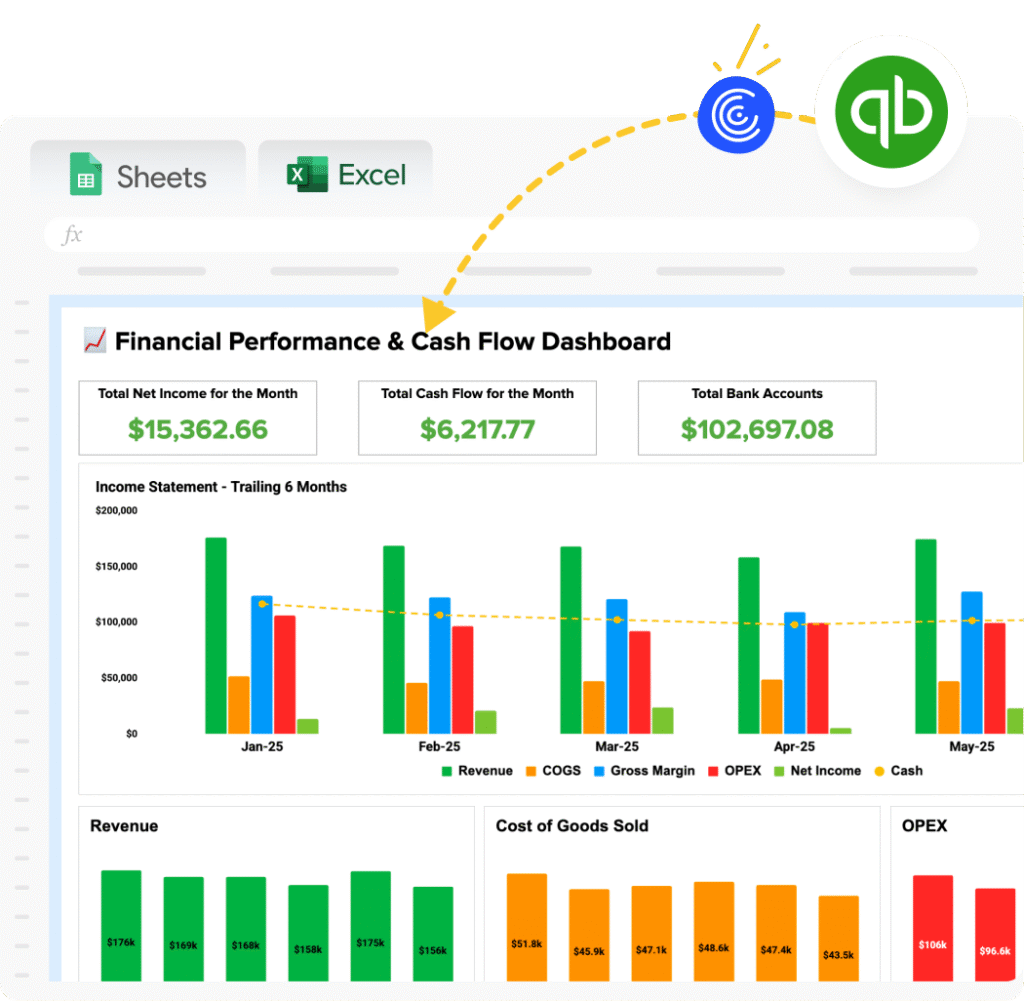
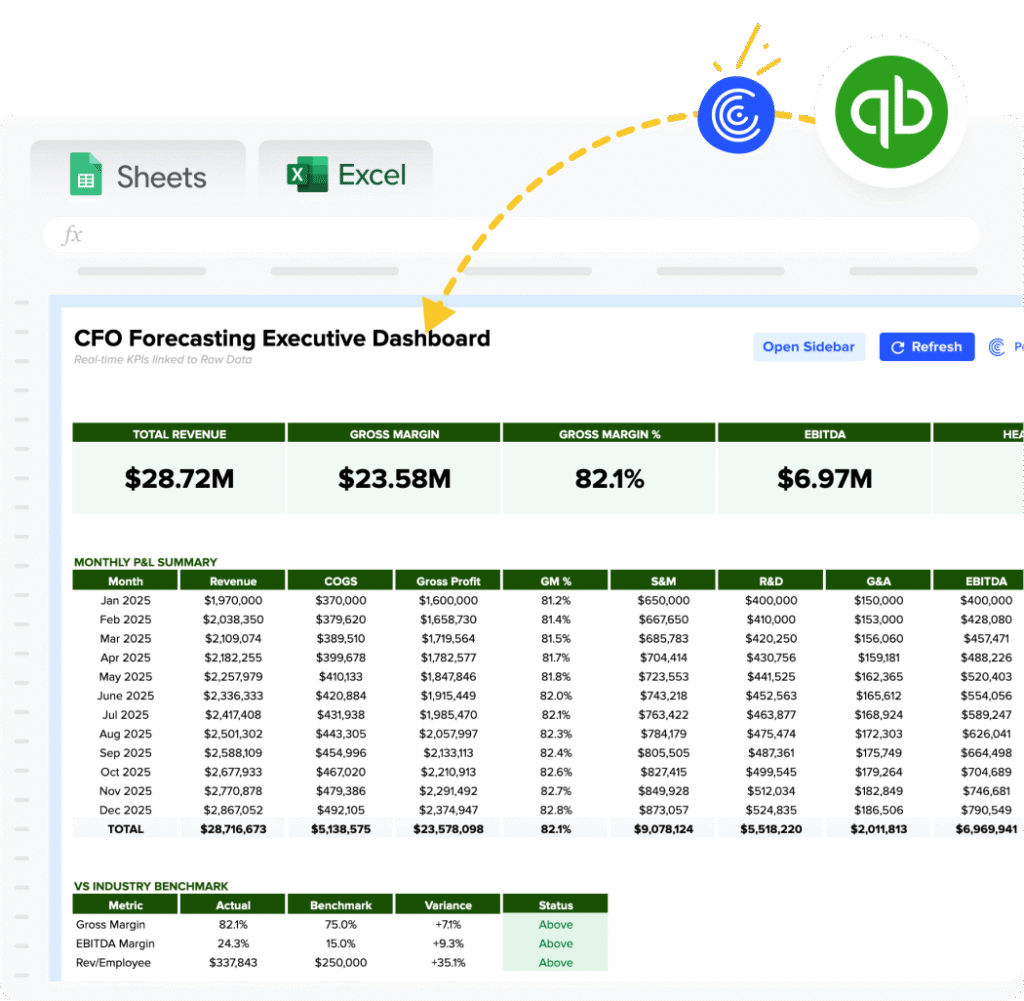
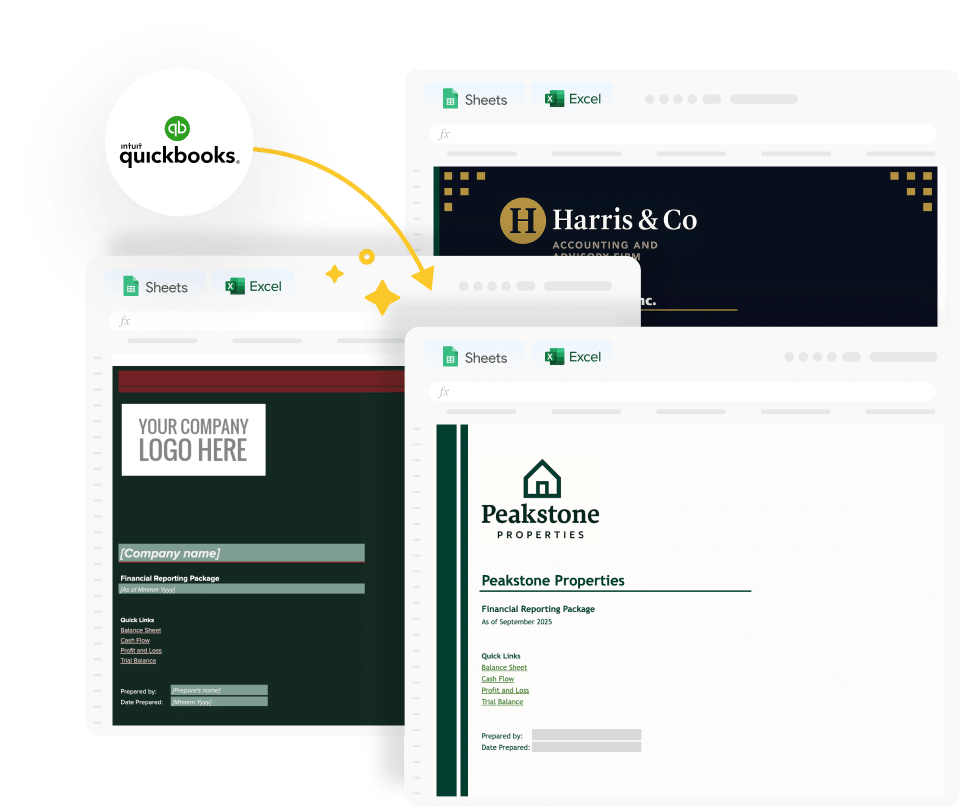
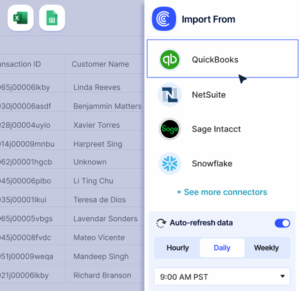
Stop pulling payroll reports from ADP, exporting revenue data from NetSuite, and copying numbers into spreadsheets every month. Coefficient connects your systems directly to Excel or Google Sheets. Your labor cost percentage updates itself from live data.
Set it up once and your calculations refresh daily, weekly, or monthly. Finance teams save 15-30 minutes per report. Fractional CFOs manage dashboards for multiple clients from one platform. Real-time data means you catch problems early, not after they’ve hurt your bottom line.
Start automating your financial metrics today.
How to Improve Your Labor Cost Percentage
High labor costs don’t mean you’re doing something wrong. But if your percentage is above your target range, here are proven ways to bring it down.
Reduce overtime and extra shifts
Overtime costs you 1.5x or 2x regular wages. Track who’s hitting overtime each week and adjust schedules to spread hours more evenly. Many businesses cut 3-5 percentage points just by managing overtime better.
Match staffing to demand patterns
Study your busy hours and slow periods. A restaurant might need six servers on Friday night but only two on Tuesday lunch. Scheduling software can predict traffic and suggest optimal staffing levels.
Cross-train your team
When employees can handle multiple roles, you need fewer people on each shift. A retail associate who can run the register and manage inventory gives you more flexibility with fewer hours.
Improve employee retention
Replacing an employee costs $1,000 to $3,000 depending on the role. High turnover kills your labor cost percentage through recruiting costs, training time, and lower productivity. Invest in keeping good people.
Automate repetitive tasks
Technology can handle routine work for less than human labor costs. Online ordering, self-checkout kiosks, automated inventory tracking, and scheduling software all reduce the hours you need to staff.
Labor Cost Percentage vs. Prime Cost vs. Overhead Rate
These three metrics all measure costs, but they tell different stories about your business.
Labor Cost Percentage
Measures just your people costs against revenue. It answers: how much of each sales dollar goes to paying the team?
Prime Cost
Combines your two biggest expenses: labor costs plus cost of goods sold. For restaurants, this is labor plus food and beverage costs. Prime cost typically should stay under 60-65% of revenue. It’s the broadest measure of your core operating efficiency.
Overhead Rate
Captures everything else: rent, utilities, marketing, insurance, and administrative costs. This shows your fixed cost burden. A high overhead rate means you need strong sales volume to break even.
When to use each
They work together to show complete financial health. A restaurant with 35% labor cost, 30% COGS, and 20% overhead rate is spending 85% of revenue on operations. That leaves 15% for profit. If labor creeps to 40%, profit drops to 10%—a 33% cut to the bottom line. That’s why CFOs watch labor cost percentage so closely.
Keep costs in check
A 5-point improvement in labor cost percentage can mean the difference between breakeven and strong profit. For a business with $1 million in annual revenue, reducing labor costs from 35% to 30% saves $50,000.
Start with overtime management and scheduling optimization. These two changes typically deliver 3-5 percentage points of improvement within 60 days.Get started with Coefficient to automate your labor cost tracking and catch problems before they hurt your bottom line.
 Sync Live Finance Data into Your Spreadsheet