



Cash Runway Formula Explained
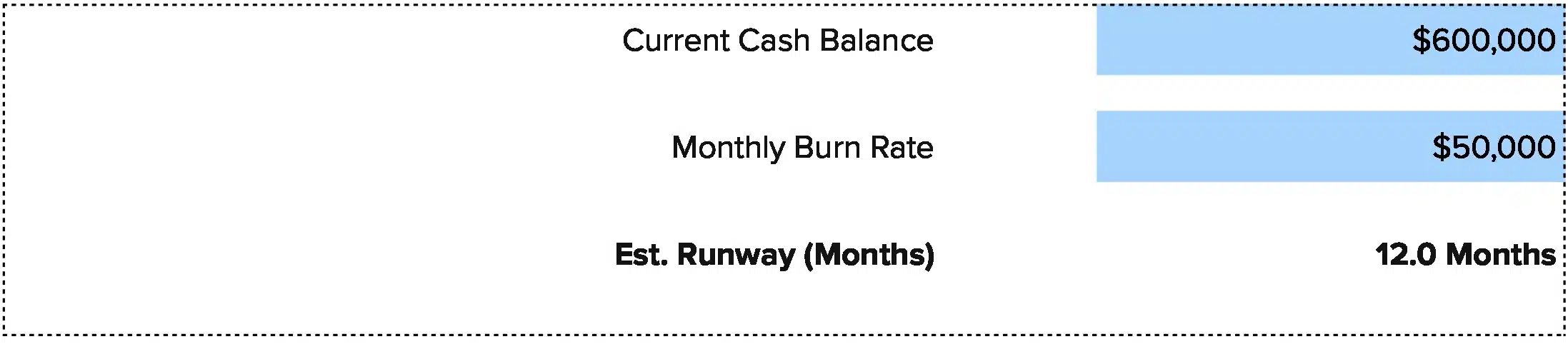
Cash Runway = Cash Balance ÷ Monthly Burn Rate
Let’s break down each part:
Cash Balance: The total cash you have on hand. This includes money in your bank accounts and any liquid assets you can access within days. It does not include accounts receivable that haven’t been collected yet or inventory you’d need to sell first.
Monthly Burn Rate: How much cash you spend each month beyond what you bring in. Calculate this by subtracting your monthly cash inflows (revenue, collections) from your monthly cash outflows (payroll, rent, vendors, software subscriptions). The result is your net burn rate.
We use net burn rate because it accounts for the cash actually flowing in and out. Gross burn rate only counts outflows, which gives an incomplete picture. For a startup with $50,000 in monthly expenses and $20,000 in monthly revenue, the net burn rate is $30,000 per month.
What Is Cash Runway?
Cash runway measures how long your business can keep running at your current spending rate before you run out of money. Think of it as your company’s financial lifespan based on today’s cash position and burn rate.
Also called financial runway or startup runway, this metric answers one critical question: when do you need to make a change? That change could be raising more capital, cutting costs, or reaching profitability. Whatever the answer, you need time to act on it.
Who uses this metric?
CFOs and finance teams track burn rates across multiple scenarios and prepare board reports.
Startup founders plan their next fundraise or decide when to shift to profitability.
Fractional CFOs monitor cash positions for multiple clients simultaneously.
Investors and board members evaluate company health and timing for next rounds.
Controllers forecast cash needs and coordinate with accounting on collections.
How to Calculate Cash Runway: Step-by-Step
Let’s walk through a real example using a mid-stage SaaS company.
- Find your current cash balance
Check your bank accounts and add up the accessible cash. For this example: $450,000
- Calculate monthly cash received
Add up all cash that came in last month. This includes customer payments, not just booked revenue. Our example company collected $85,000.
- Calculate monthly cash spent
Total all cash that went out last month. Include payroll, rent, software, vendors, marketing spend. Our example: $115,000 in total outflows.
- Calculate net monthly burn rate
Subtract cash received from cash spent:
$115,000 – $85,000 = $30,000 net burn per month
- Apply the cash runway formula
Divide cash balance by monthly burn rate:
$450,000 ÷ $30,000 = 15 months of runway
- Understand the result
With 15 months of cash runway, this company has adequate time to execute its plan. It can continue growing at the current rate, or begin planning a fundraise 6-9 months out. If runway drops below 12 months, immediate action becomes necessary.
- Track it monthly
Cash runway changes as your burn rate and cash balance change. Review both metrics monthly to catch problems early and adjust before they become critical.
How to Interpret Your Cash Runway Number
| Runway Range | Interpretation | Recommended Actions |
| Below 6 months | Critical zone – Immediate risk of running out of cash. You have limited options and little negotiating power. | • Cut all non-essential spending now<br>• Negotiate payment terms with vendors<br>• Accelerate collections aggressively<br>• Begin emergency fundraise or consider sale |
| 6 – 12 months | Concerning – You need to act soon. This range leaves little room for delays or setbacks. | • Start fundraising process immediately<br>• Review all expenses and cut 15-20%<br>• Focus on revenue retention and growth<br>• Model scenarios for extending runway |
| 12 – 18 months | Adequate – Standard target for most startups. Gives you time to execute but requires discipline. | • Monitor burn rate monthly<br>• Begin fundraise planning 6 months out<br>• Maintain current financial discipline<br>• Build contingency plans |
| 18 – 24 months | Healthy – Strong position with good flexibility. You can invest in growth while planning ahead. | • Continue current strategy<br>• Consider strategic investments<br>• Plan fundraise on your timeline<br>• Optimize for growth efficiency |
| Above 24 months | Excellent – You have control over your timeline and terms. May indicate room for more aggressive growth investment. | • Evaluate growth opportunities<br>• Consider if you’re underinvesting<br>• Maintain optionality for timing<br>• Plan for profitability path |
Cash Runway Benchmarks by Industry
Runway expectations vary significantly by industry due to different business models, capital intensity, and growth patterns.
| Industry | Typical Runway Target | Notes |
| SaaS / Software | 18 – 24+ months | Subscription revenue provides predictability. Investors expect 12-18 month minimum post-raise. |
| Fintech | 18 – 24+ months | Regulatory requirements and compliance costs demand longer runways. Capital-intensive. |
| Healthcare / Biotech | 24 – 36+ months | Clinical trials and regulatory approval timelines require extended cash positions. |
| E-commerce / Retail | 12 – 18 months | Inventory cycles and seasonal patterns affect runway needs. Q4 often burns more cash. |
| Manufacturing / Hardware | 18 – 24 months | Long product development cycles and inventory requirements demand more runway. |
| Consulting / Services | 12 – 18 months | Lower capital requirements but revenue can be lumpy. Client concentration affects stability. |
What drives these differences?
Business model matters. Companies with recurring revenue (SaaS, fintech) can forecast cash more accurately, but still need 18+ months to demonstrate metrics investors want to see. Product development timelines also play a role: biotech companies running clinical trials need 3+ years between major milestones.
Capital intensity is another factor. Hardware and manufacturing companies burn cash on inventory and production before generating revenue. Service businesses have lower cash needs but face revenue volatility if they lose a major client.
The fundraising cycle itself impacts runway targets. In 2024-2025, Series A rounds are taking 6-9 months to close. If you start with 12 months of runway, you’re already in the danger zone before you finish raising.
Benchmark Citations
Wall Street Prep Cash Runway Analysis
Upflow SaaS Cash Runway Report
Automating Cash Runway Tracking with Coefficient
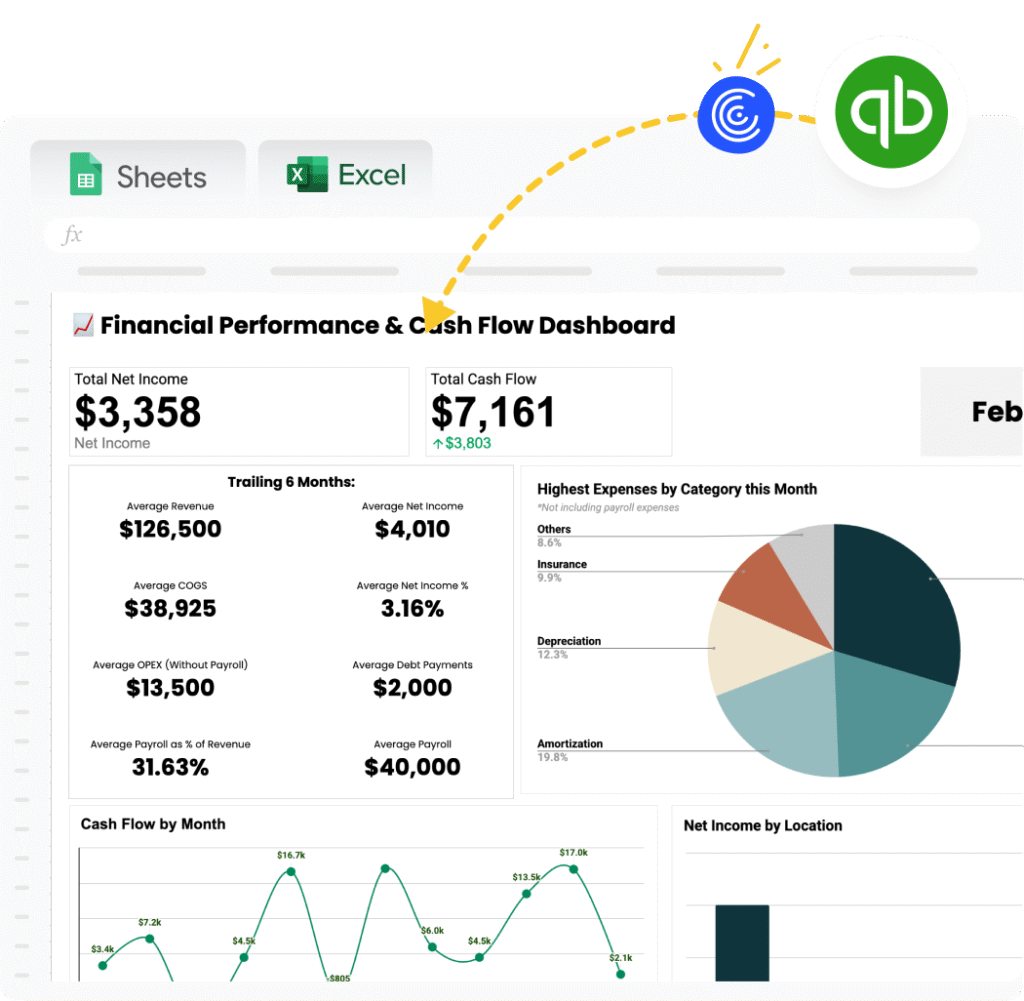
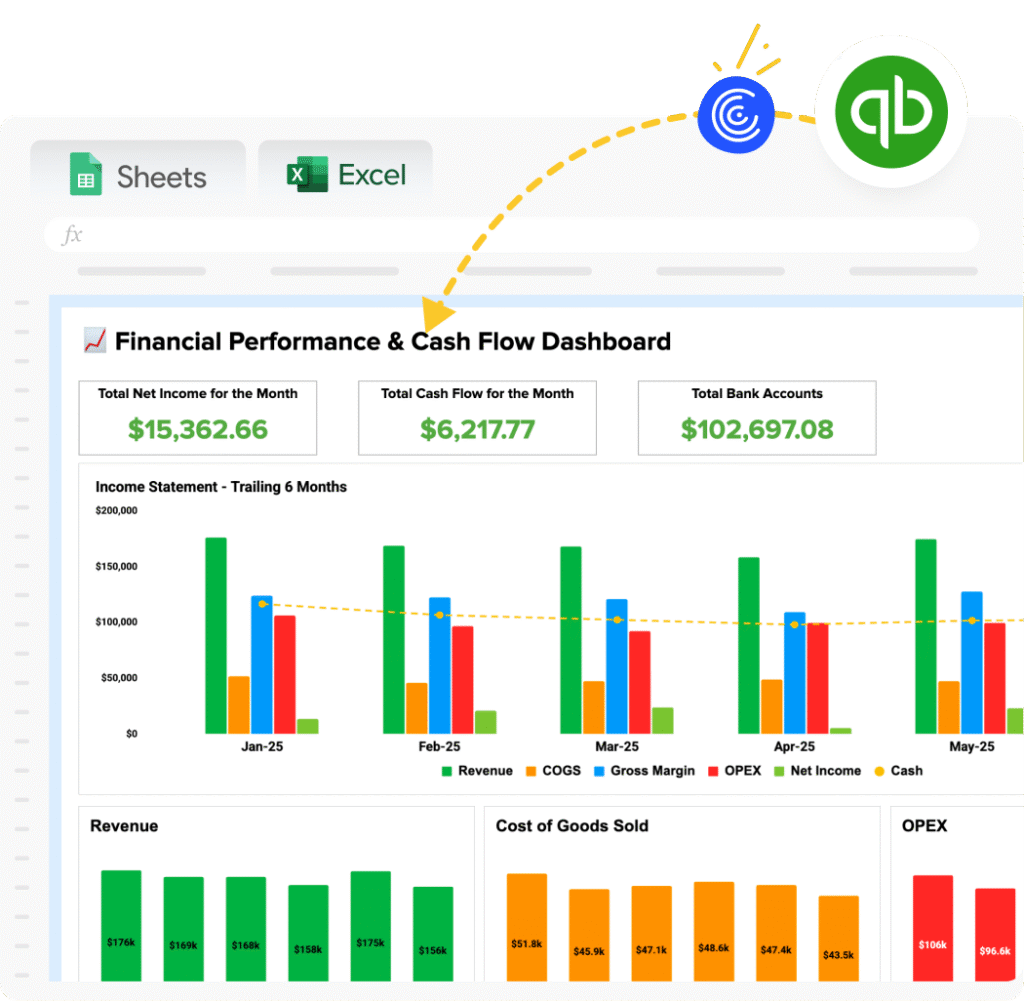
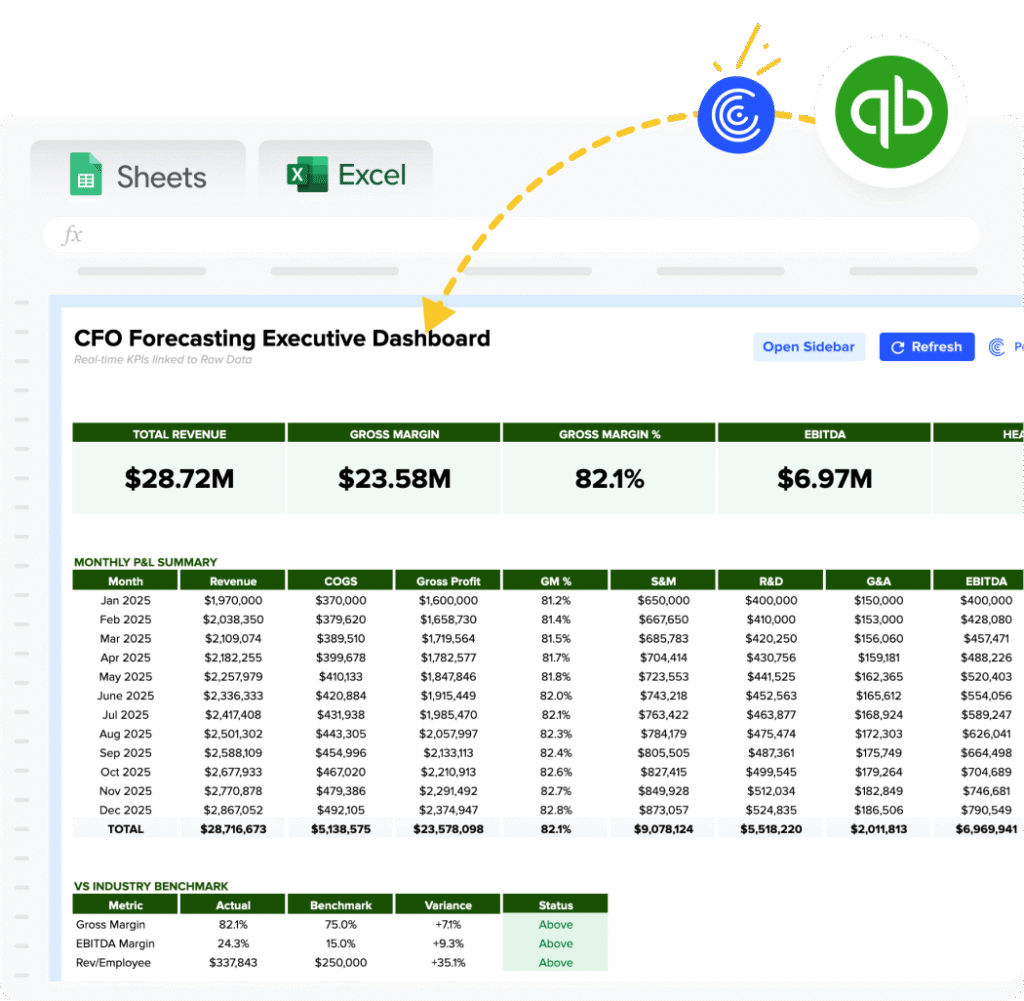
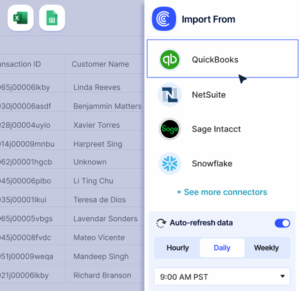
Stop pulling monthly CSV exports from QuickBooks, NetSuite, or Xero to calculate runway by hand. Coefficient connects your accounting system straight to your spreadsheet and updates cash balance and burn rate automatically.
Your runway calculation refreshes on schedule – daily, weekly, monthly, whatever you need. No manual work. No copy-paste errors. Finance teams managing multiple entities or fractional CFOs tracking client portfolios can monitor everything from a single dashboard.
Set it up once and your metrics update themselves. Get started with Coefficient and automate your cash runway tracking.
How to Improve Your Cash Runway
Extending runway means either adding cash or reducing burn. Here are five proven strategies.
Cut operating expenses strategically
Audit every recurring cost. Cancel unused software subscriptions, renegotiate vendor contracts, and reduce discretionary spending on events or travel. Even small cuts add up: cutting $10,000 per month extends a 12-month runway to 15 months if you have $450,000 in the bank.
Accelerate customer payments
Offer early payment discounts (2/10 net 30), send invoices immediately upon delivery, and follow up on overdue accounts within days, not weeks. Reducing your average collection period from 45 to 30 days can free up significant cash.
Extend payment terms with vendors
Ask your key suppliers for net-45 or net-60 terms instead of net-30. This keeps cash in your business longer without reducing expenses. Strong vendor relationships help here.
Focus on high-margin revenue
Prioritize deals that close quickly and generate immediate cash. Pause investments in long-sales-cycle opportunities that won’t impact cash for 6+ months. Every dollar of revenue you bring in next month directly extends your runway.
Convert short-term debt to long-term financing
Refinance credit lines or short-term loans into 3-5 year term debt. This removes near-term cash obligations from your burn calculation. The monthly payment may be similar, but the immediate pressure disappears.
Cash Runway vs. Burn Rate vs. Cash Flow
These three metrics measure different things. Here’s when to use each.
| Metric | What It Measures | Formula | Best Use Case |
| Cash Runway | Time until you run out of money | Cash Balance ÷ Monthly Burn Rate | Strategic planning and fundraise timing |
| Burn Rate | Monthly cash spending rate | Cash Out – Cash In per month | Operational management and budget control |
| Cash Flow | Net change in cash position | Operating + Investing + Financing Cash Flow | Financial statement analysis and reporting |
Cash runway tells you when you’ll hit zero. Burn rate tells you how fast you’re spending. Cash flow tells you what changed in a period.
All three matter, but they answer different questions. Use runway for planning your next 12-18 months. Track burn rate monthly to catch problems fast. Review cash flow statements quarterly to understand where money went and whether your assumptions were right.
Pro tip for fractional CFOs: Present all three metrics together with narrative context. For example: “Your burn rate increased from $25,000 to $35,000 due to three new hires. This reduced your runway from 20 months to 14 months. However, your cash flow from operations improved because two large customers prepaid annual contracts. This gives us flexibility to maintain current headcount through Q2 while we monitor new hire productivity.”
Context turns numbers into decisions.
Know your timeline
Cash runway shows you exactly how long you have. Calculate it monthly. Watch for trends. Act before you hit the danger zone.
Six months of runway means emergency mode. Twelve months means start planning now. Eighteen months means you have options. Know which zone you’re in and what that demands.
Get started with Coefficient and turn runway tracking into a system that updates itself.
 Sync Live Finance Data into Your Spreadsheet