



CFOs carry the weight of accurate financial statements. Board decisions, investor confidence, and strategic planning all depend on timely numbers. When month-end close drags to 10 or 15 days, every extra day spent closing is a day lost to analysis. The entire organization waits while finance scrambles to finalize reports.
Only 53% of businesses complete their monthly close in six days or less. Top-performing finance teams close in 1-3 business days with full automation. The gap between average and excellent is enormous.
This guide covers the ten most critical actions CFOs must take to speed up month-end close and free their teams from manual work.
Why fast month-end close matters for CFOs
Speed matters. But not just for its own sake.
Faster strategic decisions
Real-time data gives CFOs agility. When financial statements are ready in 1-3 days versus 10+ days, you gain an extra week for forecasting and decision support. Early warning indicators help adjust strategies based on emerging trends rather than reacting after problems hit.
Stronger stakeholder confidence
Timely statements signal organizational maturity. Companies that consistently deliver fast closes demonstrate strong financial controls. This builds trust with boards, investors, and lenders.
More time for value-added work
Automation reduces month-end cycle time by 55%. Overall finance processes drop from 182 hours monthly to 56 hours—a 69% reduction. That’s 126 hours saved monthly your team can spend on analysis instead of data entry.
Fewer errors and lower risk
Manual consolidation turns a 5-day close into a 15-day nightmare. Every manual step introduces error risk. Automated solutions reduce mistakes and deliver more accurate insights. Error reduction alone saves $15K-$50K annually in correction costs.
Near-instant reporting capability
Continuous accounting distributes tasks throughout the month rather than cramming them into period-end. Companies using this approach reduce month-end from 15+ days to under 5 days. Finance transforms from transaction processors to strategic advisors.
Top things CFOs must do for on-time close
1. Establish clear cutoff periods
Clear cutoff dates eliminate confusion. Communicate deadlines to department leaders ahead of close. Everyone needs to know when accounting stops booking actuals and accruals begin.
Prepare your team for the cutoff date. Establish procedures for flagging transactions that arrive late. Documents with final approval must be completed before end of business on the cutoff date.
Best practice: Develop detailed checklists outlining the process, team assignments, and closing calendar. Make cutoff periods non-negotiable. Train department leaders to plan around these dates rather than requesting exceptions.
2. Deliver financial statements first
Financial statements are your primary deliverable. The income statement, balance sheet, and cash flow statement must be completed before operational reports. These core statements provide essential feedback on business growth and financial health.
Operational dashboards and metrics matter. But they should not delay core statements.
Use a two-phase approach: Phase 1 completes GAAP-compliant statements within target close days. Phase 2 adds variance commentary and forward-looking insights. This ensures timely delivery of compliance and board requirements.
3. Empower stakeholders with real-time dashboards
Give people data when they need it. Provide live access to operational stakeholders, reducing their dependency on month-end reports.
When department leaders have live dashboards showing their metrics, they stop requesting ad hoc reports during close crunch time. Sales tracks pipeline without special requests. Operations monitors expenses continuously. Marketing sees campaign ROI without waiting for month-end.
This self-service approach frees finance to focus on core close activities. Check out the finance dashboards gallery for templates including cash runway, AR aging, and revenue dashboards.
4. Consolidate multi-entity processes
Managing intercompany transactions is rarely easy. Every transaction between entities must be tracked on both sides, then eliminated at the consolidated level. Different accounting systems and currencies make this harder.
Manual consolidation can turn a 5-day close into a 15-day nightmare. Each entity often has its own system, leading to disconnected data and painful reconciliations.
Modern approach: Move to continuous consolidation throughout the period, not just at month-end. Companies using this method reduce close time by up to 70%. Standardize your chart of accounts across entities—this alone can shave two days off consolidated statements.
5. Optimize billing processes
Faster invoices mean faster close. Billing optimization directly impacts Days Sales Outstanding (DSO) and working capital.
Automated invoice generation reduces errors and speeds cycles. Moving from monthly to weekly or milestone-based billing accelerates cash flow. Electronic invoicing cuts 3-5 days from typical payment timelines versus paper.
When billing is automated, month-end teams face fewer unbilled revenue accruals and revenue recognition questions. The faster you bill, the cleaner your close.
6. Review balance sheet daily
Treat your balance sheet like an inbox. Monitor it daily to catch errors when they’re small and easy to fix.
Key indicators to track: quick ratio, current ratio, and debt-to-equity. The quick ratio measures your ability to meet short-term obligations immediately. Most CFOs start with working capital as a proxy for short-term resilience.
Daily reviews prevent discovering problems during month-end crunch. Coefficient’s balance sheet template provides real-time snapshots directly from QuickBooks with automated calculations.
7. Maximize sub-ledger usage
Record detailed activity where it belongs. Data summarizes as it flows from sub-ledgers to the general ledger. Each sub-ledger must close in a specific order before GL close begins.
Modern software automatically summarizes and posts sub-ledger totals to correct GL accounts. This reduces manual entry and speeds reconciliation.
Complete all tasks for AR, AP, and Inventory modules first. Verify all journals are posted. Then set ledger periods to “On hold” so no further posting occurs during close.
8. Invest in automation tools
Manual data consolidation is the biggest time sink in traditional close. Finance teams export data from ERPs, copy-paste between spreadsheets, manually refresh stale reports, and reconcile differences by hand. This work consumes days and introduces errors at every step.
Automation eliminates this waste. Month-end close automation delivers median first-year ROI of 287%. Time savings hit 55% on close processing alone.
Coefficient helped Thornton Capital cut month-end close from 10 days to 3 days. CFO Mike Lynch called it “the single greatest return on investment” that year. The firm now pulls live data from 16 QuickBooks files into standardized templates, refreshing automatically instead of re-downloading manually.

9. Build cross-functional relationships
Finance does not operate in isolation. Cross-functional collaboration has become a strategic imperative. 55% of CFOs now view their CHRO relationship as strategically important.
During close, these relationships become critical. Sales must provide final revenue data by cutoff. HR must finalize payroll accruals. Operations must report inventory and COGS accurately.
Strong relationships built throughout the month make close-period collaboration smoother. Schedule regular check-ins with department leaders to understand their processes, data quality, and challenges.
10. Set ambitious goals with team buy-in
Challenge your team to think differently. Leading companies close their books in as little as one day. Setting Day 1 close as a goal requires change management and buy-in.
Present the vision to your team. Encourage creative thinking about how to achieve it. Balance ambitious targets with realistic implementation strategies.
43% of CEOs plan to increase their organization’s transformation tempo over the next 12 months. CFOs are stepping up as champions of change. Focus on quick wins during initial implementation while building toward larger transformation goals.
CFO month-end close benchmarks
Understanding industry standards helps set realistic targets.
By timeline
The median month-end close is 6.4 business days according to APQC benchmarking. Top-quartile teams close in about 4.8 days. Best-in-class benchmark is 5 days or less, but most mid-sized organizations still take longer.
By automation level
Companies relying on manual processes see 10+ day closes. Those using technology and standardized workflows consistently hit 3-5 day targets. The difference is stark.
By company size
- Small businesses (under 50 employees): 3-5 days
- Mid-market (50-500 employees): 5-8 days
- Large enterprises (500+ employees): 7-10 days
- Multi-entity global organizations: 10-15 days without automation
By industry
Different industries face unique challenges. SaaS companies deal with ASC 606 revenue recognition complexity, adding 1-2 days. Healthcare handles patient billing and insurance claims, adding 2-3 days. Manufacturing requires inventory valuation, adding 1-2 days. Financial services face regulatory requirements, adding 2-4 days.
Coefficient for CFO month-end efficiency
Modern CFOs need modern tools.
Automated multi-system data consolidation
Coefficient connects spreadsheets directly to live data from NetSuite, Sage Intacct, Snowflake, and 70+ other sources. Finance teams automate reporting, eliminate manual exports, and build self-service dashboards.
No more CSV exports, copy-pasting between systems, or waiting for IT to pull reports. Scheduled refreshes keep reports current for month-end, board meetings, and planning.
Watch how it works:
<iframe width=”560″ height=”315″ src=”https://www.youtube.com/embed/pmc3GpbruD4″ frameborder=”0″ allowfullscreen></iframe>
Executive close dashboards
Build live dashboards showing close progress, outstanding items, and completion status. Track cash flow, revenue trends, expense patterns, and profitability without waiting for monthly closes.
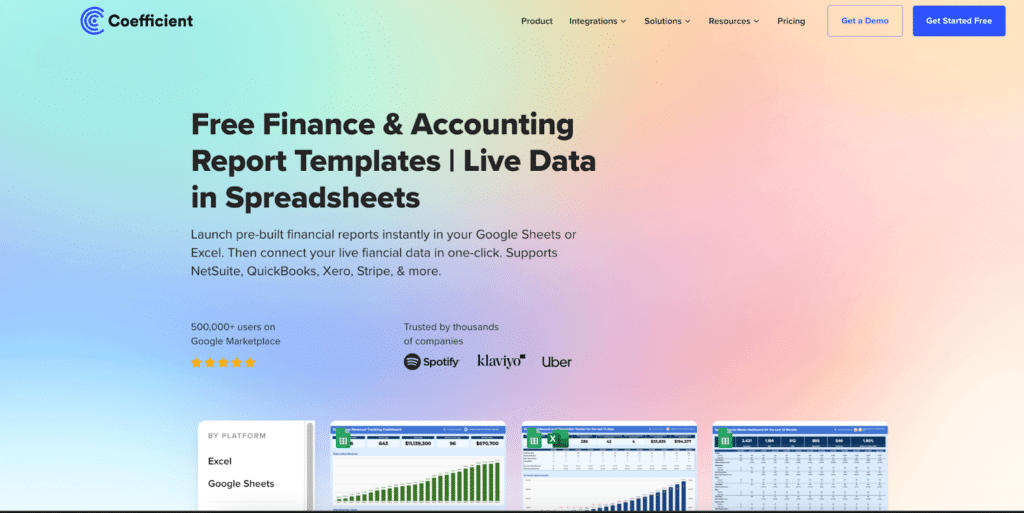
The Finance Dashboards Gallery includes templates for balance sheets, cash runway, AR aging, revenue dashboards, and cashflow forecasts—all with live data.
Variance analysis automation
Coefficient’s Budget vs Actual template syncs automatically with QuickBooks data. The system generates reports without manual entry, highlighting differences between expected and actual performance.
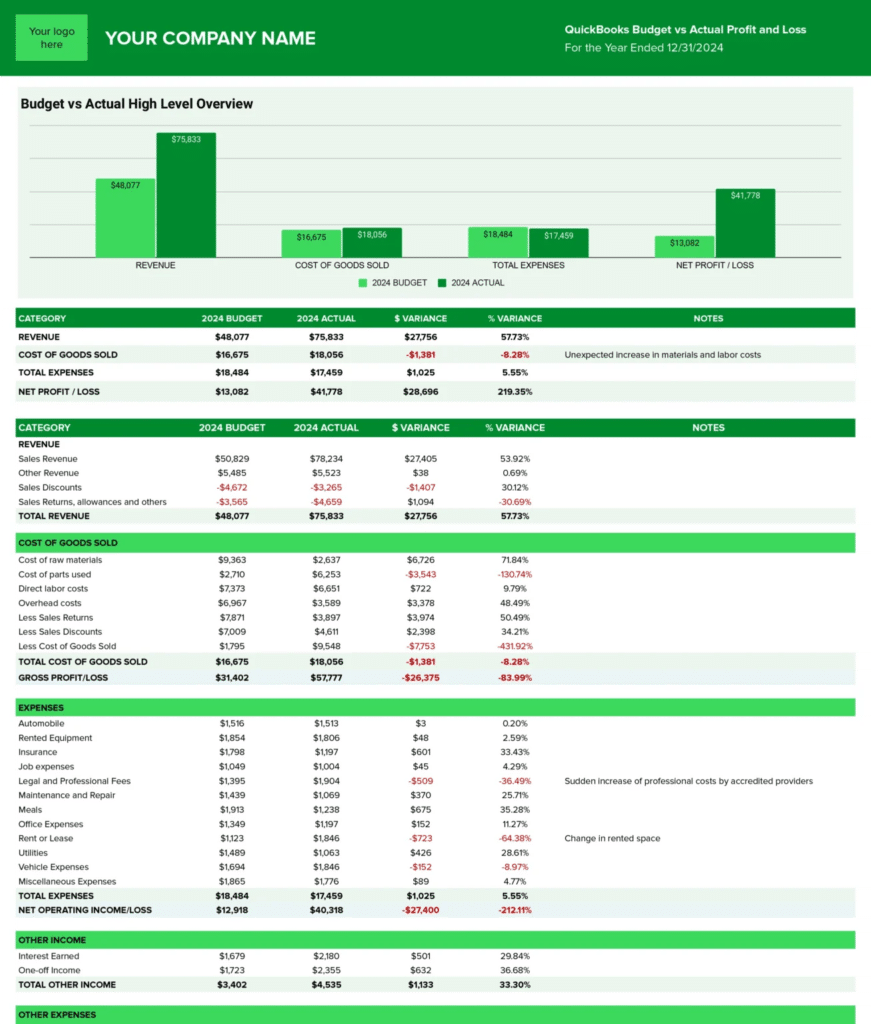
Automated variance reporting lets CFOs and CEOs trust the numbers. Teams focus on strategic insights instead of spending days on data consolidation.
Speed up your close
Delivering month-end close on time is one of the most critical CFO responsibilities. The difference between a 10-day close and a 3-day close is the difference between reactive reporting and strategic leadership.
The ROI is clear: 287% median first-year returns, 126+ hours saved monthly, and finance teams freed for value-added work. Stop wasting days on manual processes. Get started with Coefficient today.
For more resources, tools, and templates, visit the CFO resources hub.