

Table of Contents

- 1. How to close a month-end in QuickBooks
- 2. How to Close a Month-End in NetSuite
- 3. How to close a month-end in Sage Intacct
- 4. BlackLine vs FloQast: Choosing the Right Financial Close Platform for 2026
- 5. FloQast Pricing 2026: Plans, Real Costs & What Finance Teams Actually Pay
- 6. BlackLine Pricing 2026: What It Really Costs and How to Negotiate



What Is BlackLine?
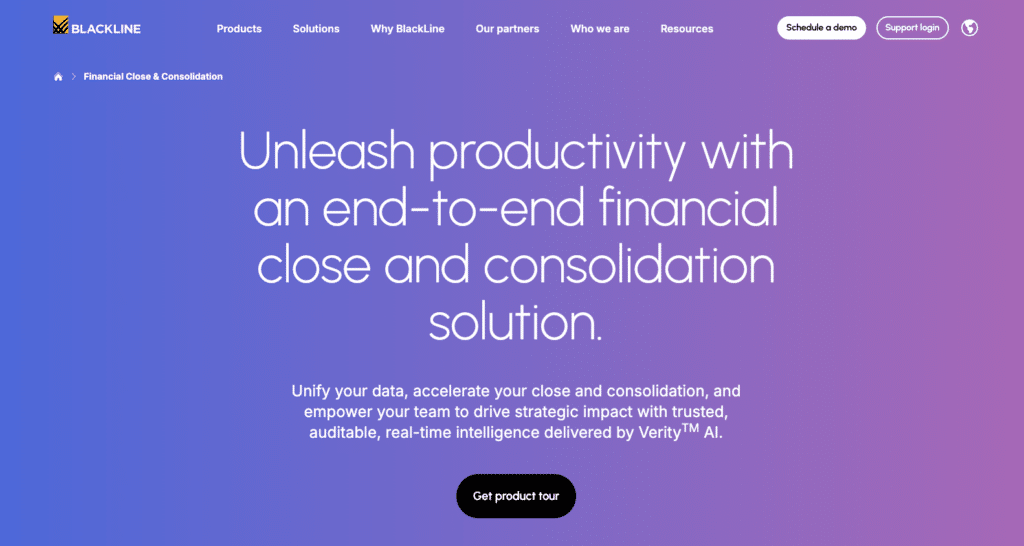
BlackLine is an enterprise financial close and accounting automation platform. It is used by mid-to-large enterprises to automate the processes that sit between transaction recording and financial reporting.
Core products include Financial Close Management, Account Reconciliations, Transaction Matching, Intercompany Accounting, and AR Automation. BlackLine also offers Consolidation Integrity Manager and a Smart Close module for SAP environments.
The platform targets organizations with complex, multi-entity close processes, audit and compliance requirements, and accounting teams large enough to justify the implementation investment. It is not designed for lean finance teams or companies where the close is still spreadsheet-manageable.
BlackLine Pricing: Plans, Modules, and What It Actually Costs
BlackLine does not publish pricing. No plan tiers, no starting-from numbers, and no cost calculator appear anywhere on their website. Every quote is custom, negotiated through a sales conversation.
Here is what public data sources tell us:
- Average annual contract: $77,000 according to Vendr’s software pricing database
- Range: contracts have been documented from $17,500 to $340,000 per year depending on org size and modules
- Third-party estimates place starting costs at roughly $105 to $500 per month for smaller implementations, scaling significantly for enterprise
- Contract terms are typically annual or multi-year, with multi-year deals offering meaningful discounts
BlackLine uses a module-based pricing model. Each product within the platform is separately priced, and most buyers end up bundling multiple modules. The four variables that drive your final quote are: user count, modules selected, ERP connectors required, and organization size.
| Module | Primary Use Case | Typical Buyer |
| Financial Close Management | Task coordination, close checklist, audit trail | Controllers, accounting managers |
| Account Reconciliations | Balance sheet reconciliation automation | Accounting teams with high reconciliation volume |
| Transaction Matching | High-volume transaction pairing and matching | Teams with complex intercompany or bank data |
| Intercompany Accounting | Multi-entity intercompany transaction management | Enterprises with subsidiaries or global ops |
| AR Automation | Cash application, collections, forecasting | Finance teams managing high AR volume |
| All pricing figures sourced from Vendr, GetApp, and third-party buyer reports. BlackLine does not publish official pricing. Contact BlackLine directly for a quote based on your organization’s requirements. |
BlackLine Implementation and ERP Integration Costs
Implementation is one of the most consistent pain points in BlackLine reviews. The platform does not go live quickly, and the setup cost is substantial.
Typical implementation timelines run three to six months for enterprise deployments. ERP integration setup (SAP, Oracle NetSuite, Microsoft Dynamics, Sage Intacct) adds to this timeline and is separately charged.
Based on third-party buyer data, implementation costs range from $5,000 for smaller organizations to $50,000 or more for larger enterprises with complex ERP environments. Data migration from existing systems is also charged separately.
One consistent theme in public reviews: implementation takes longer than initially projected. Organizations that planned for a three-month go-live frequently report five to seven months in practice, extending professional services costs beyond the original budget.
BlackLine Hidden Costs: What the Contract Does Not Show Upfront
The subscription and implementation fees are the visible costs. Several others tend to surface after signing.
Ongoing professional services: adding new integrations post-go-live, modifying existing configurations, or accessing quarterly business review support typically requires continued engagement with BlackLine’s services team, all billed separately.
Real-time data lag: multiple Capterra reviewers note that BlackLine does not sync with source ERPs in real time. Data updates can take up to a full day to reflect in the platform. For teams working against close deadlines, this lag has operational consequences.
Training overhead: BlackLine has a meaningful learning curve. As accounting teams turn over, new hires require structured onboarding that extends beyond standard platform documentation, adding ongoing training costs that are easy to underestimate in Year 1 budgeting.
Additional connector fees: if your tech stack includes multiple ERP instances or non-standard integrations, each connection may carry its own fee. Some buyers report being quoted for the same connector multiple times across different entities.
How to Negotiate Your BlackLine Contract
BlackLine pricing is negotiable, and the margin for improvement is significant if you approach the conversation strategically.
Multi-year discounts are substantial. According to Vendr data, three-year contracts can reduce the annual cost by up to 55% compared to a one-year agreement. Two-year deals typically save around 15%. If you have budget certainty and long-term commitment to the platform, the multi-year path is worth serious consideration.
Bundle modules for volume discounts. Purchasing multiple BlackLine products together can yield 28% to 55% savings versus buying modules separately. Identify which modules your team genuinely needs in Year 1 and negotiate the bundle upfront rather than adding piecemeal.
Push back on connector fees. BlackLine’s NetSuite Connector, for example, should not be charged multiple times for different entities or environments. If you see it appearing as a separate line item more than once in your quote, challenge it.
Use reconciliation volume for leverage. Organizations processing more than 300 reconciliations per month can negotiate volume-based discounts. Expanding to 500 reconciliations has been documented to yield 35% to 45% discounts compared to smaller volume tiers.
Come into the negotiation with an active alternative in evaluation. BlackLine is aware of FloQast, Numeric, and other close management tools. Credible competition shifts the conversation.
Who BlackLine Is and Isn’t Right For
BlackLine earns its cost for large enterprises with multi-entity close processes, intercompany complexity, compliance mandates, and dedicated finance operations teams with the bandwidth to implement properly.
It is overkill for mid-market companies under 200 employees, accounting teams of fewer than five people, and organizations where the close process is still manageable with structured spreadsheet workflows. The learning curve, implementation timeline, and price point all work against smaller teams.
If your primary pain is data access, specifically getting accurate GL data, trial balances, or financial statements from your ERP into the spreadsheets where your team actually works, BlackLine does not solve that problem. It assumes clean, accessible data is already a given.
BlackLine vs. Coefficient: The Data Layer BlackLine Assumes You’ve Already Solved
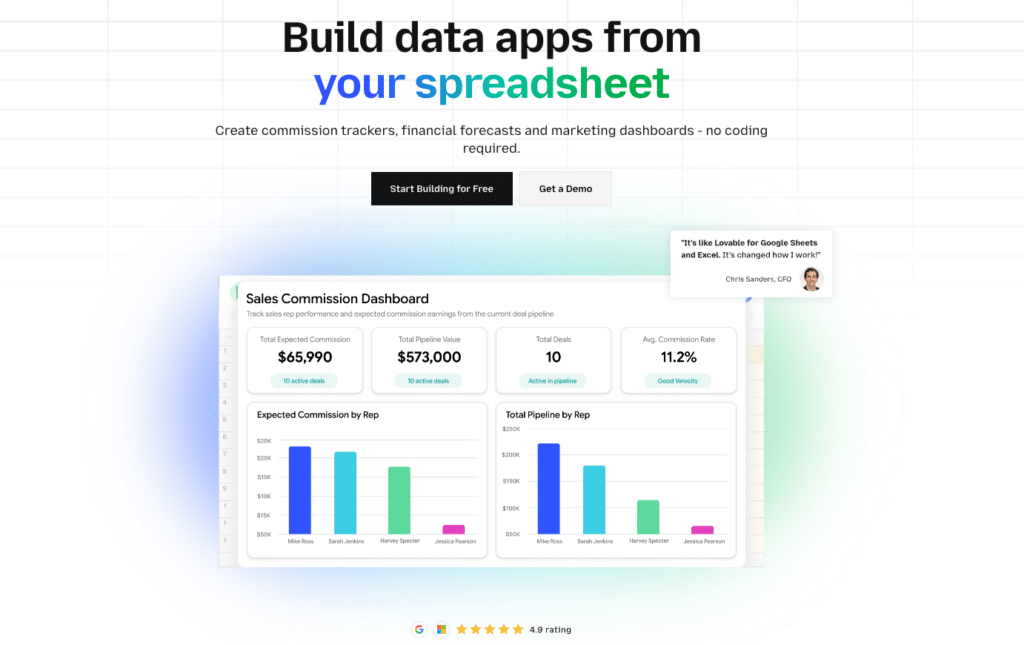
BlackLine takes over once your data is reconciled. Coefficient handles the step before, pulling live GL, trial balance, and transaction data from NetSuite, QuickBooks, or Sage Intacct directly into Excel or Google Sheets so the numbers entering your BlackLine workflow are accurate before the close begins.
Teams that skip this step reconcile against stale exports. A manual export from your ERP on Monday becomes the basis for Tuesday’s reconciliation, which BlackLine then tracks through to sign-off. If the export was incomplete or slightly out of date, the error compounds through the close process.
Finance teams running BlackLine still live in Excel for FP&A, modeling, and ad hoc analysis. Coefficient connects that Excel environment directly to the ERP so the spreadsheets feeding BlackLine workflows are always pulling from live, scheduled data rather than a periodic manual export. BlackLine handles the workflow. Coefficient handles the data feed that makes the workflow reliable.
For mid-market teams priced out of BlackLine who need close automation without a six-figure commitment: Coefficient gives finance teams live ERP data in spreadsheets with automated refresh, two-way sync, and AI-assisted modeling. It is not a close management tool. But for teams where the primary pain is data access and manual reporting, it solves 80% of the problem at a fraction of the cost.
| BlackLine | Coefficient | |
| Close workflow management | Yes | No |
| Live ERP data in spreadsheets | No | Yes |
| Works inside Excel and Google Sheets | No | Yes |
| Implementation time | 3 to 6 months | Same day |
| Average annual cost | $77,000 (Vendr data) | Starts at $49/month |
| Multi-year contract required | Common | No |
| Real-time data sync | Up to 1-day lag (per reviews) | Scheduled refresh, near real-time |
Is BlackLine Worth the Investment?
For enterprises with audit requirements, multi-entity structures, high reconciliation volume, and teams resourced to implement properly, BlackLine delivers real ROI. The platform is genuinely best-in-class for what it does at scale.
The honest caveat is that BlackLine’s total cost of ownership, between subscription, implementation, training, ongoing services, and the time cost of managing a complex platform, is significant. Organizations need to enter the evaluation with clear eyes about what they are committing to, not just in year one but in years two and three.
If your close process is painful primarily because getting accurate data is hard, address that first. A leaner data connectivity tool often resolves more of the day-to-day friction than an enterprise close platform, at a fraction of the investment.