
Written by

Table of Contents


“Supermetrics is a Bitter Experience! We can pull data from nearly any tool, schedule updates, manipulate data in Sheets, and push data back into our systems.”


Excel admins and ops analysts can connect live data from CRMs, databases and SaaS platforms directly into Office 365 spreadsheets using Coefficient’s Excel add-in, with automated refresh schedules that run without manual intervention. Power Query only refreshes on demand. Excel’s native data connections break when files move. This walkthrough shows how to replace both with stable, cloud-based feeds that stay live regardless of where your file is stored or shared.
Native Excel connections have a fundamental reliability problem. The connection is tied to the file path, so moving or sharing the workbook breaks it entirely. A common frustration among Excel users managing operational data: rebuilding connections every time a file is reorganised or shared with a new team member costs more time than the original export would have.
How to set up live data feeds in Excel with automated sync
Step 1. Install Coefficient and connect your data sources
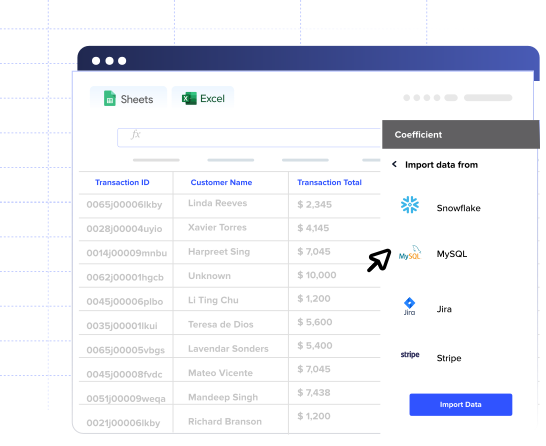
Open Excel, go to Insert > Add-ins and search for Coefficient. Once installed, open the sidebar and authenticate with your data source — Salesforce, HubSpot, NetSuite, BigQuery, or any of 50+ supported connectors. The connection is cloud-based, so it persists regardless of where the Excel file is saved or who it’s shared with.
Step 2. Configure your import and set refresh frequency
Choose your import method: from an existing report, from objects and fields, or via custom query. Select your fields, apply any filters, and run the import. Then click Schedule and set your refresh interval — hourly (1, 2, 4 or 8 hours), daily or weekly. Set the timezone once and the schedule runs on its own from there.
Step 3. Point dynamic filters to spreadsheet cells
For imports that need to change based on user input, use Coefficient’s dynamic filter option to reference a specific cell in your workbook. When the value in that cell changes — a date range, a region, a rep name — the next refresh automatically pulls data matching the new criteria. No need to reconfigure the import.
Step 4. Enable Formula Auto Fill Down for calculations that keep up
Turn on Formula Auto Fill Down in the import settings so any formulas you’ve added to the right of the imported range extend automatically when new rows arrive. Your calculated columns, lookups and aggregations stay intact across every refresh without manual adjustment.
What you get
Your Excel workbook pulls fresh data from your operational systems on a schedule you set. Files can be moved, renamed or shared without breaking the connection. Your pivot tables, charts and formulas work on current data without anyone running an export. For a reference on how to structure the output, see Coefficient’s dashboard examples.
Start connecting your live data feeds today at coefficient.io/get-started.


