Salesforce Excel add-in for reports that keep up
Coefficient is an Excel add-in that keeps Salesforce data live in your workbook and saves weekly snapshots, so you can see how pipeline changed, not just where it is today.

Trusted by 700,000+ users


How to connect Salesforce to Excel
A Salesforce admin installs Coefficient once. Then each person signs in with their own login and pulls reports into Excel on a schedule.
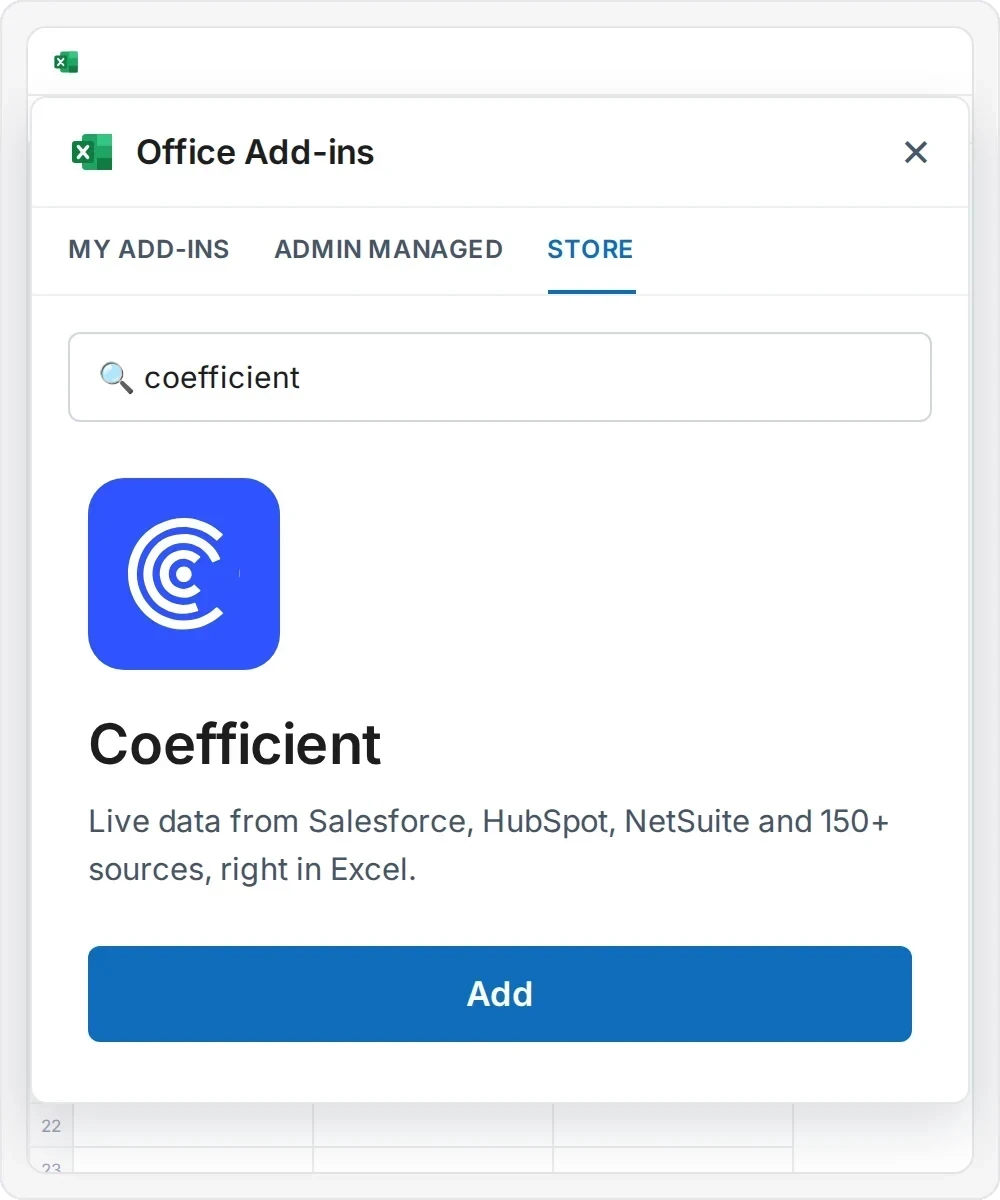
1. Add Coefficient to Excel

Install the Coefficient add-in from Office Add-ins or Microsoft AppSource, then open the Coefficient tab in Excel.
2. Connect Salesforce
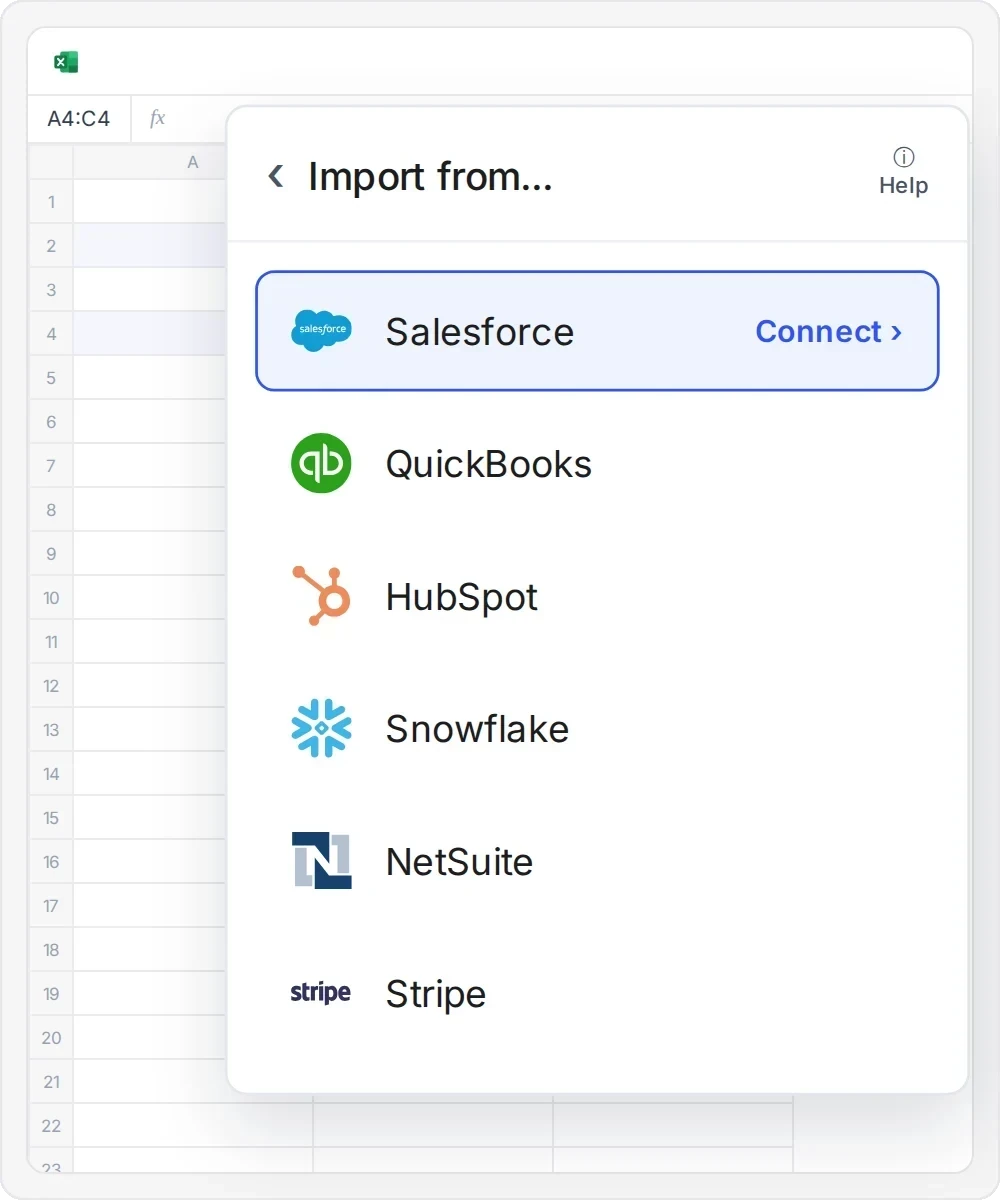
Your Salesforce admin installs the Coefficient connected app once. Then your team signs in and starts importing. See the admin setup.
3. Choose your data
Pick a report, select objects and fields, or write your own SOQL query.
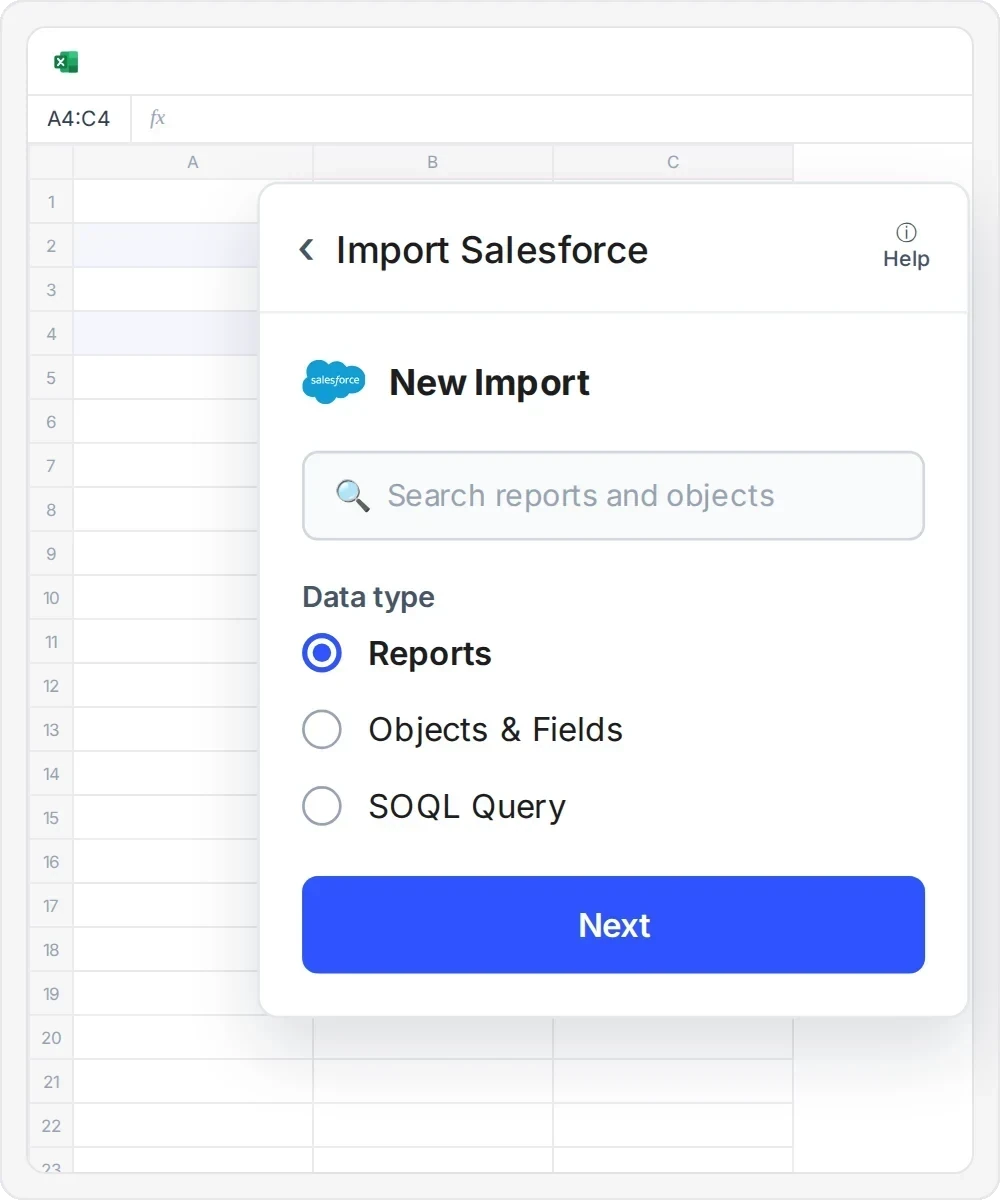
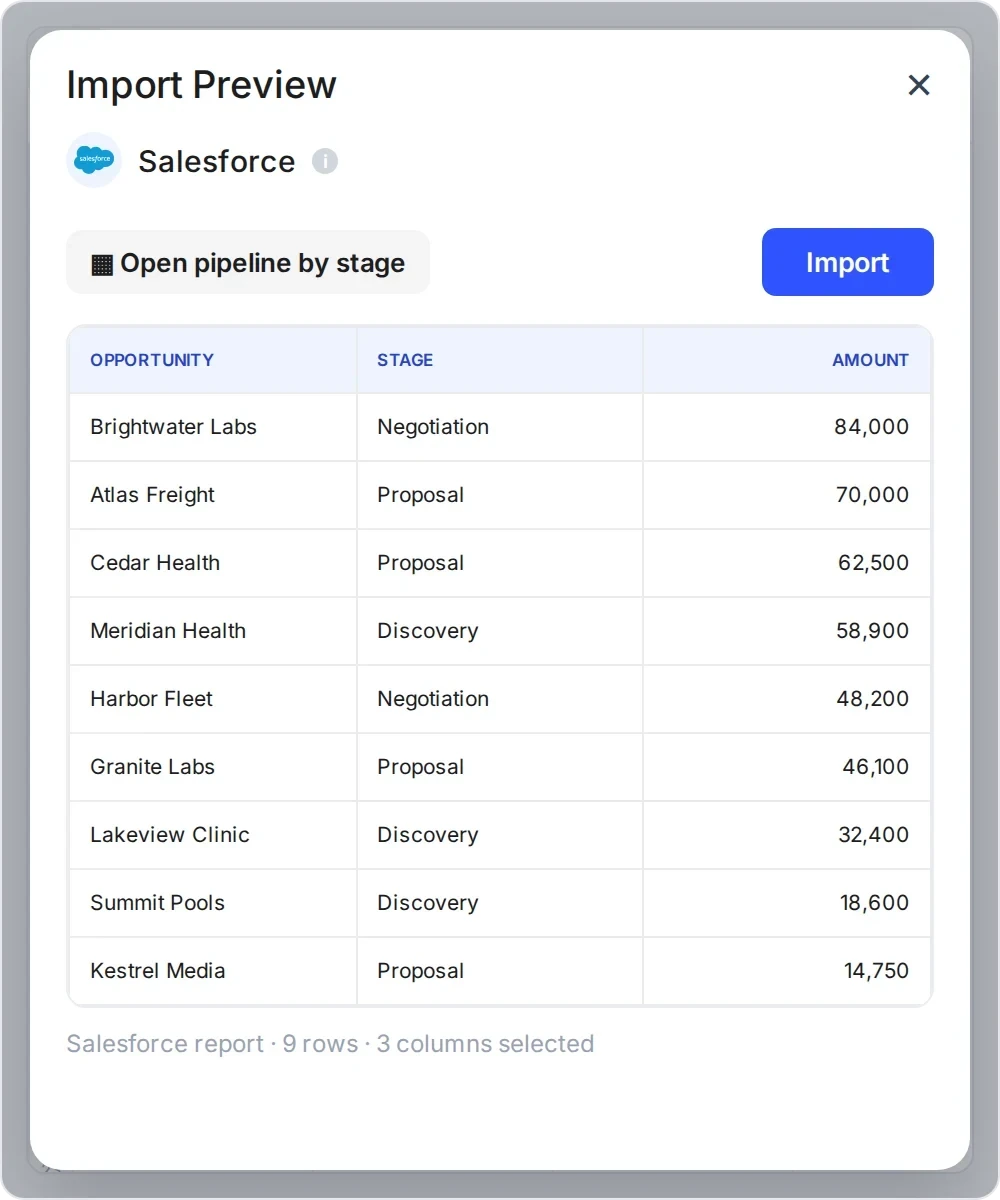
4. Preview and import
Check the preview, then import the results into your workbook.
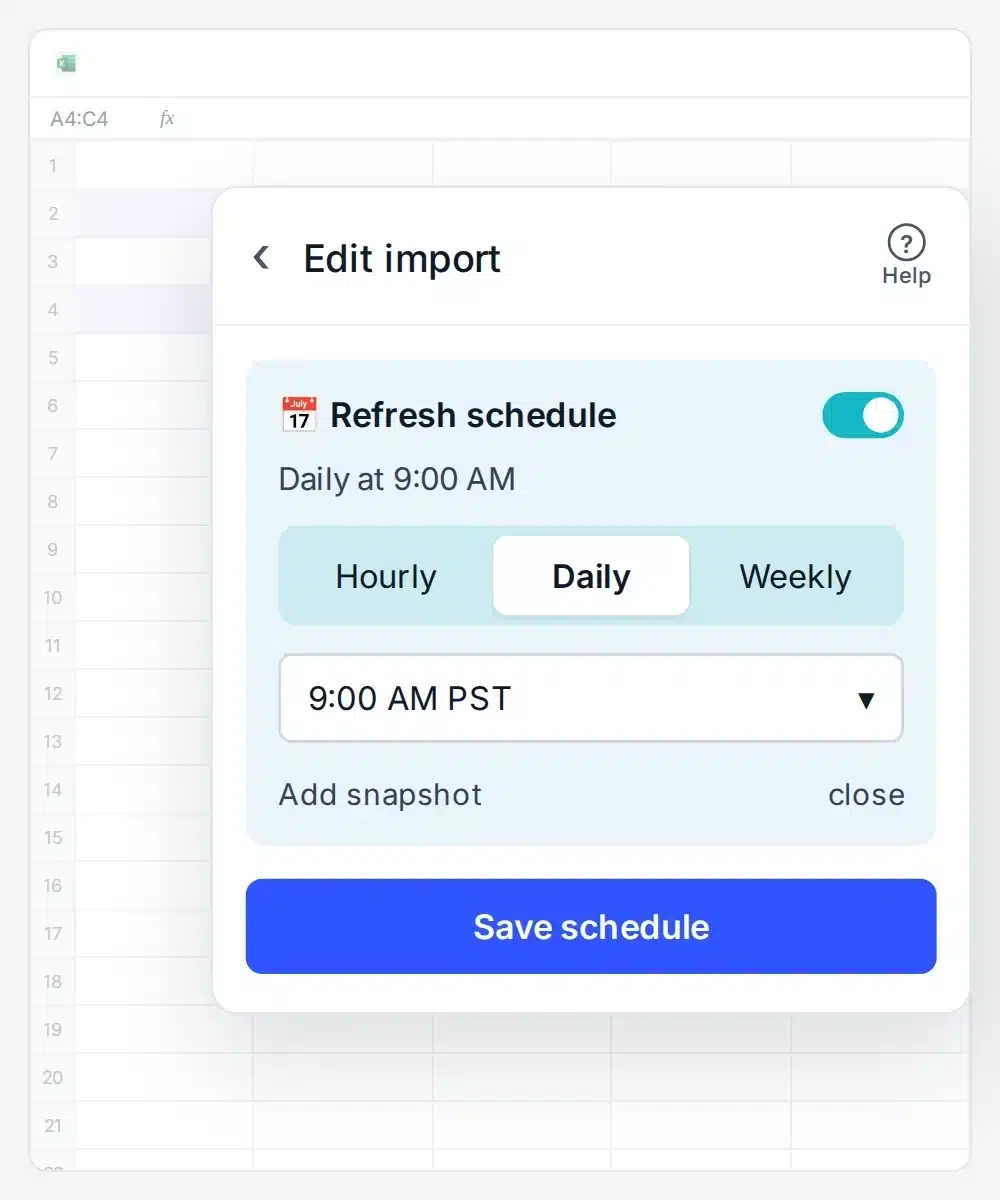
5. Save and schedule auto-refresh
Save the workbook to OneDrive, then set it to refresh hourly, daily or weekly.
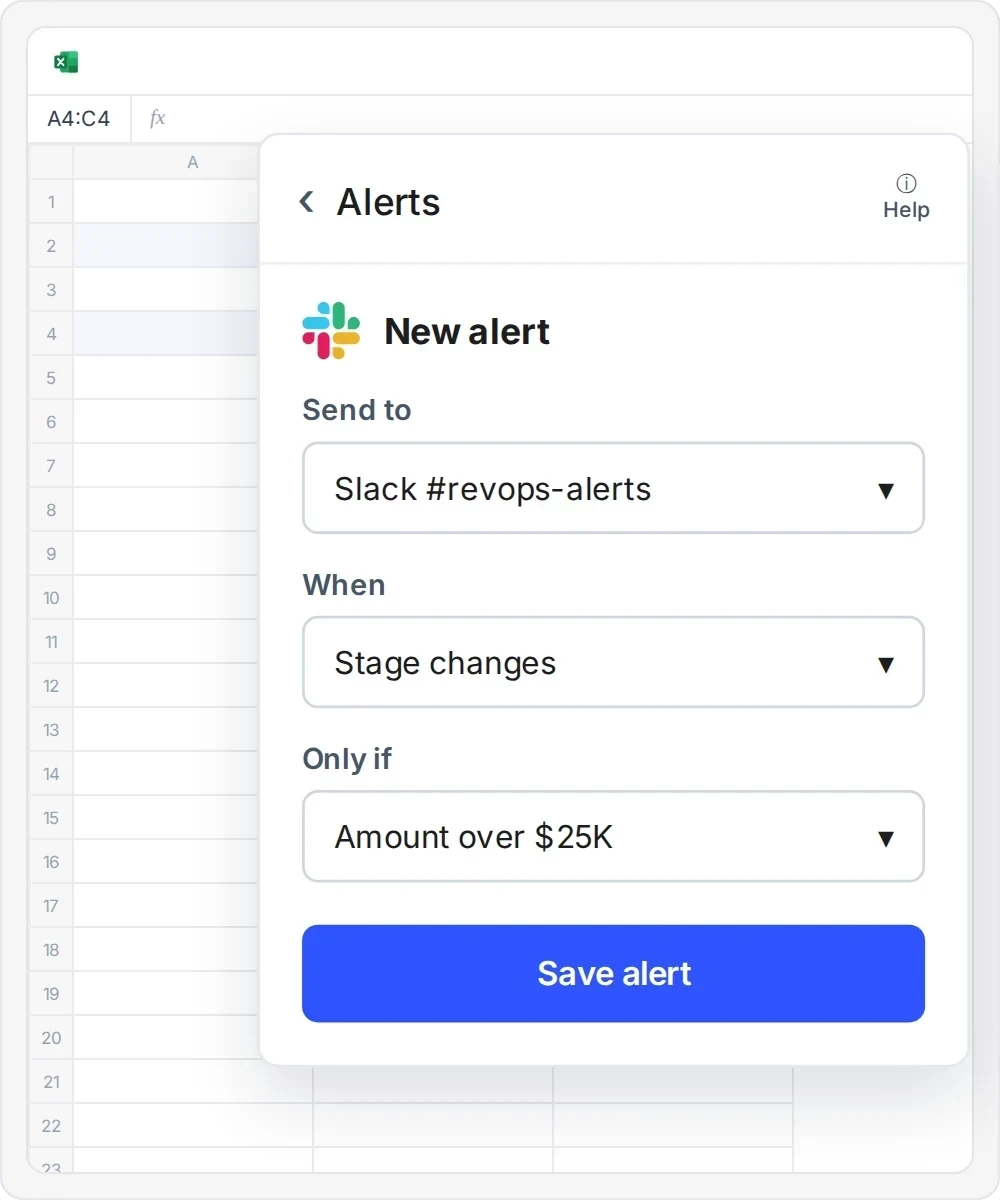
6. Set up alerts
Get Slack, Teams or email alerts when key numbers change. Monitor pipeline targets, commissions and more.
Ways to import Salesforce data into Excel
Pick a report, choose objects and fields, or write your own SOQL
 Sheets
 Excel
Same imports in Google Sheets and Excel
Sales Pipeline
Open deals by stage, owner and close date.Lead Source
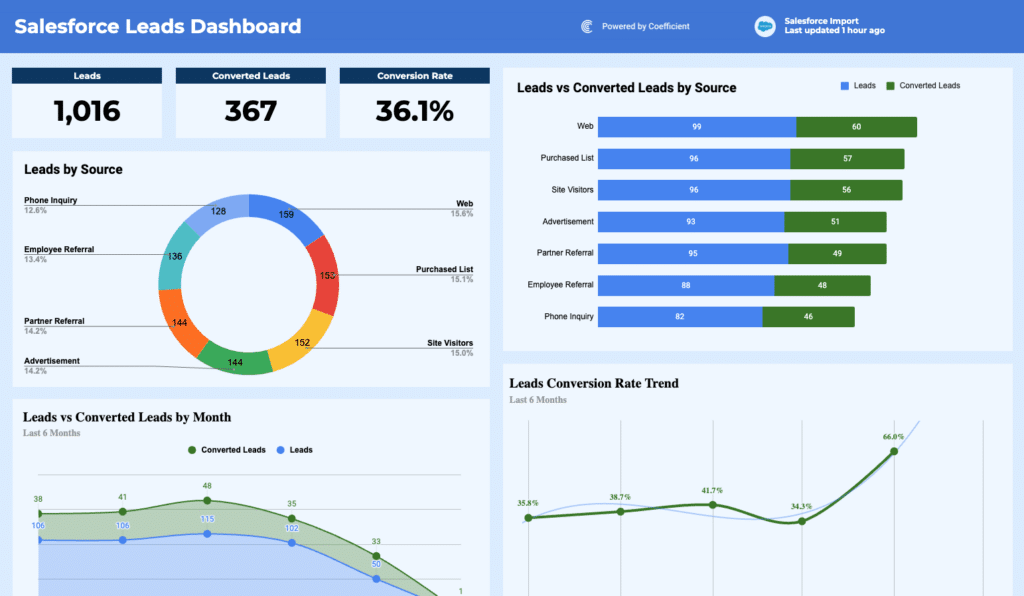
Leads and conversions by channel.Opportunity by Rep
Deal count and value per rep.Closed Won vs. Closed Lost
Win and loss trends by period.Sales Forecast
Commit and best case by quarter.Customer Lifetime Value
Revenue per account over time.Accounts by Industry
Account mix across industries.Top Accounts by Revenue
Your biggest accounts, ranked.Campaign Performance
Responses and pipeline by campaign.
Account
Firmographics, owners and hierarchy.Opportunity
Every deal field, standard and custom.Lead
Source, status and conversion.Contact
People, roles and account links.Campaign
Budget, status and dates.Campaign Member
Who responded to each campaign.Task and Event
Calls, emails, meetings and to-dos.User
Reps, roles and managers.Custom Objects
Any object your team built.
Custom SOQL queries
Your own query with the fields and filters you need.Related records
Parent and child fields in one query.

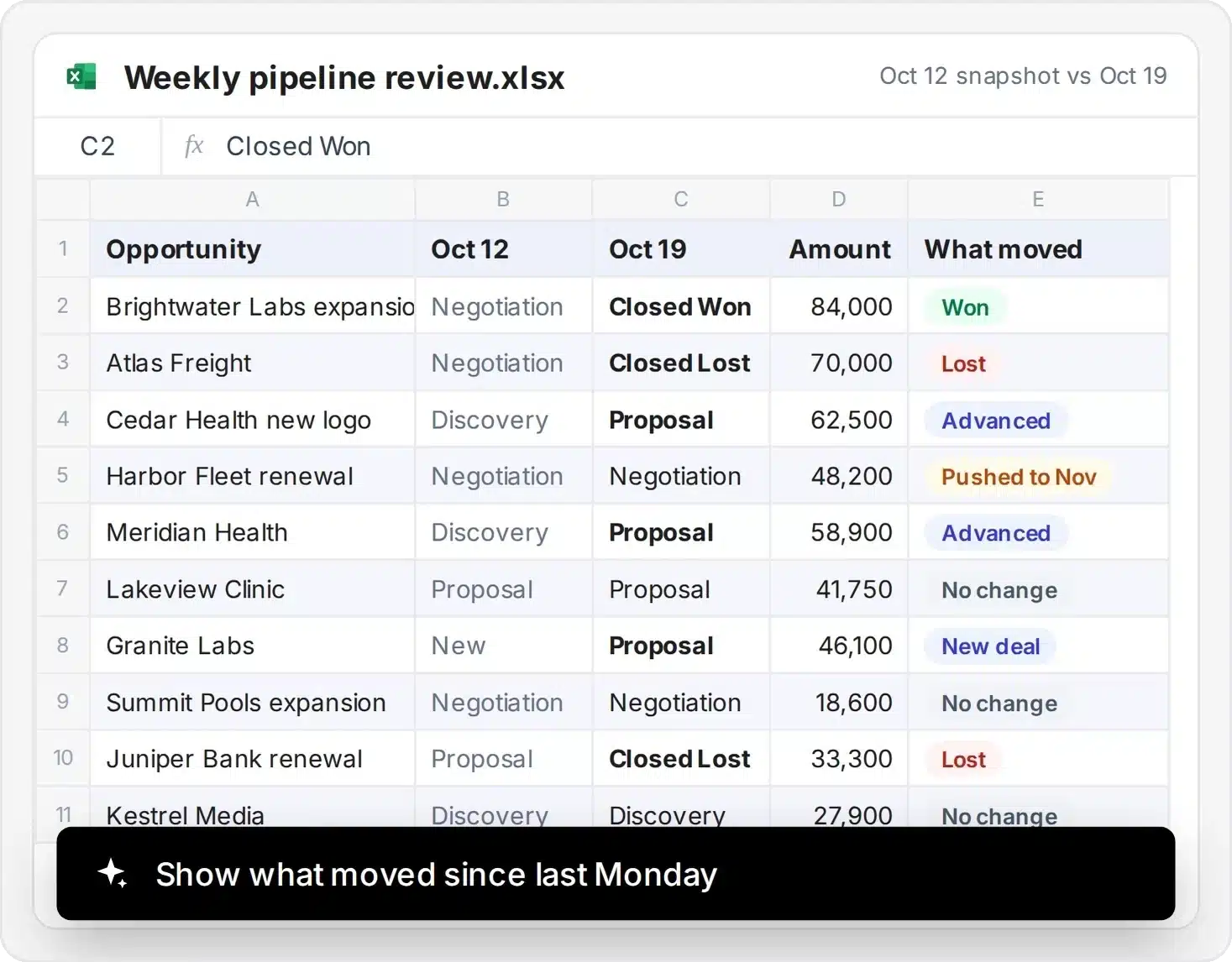
Salesforce is not the greatest at historical reporting. But seeing how a pipeline has changed week-over-week is super easy to do in Coefficient.

Historical snapshots
See how your Salesforce pipeline and data change over time
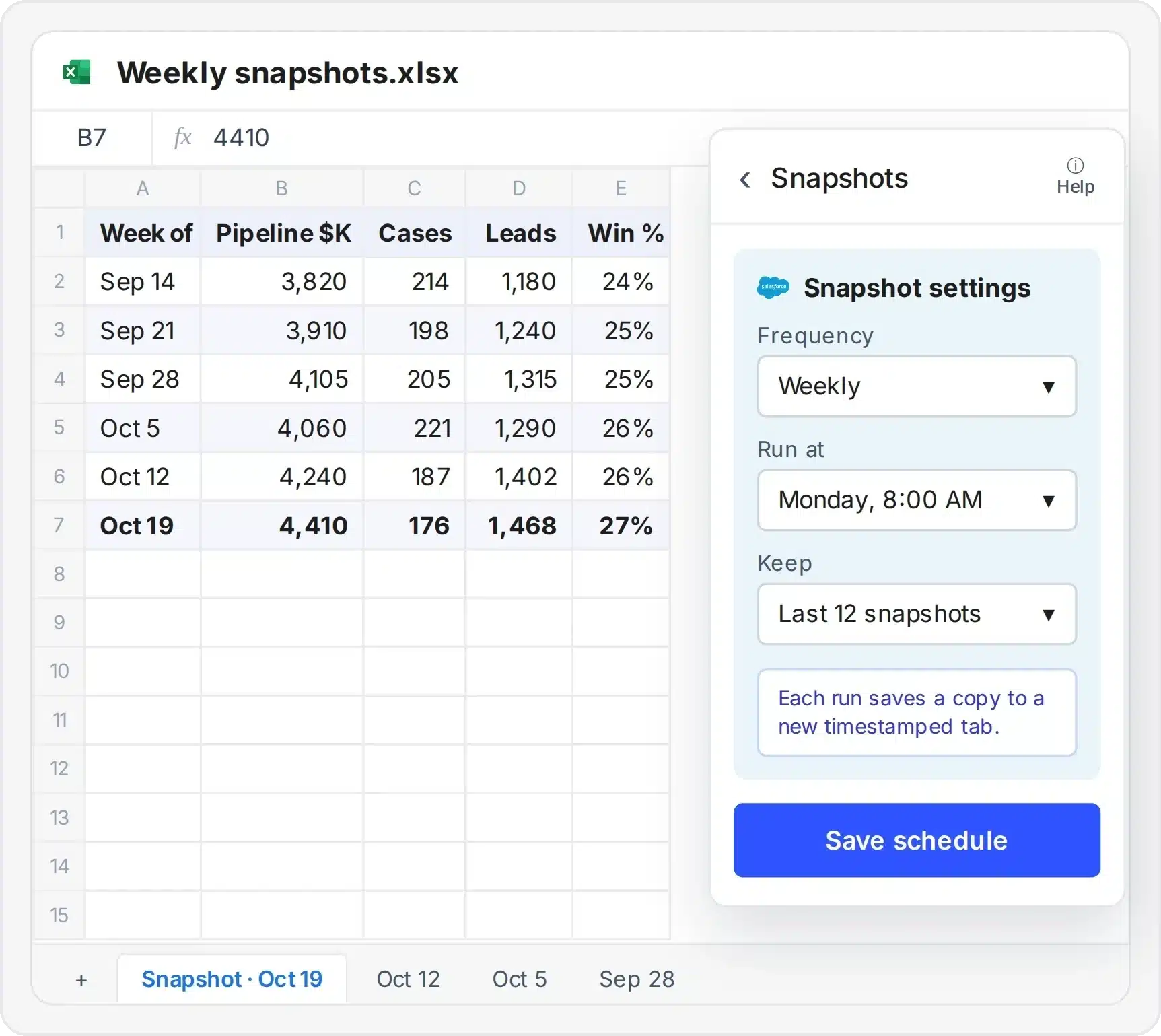
- Save any report or object to a timestamped tab on a schedule
- Compare pipeline value, stage and close dates across periods
- Keep the field history Salesforce overwrites
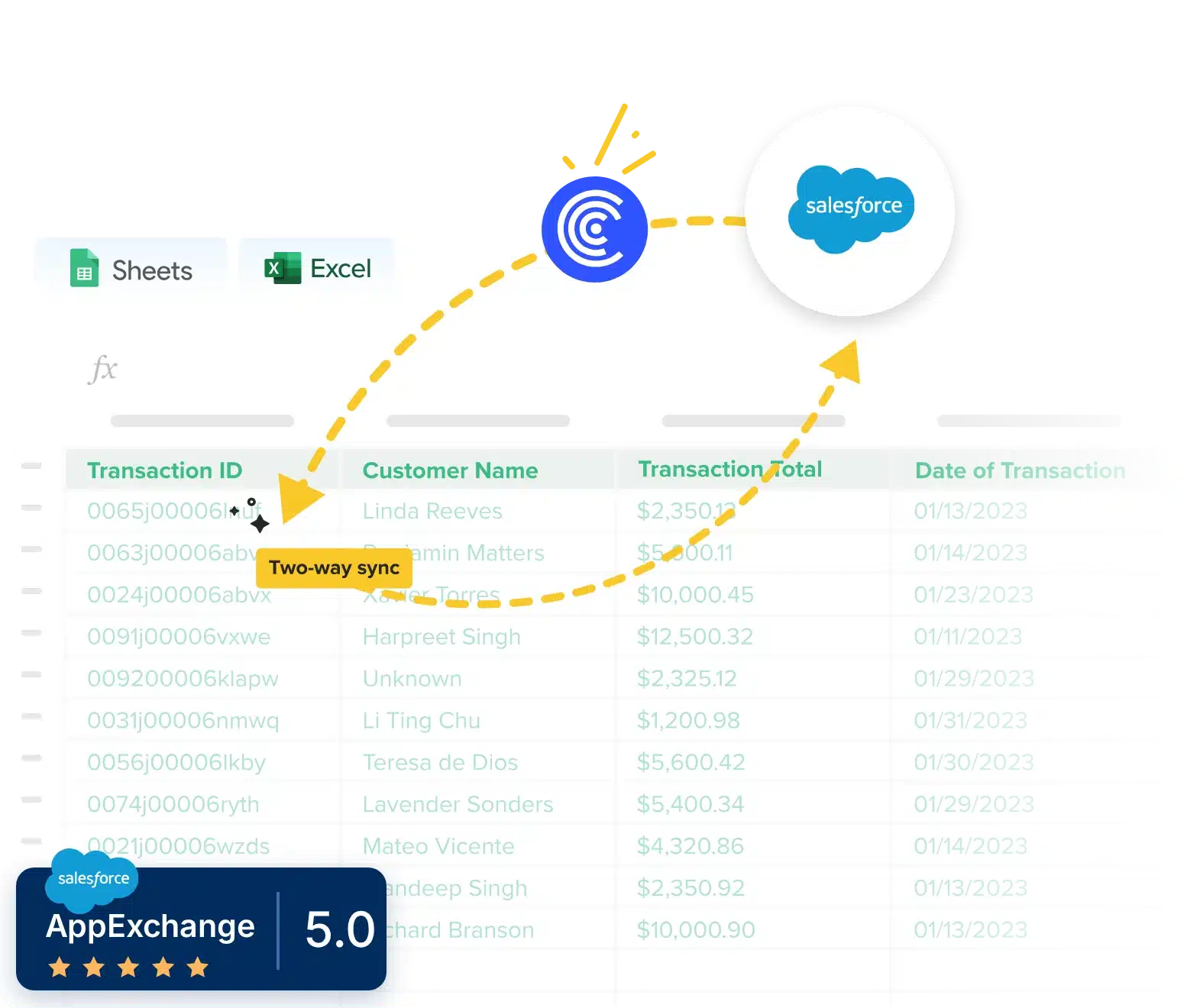
Two-way sync
Export reviewed updates from Excel to Salesforce
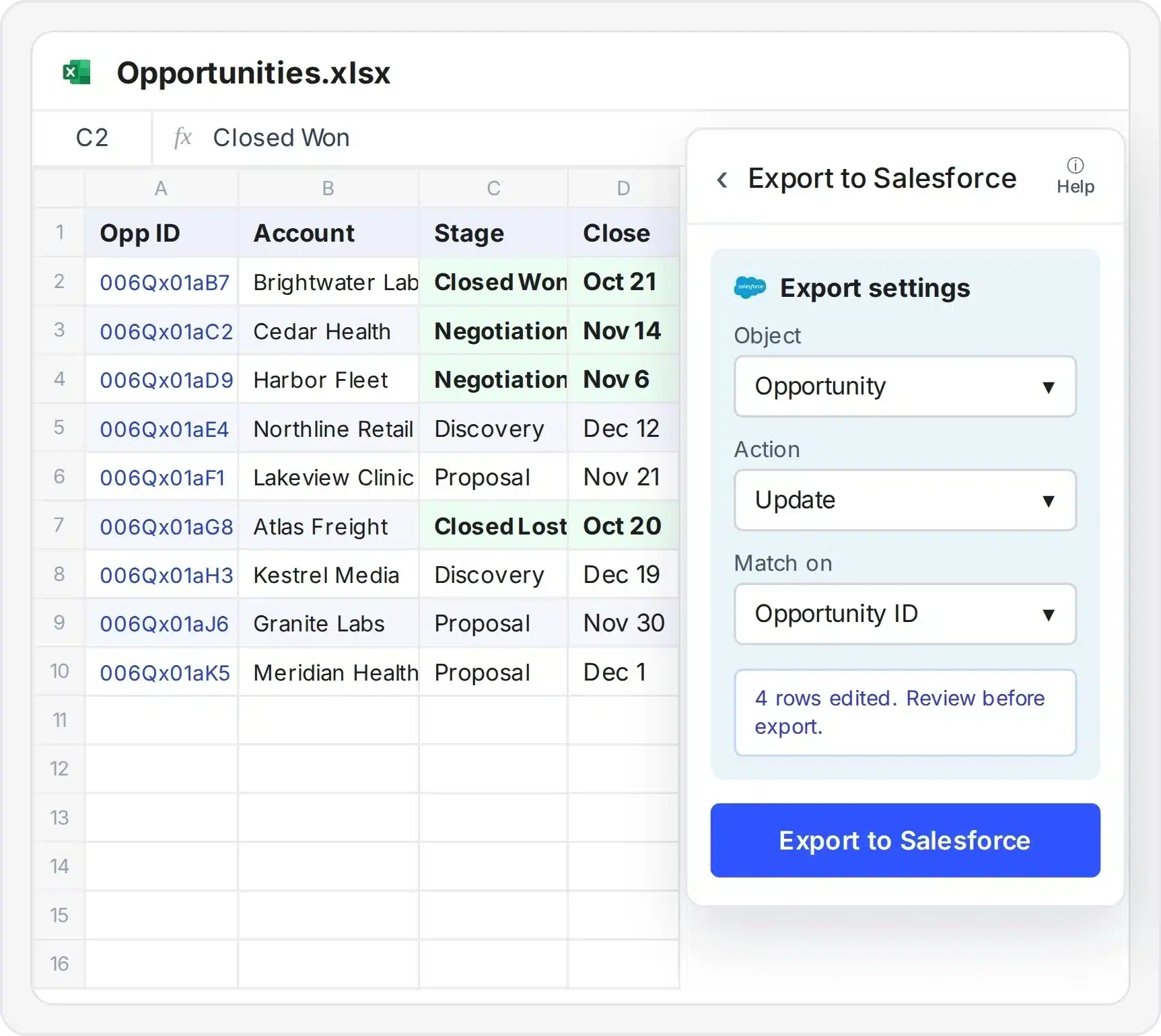
- Update, insert, upsert or delete records from your workbook
- Fix stages, owners and close dates in bulk
- Preview updates before anything is sent
AI Dashboards
Turn your Salesforce workbook into a live dashboard
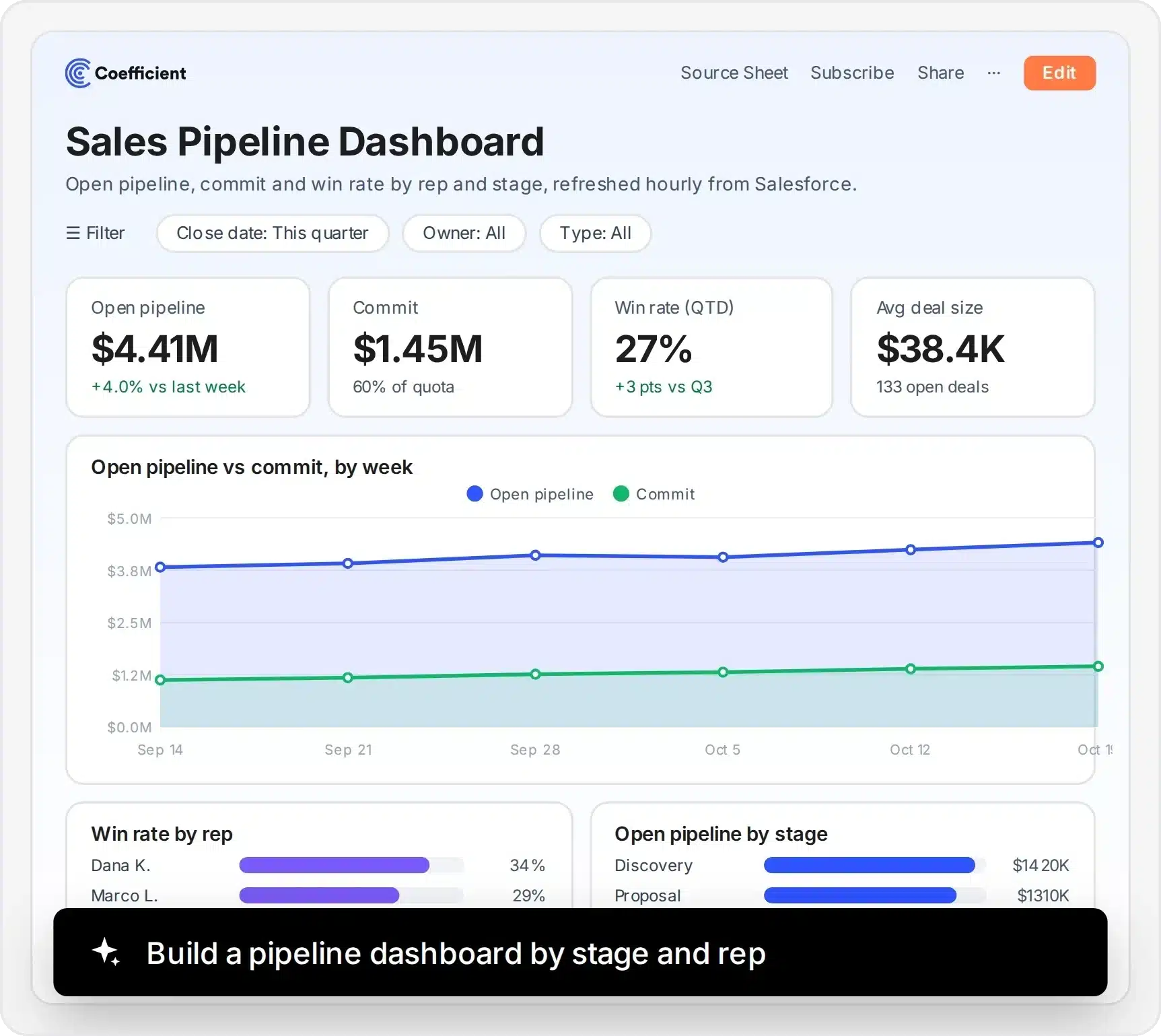
- Describe the dashboard and AI builds it from your workbook
- Share a live link, no Salesforce login needed
- Get Slack, Teams or email alerts when numbers change
150+ integrations
Blend Salesforce with 150+ other data sources

- Pull HubSpot, Gong and 150+ other sources into the same workbook
- Report on pipeline, billing and product data in one model
- No ODBC drivers, data warehouse or ETL tool needed
What RevOps teams build in Excel with Salesforce and Coefficient
Forecast vs quota dashboard
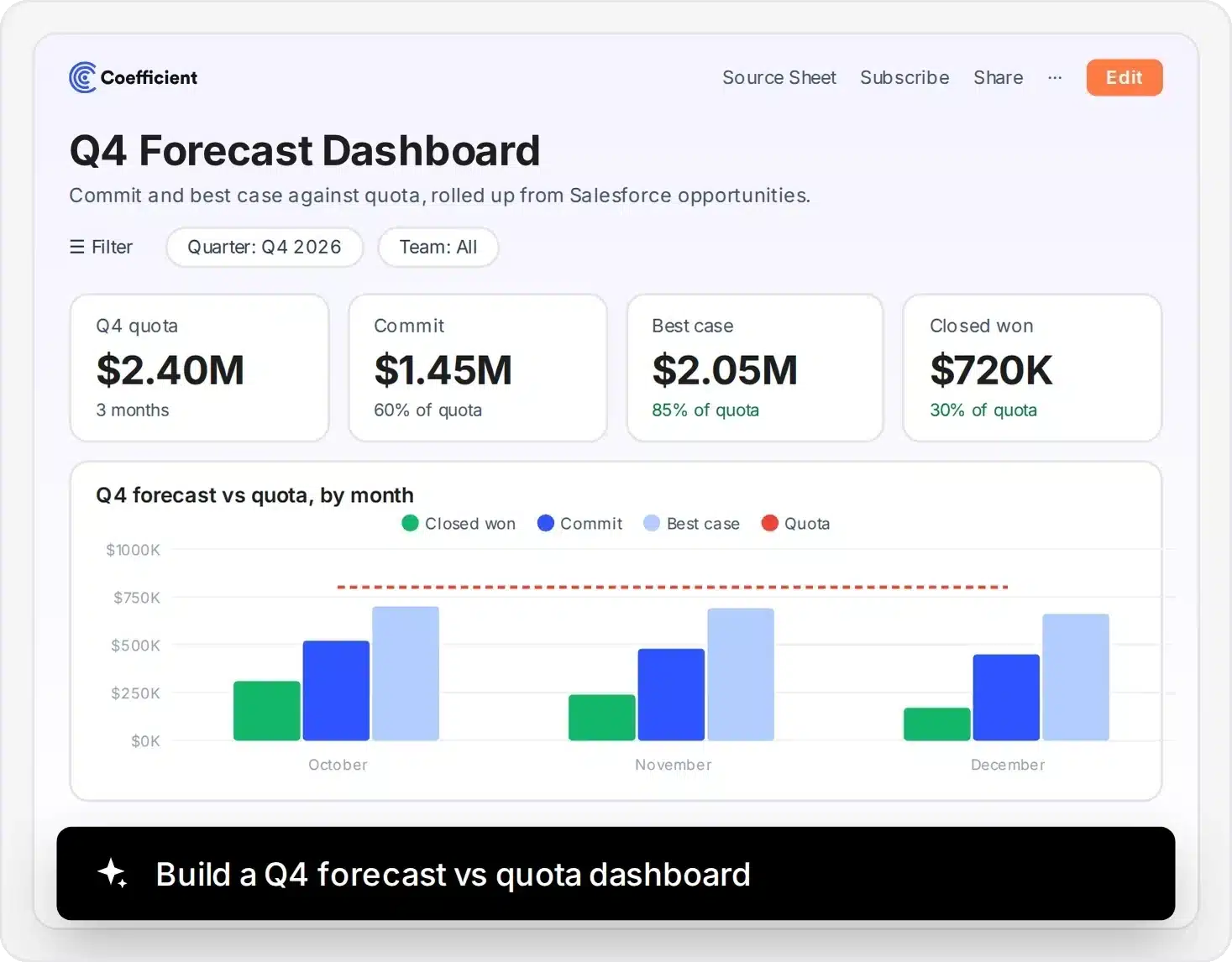
Weekly business reviews
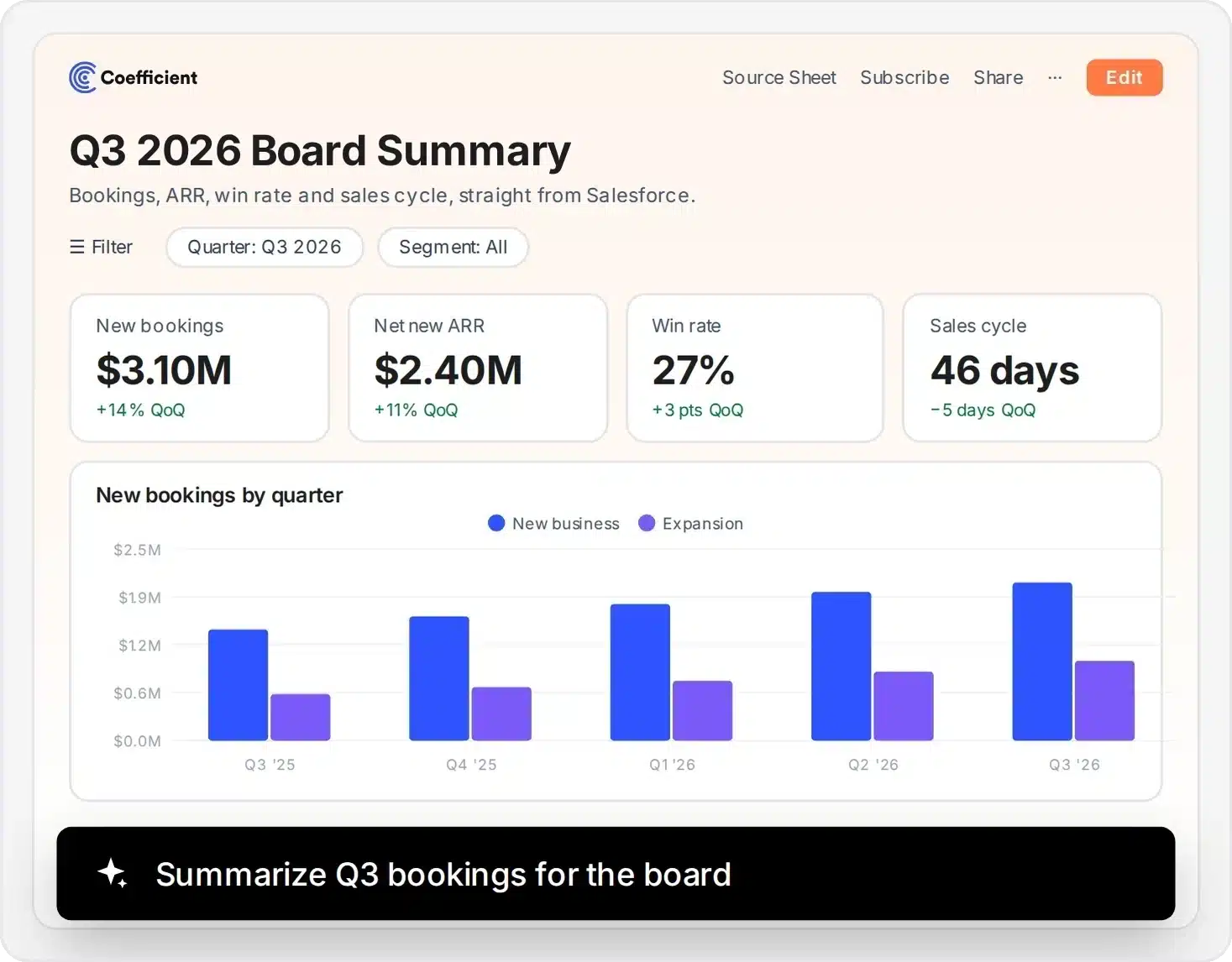
Board summary dashboard
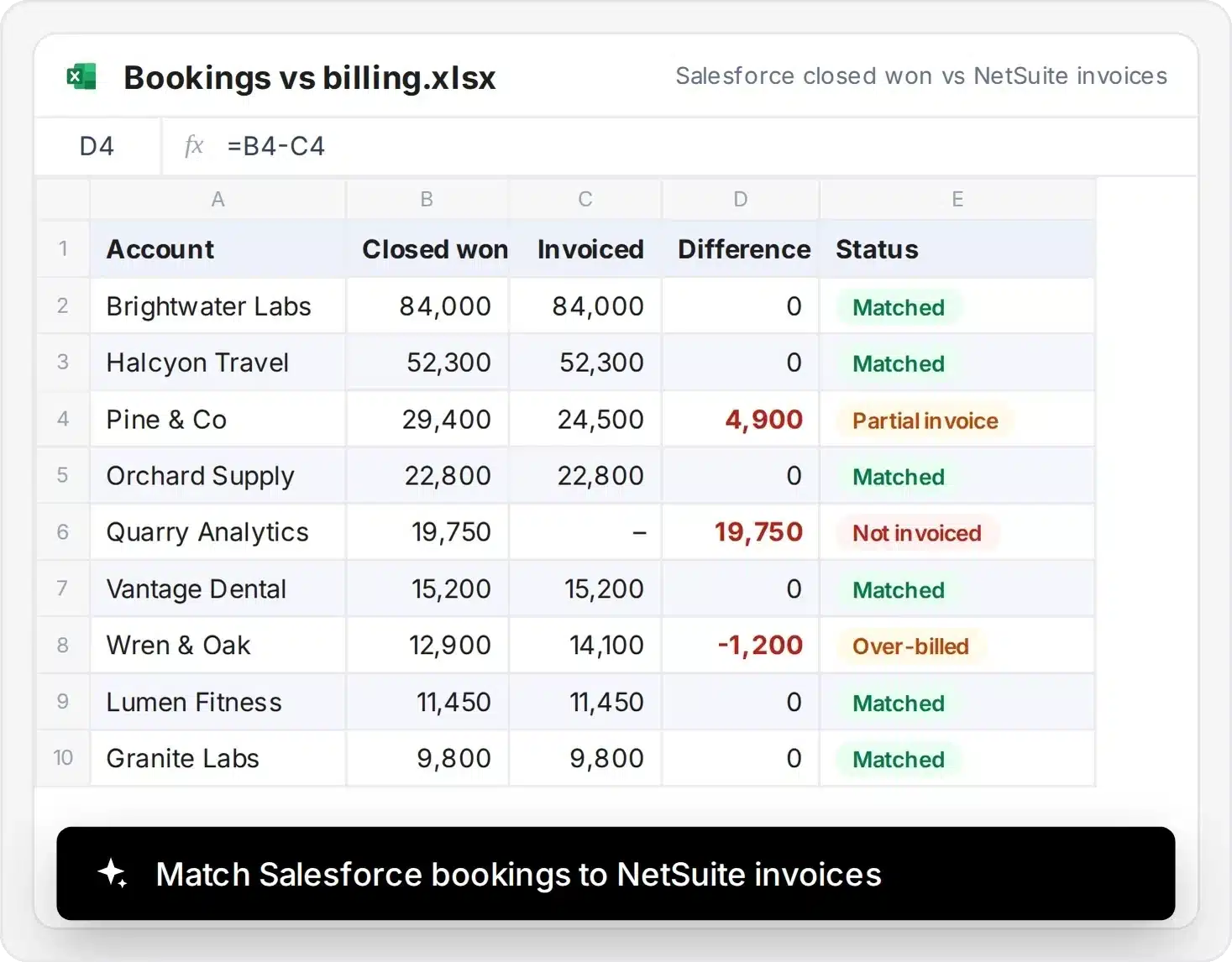
CRM and billing reconciliation
AI forecasting
Build quick forecasting models with AI
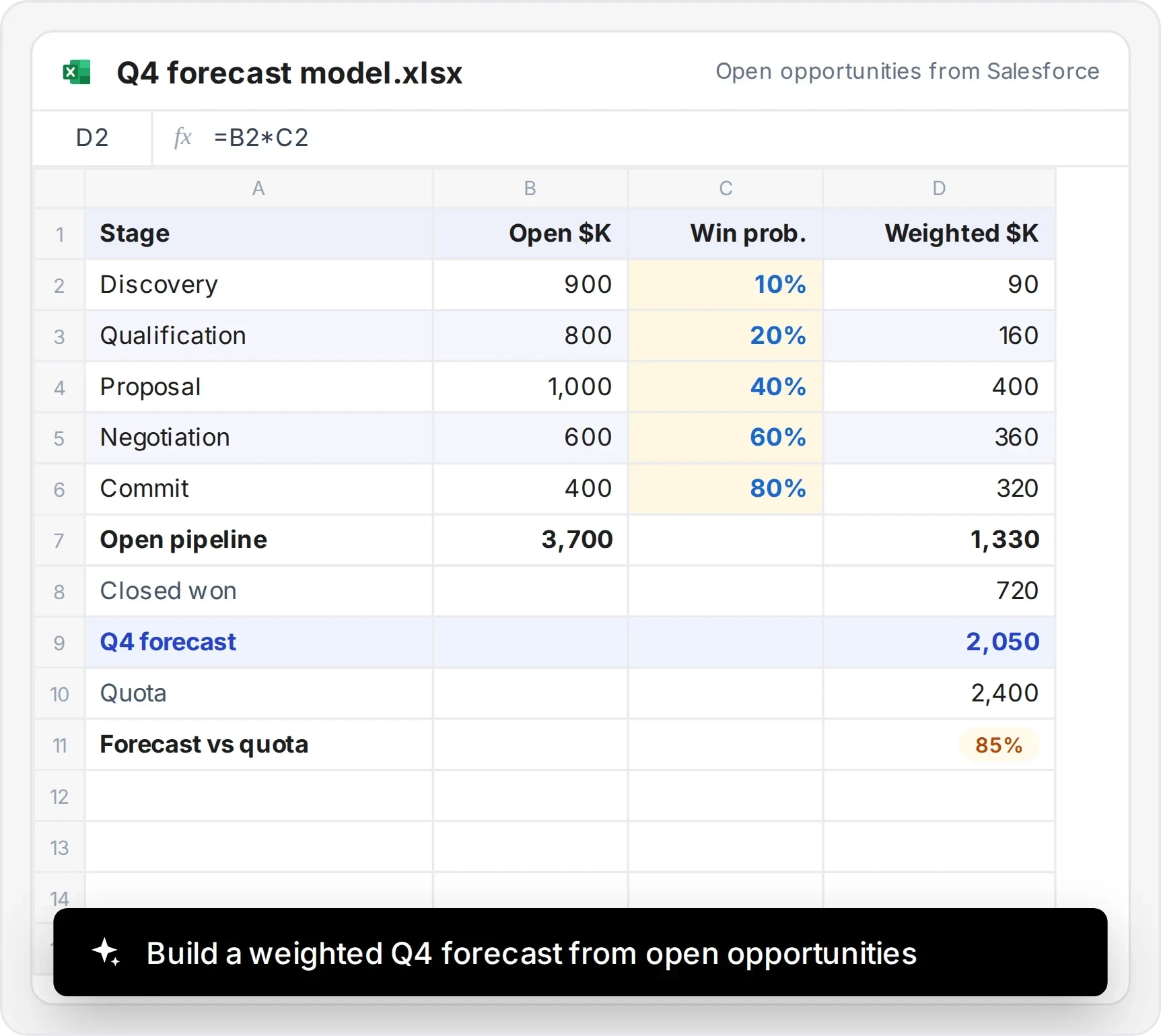
- Describe the forecast in plain English and AI builds the model
- Weight open pipeline by stage and close date
- Change win rates and see the forecast update
Coefficient vs. Salesforce report export vs. Data Loader
Compare import, refresh, writeback and history for Salesforce reporting in Excel.
| Coefficient | Salesforce report export | Salesforce Data Loader | |
|---|---|---|---|
| Get Salesforce data into a workbook | Reports, objects or SOQL queries. | Export one report at a time to .xlsx or CSV. | Export objects to CSV with SOQL. |
| Keep reports up to date | Scheduled refresh for workbooks on OneDrive. | A new manual export every time. | Manual exports, or the command-line version. |
| Send edits back to Salesforce | Update, insert, upsert or delete from the workbook. | Not possible. | Insert, update, upsert and delete from CSV files. |
| Track pipeline history | Scheduled snapshots to timestamped tabs. | Not available. | Not available. |
| Combine with other business data | HubSpot, Gong and 150+ sources in one workbook. | Salesforce only. | Salesforce only. |
| Get alerts when numbers change | Slack, Teams or email alerts from your workbook. | Not available. | Not available. |
| Use it in Google Sheets too | Yes, the same connector works in both. | Excel or CSV files only. | CSV files for any spreadsheet. |
| Pricing | Free plan with basic features. Paid plans start from $49/mo. | Included with Salesforce. | Free with Salesforce. |
What customers say about Coefficient

To have a dashboard that’s bookmarked on everyone’s Chrome, that they just click and go see, that’s huge. And they know it’s right.

The speed at which you can get something up and running to a massive amount of people that’s correct and visually appealing is huge.

Do you like having numbers at your fingertips at all times, live updating, so you know exactly where you stand across go-to-market?

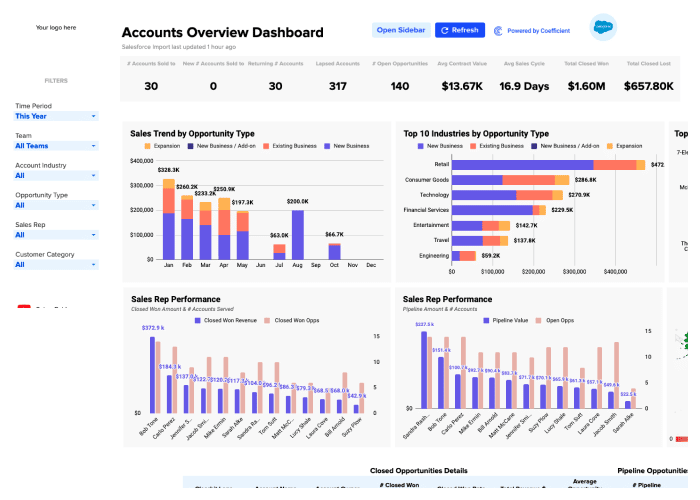
Start with a Salesforce reporting template
Pick a template, connect your Salesforce data and make the report your own.

Connect with the right access. Share with care.
Security, compliance, and control - without the enterprise sales cycle.
SSO & access control
Your identity provider. Your rules.
- SSO: Okta, Azure AD, Google Workspace, OneLogin
- Roles: Admin, Editor, Viewer
- Permissions: Control who accesses which data sources

Coefficient Salesforce connector capabilities at a glance
Import Salesforce reports, objects and SOQL results into Excel.
| What Coefficient supports | |
|---|---|
| Reports | Any Salesforce report your account can run |
| Objects and fields | Standard and custom objects, with the fields you choose |
| Custom SOQL | Your own SOQL query results |
| Scheduled refresh | Hourly, daily or weekly for workbooks on OneDrive |
| Two-way sync | Update, insert, upsert or delete records from the workbook |
| Historical snapshots | Save any import to a timestamped tab on a schedule |
| Alerts | Slack, Teams or email alerts when workbook values change |
| Team reporting | Share the workbook and dashboard, no Salesforce login needed |
| Cost | Free plan with basic features. Paid plans start from $49/mo |
Salesforce Excel add-in FAQs
Salesforce and Coefficient
Salesforce holds your CRM data. Coefficient connects that data to Excel so your team can refresh reports, build its own models and send reviewed updates back to the CRM.



Put live Salesforce data in Excel
No credit card required.