

Table of Contents


ASC 606 changed everything. Complex contract terms, performance obligations, and transaction pricing requirements now demand systematic revenue recognition tracking. Manual journal entry processes expose businesses to compliance risks, calculation errors, and audit trail gaps that invite regulatory scrutiny.
Growing companies face a tough choice. Balance ASC 606’s rigorous documentation demands with practical implementation that fits their operational capabilities and budget limitations.
This guide explores two strategic approaches—manual compliance methods versus automated tracking systems—so you can make informed decisions that protect your regulatory standing while maintaining operational efficiency.
Two ways to handle ASC 606 entries
Manual ASC 606 compliance
Manual ASC 606 implementation creates substantial operational overhead. It relies heavily on spreadsheet-based tracking systems and manual journal entry processes that introduce compliance risks at every step.
Spreadsheet tracking becomes unwieldy fast. Finance teams attempt to capture the five-step ASC 606 process through complex Excel workbooks. They create detailed worksheets for:
- Contract identification and mapping
- Performance obligation analysis
- Transaction price determination
- Allocation calculations across obligations
- Revenue recognition timing schedules
These spreadsheets track multiple contracts with varying performance obligations, modification dates, and pricing terms across dozens of tabs and thousands of rows. The complexity grows exponentially with business scale.
Contract modifications create calculation nightmares. Each contract amendment requires:
- Recalculation of standalone selling prices
- Reallocation of transaction prices across performance obligations
- Determination of whether modifications constitute separate contracts or adjustments
Spreadsheet formulas grow increasingly complex. Nested IF statements and lookup tables become fragile and difficult to audit.
Manual journal entries consume significant time. Finance professionals must translate spreadsheet calculations into general ledger entries while ensuring:
- Proper revenue recognition timing
- Correct contract asset/liability classification
- Full disclosure compliance
The repetitive nature of these entries—often hundreds per month for subscription businesses—creates opportunities for transcription errors and formula mistakes.
Documentation requirements expose audit gaps. ASC 606 demands comprehensive audit trails that manual systems struggle to provide. Spreadsheets lack:
- Built-in workflow approval mechanisms
- Automated timestamp logging
- Systematic rationale capture for accounting judgments
Finance teams resort to separate documentation processes, email communications, and informal decision records that create gaps during audit procedures.
Version control problems compound as you grow. Multiple team members update different spreadsheet sections simultaneously, creating conflicts and overwriting critical calculations. Email-based sharing leads to outdated version usage, while network drive storage lacks sophisticated check-in/checkout mechanisms.
Month-end close cycles extend from days to weeks. Manual reconciliation between spreadsheet calculations and general ledger balances requires detailed investigation of timing differences, allocation variances, and classification adjustments.
Automated ASC 606 tracking with live data
Modern automated solutions transform ASC 606 compliance. They convert manual spreadsheet management into systematic, audit-ready processes that scale with business growth.
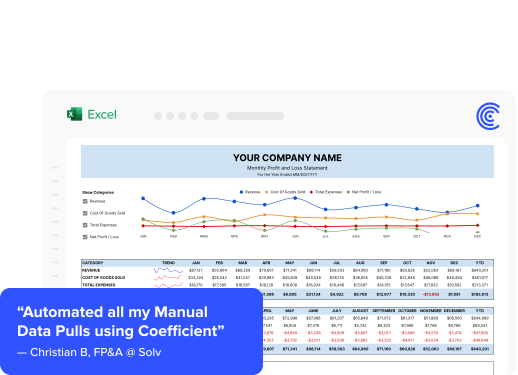
Coefficient enables sophisticated ASC 606 tracking by connecting live contract and billing data from CRM and ERP systems directly into enhanced spreadsheet environments. This approach combines familiar Excel/Google Sheets interfaces with real-time data connectivity that eliminates manual data entry while maintaining flexibility for complex calculations and custom business rules.
Live contract data integration solves the fundamental challenge. Keeping ASC 606 calculations current with underlying business transactions becomes automatic. Coefficient imports:
- Contract terms and modification dates
- Billing schedules and payment terms
- Performance milestones and delivery status
This real-time connectivity from systems like Salesforce, HubSpot, and NetSuite ensures revenue calculations reflect current contract status without manual export/import cycles.
Performance obligation identification becomes systematic. Automated spreadsheet logic analyzes contract terms against pre-defined criteria. Dynamic formulas identify distinct performance obligations based on:
- Contract language patterns
- Delivery terms and schedules
- Service categories and classifications
These automated assessments provide consistent application of ASC 606 principles while flagging unusual arrangements for manual review.
Transaction price allocation runs automatically. Standalone selling price (SSP) calculations become systematic through automated data imports. Current pricing data flows from:
- Product catalogs and price lists
- Historical transaction databases
- Competitive analyses and market data
Automated allocation formulas distribute transaction prices proportionally while accommodating discounts, variable consideration constraints, and contract-specific adjustments.
Revenue recognition timing tracks performance progress. Automated connections to project management systems, shipping databases, and service delivery platforms capture:
- Completion percentages and milestone achievements
- Delivery confirmations and acceptance dates
- Service performance metrics and progress indicators
This live connectivity enables precise revenue recognition timing without manual status updates.
Compliance reporting generates automatically. ASC 606 disclosure requirements flow through systematically maintained data structures. Automated reports provide:
- Contract balances and remaining obligations
- Disaggregated revenue categories
- Significant judgments and estimates
- Period-over-period performance analysis
These reports pull directly from live transaction data, ensuring accuracy and eliminating manual compilation processes.
Audit trails maintain themselves. Automated systems capture user actions, timestamp modifications, and maintain complete revision histories. Unlike manual spreadsheets, they provide systematic documentation that satisfies audit requirements without additional administrative overhead.
Common ASC 606 compliance challenges
Manual ASC 606 implementation creates predictable operational challenges that impact compliance effectiveness and audit readiness.
Calculation errors occur frequently. Research indicates that 88% of large spreadsheets contain material errors. Individual mistakes can cost hundreds of thousands in revenue misstatements or regulatory penalties. ASC 606’s multi-step calculation requirements—particularly for contracts with multiple performance obligations and variable consideration—exponentially increase error probability through compound formula complexity.
Audit trail inadequacies emerge consistently. Manual processes lack systematic documentation of:
- Accounting judgments and rationales
- Performance obligation identification support
- Standalone selling price determinations
- Contract modification assessments
Auditors frequently request additional documentation that manual systems cannot easily provide, leading to audit delays and potentially adverse findings.
Compliance reporting becomes difficult. ASC 606 disclosure requirements demand detailed contract information, revenue disaggregation, and remaining performance obligation quantification. Spreadsheet-based systems struggle to maintain this data accurately. Month-end reporting cycles become lengthy reconciliation exercises rather than systematic compilation processes.
Month-end processes consume increasing resources. As contract volumes increase, manual calculation verification, general ledger reconciliation, and disclosure preparation consume progressively more time. Close cycles extend while available bandwidth for forward-looking financial analysis decreases.
Streamline your ASC 606 compliance
Successful ASC 606 implementation prioritizes operational sustainability over technical sophistication. Growing businesses need compliance approaches that scale with transaction volumes while maintaining audit readiness and regulatory accuracy.
Automated compliance solutions eliminate the manual maintenance overhead that makes spreadsheet-based systems unsustainable as businesses grow. Live data connectivity ensures calculations remain current with underlying transactions, while systematic documentation processes create audit trails that satisfy regulatory requirements without additional administrative burden.
The most effective implementations leverage familiar tools—enhanced spreadsheets with live data connectivity—rather than requiring expensive specialized software or extensive technical training. This approach enables finance teams to maintain sophisticated ASC 606 compliance using interfaces they understand while benefiting from automated data management and calculation reliability.
Ready to transform your ASC 606 compliance from manual spreadsheet management to automated, audit-ready processes? Get started with Coefficient and discover how live data integration enables sophisticated revenue recognition tracking without the operational overhead and compliance risks of manual systems.