

Finance teams are drowning in spreadsheet chaos. Monthly closes drag on for weeks. Budget cycles consume entire quarters. Manual data consolidation eats up hours that could be spent on strategic analysis.
Datarails promises to solve these pain points by transforming Excel into a powerful FP&A platform, but their opaque pricing model and narrow focus on financial planning create barriers for growing businesses. Understanding Datarails’ true costs—and exploring alternatives like Coefficient—is essential before committing to expensive enterprise software.
This comprehensive guide reveals everything about Datarails pricing, uncovers hidden implementation costs, and shows why thousands of finance teams are choosing more transparent, flexible solutions.
- What is Datarails?
- Datarails pricing plans overview
- Datarails implementation and setup costs
- Datarails custom pricing structure
- Hidden costs and considerations
- Datarails vs. Coefficient: Pricing comparison
- Datarails customer reviews and testimonials
- Why growing businesses choose Coefficient over Datarails
- Frequently asked questions
What is Datarails?
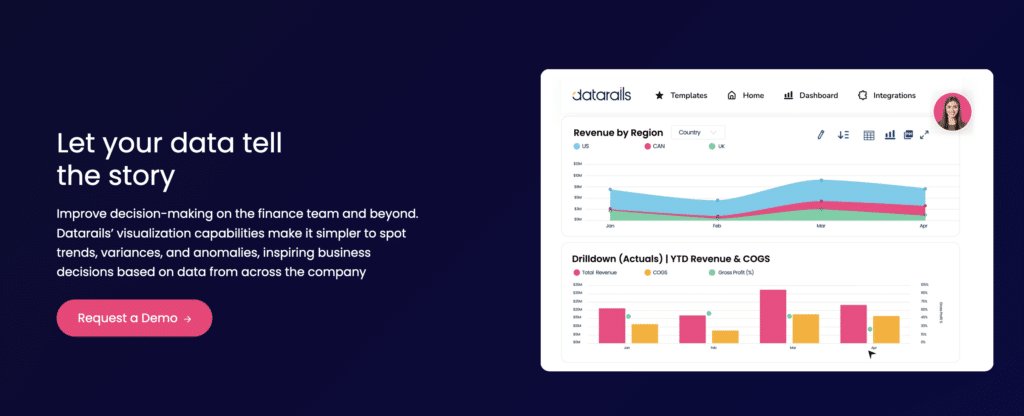
Datarails is a financial planning and analysis (FP&A) platform specifically designed for finance teams who live in Excel. The company positions itself as a solution that “supercharges” Excel by adding:
- Cloud-based data consolidation
- Automated reporting capabilities
- Collaborative planning tools
All without forcing users to abandon their familiar spreadsheet environment.
Target users: Mid-market finance teams struggling with manual data collection, version control issues, and time-intensive reporting processes. Datarails connects to various financial data sources, consolidates information in the cloud, and enables users to build budgets, forecasts, and reports using Excel as the interface.
Core value proposition: Maintaining Excel’s flexibility while adding enterprise-grade data management.
Significant limitations compared to modern platforms
Datarails has major restrictions that growing businesses should consider:
- Financial data only – Teams using marketing platforms, CRMs, or operational databases must use additional tools
- Substantial setup time – Often requires professional services engagements that add significant costs
- Complex implementation – Typically takes 3-6 months to fully deploy
Coefficient offers a broader approach with 70+ data sources spanning finance, marketing, sales, and operations. While Datarails focuses narrowly on FP&A workflows, Coefficient supports comprehensive business intelligence needs with transparent pricing and no setup fees.
The fundamental difference lies in accessibility: Datarails serves finance-specific use cases with complex implementations, while Coefficient democratizes data access across entire organizations with simple, self-service setup.
Datarails pricing plans overview
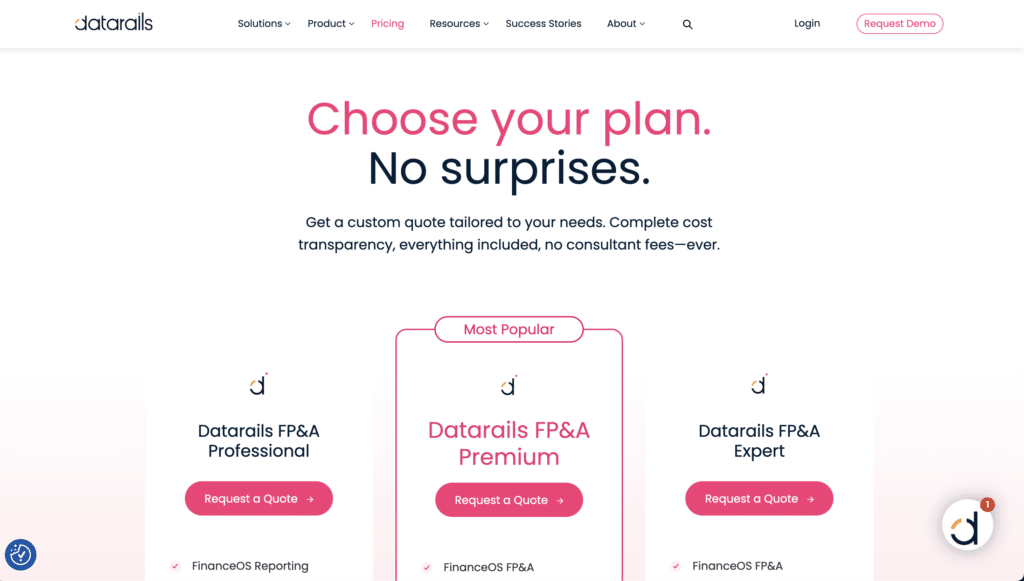
Datarails uses a custom pricing model with no published rates or transparent plan tiers. Unlike many SaaS platforms, they require prospects to engage in sales consultations to receive pricing information, making it impossible to evaluate costs without significant time investment.
The pricing philosophy reflects an enterprise-software approach where costs vary dramatically based on:
- Company size
- Data sources
- User count
- Implementation complexity
Industry research suggests Datarails pricing typically starts around $500-1,000+ per month for small implementations, with costs scaling rapidly for larger organizations.
Challenges with opaque pricing
This approach creates several problems for prospects:
- No cost comparison without lengthy sales processes
- Difficult budget planning when pricing remains unknown until deep in evaluation cycles
- Surprise quotes that exceed initial expectations due to required professional services and setup fees
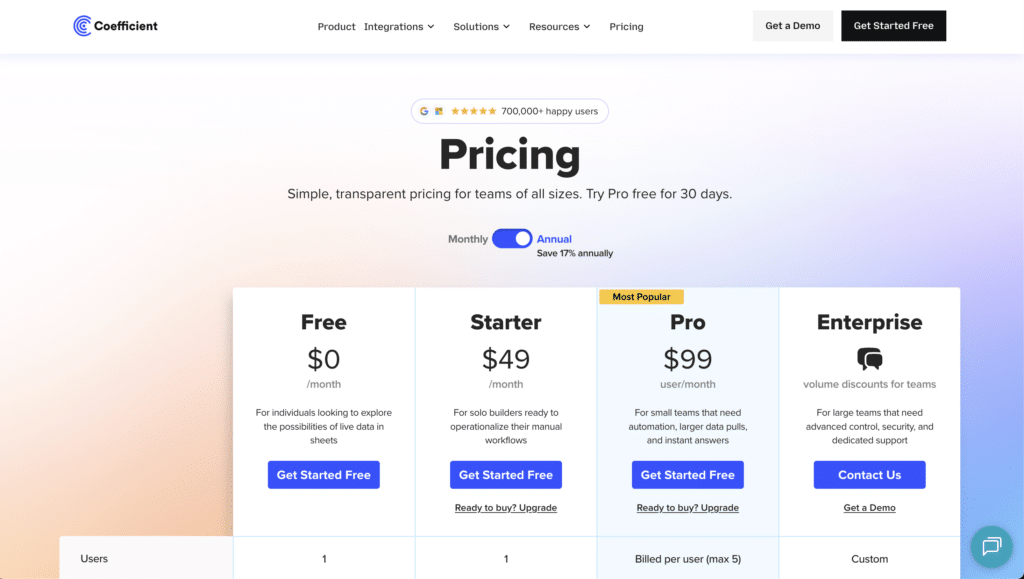
The lack of transparent pricing contrasts sharply with modern SaaS solutions. Coefficient publishes clear pricing starting at $49/month for comprehensive data integration capabilities, allowing teams to make informed decisions without sales pressure or hidden costs.
Datarails’ custom pricing model often includes several components: base platform licenses, implementation services, training, and ongoing support—all priced separately and varying by engagement complexity.
Datarails implementation and setup costs
Beyond base platform costs, Datarails typically requires significant implementation investments that substantially increase total ownership expenses. These setup costs often surprise prospects who focus only on recurring subscription fees during initial evaluations.
Professional services requirements
Most Datarails implementations require professional services engagements costing $10,000-50,000+ depending on complexity. These services include:
- Data mapping and integration setup – Connecting financial systems and configuring data flows
- Model building and customization – Creating budgets, forecasts, and reporting templates
- User training and change management – Teaching teams to use the Excel add-in and web interface
- Ongoing optimization – Quarterly business reviews and model adjustments
Hidden implementation costs
Customer reviews consistently mention unexpected costs that emerge during implementation:
- Extended timelines – Projects often take 3-6 months longer than projected, increasing services costs
- Additional data sources – Connecting non-standard systems requires custom development work
- Training extensions – Complex interfaces necessitate additional user education beyond standard packages
- Maintenance overhead – Ongoing model updates and troubleshooting require continued services engagement
One verified customer noted: “What started as a $30K annual commitment became $75K+ with implementation, training, and first-year support.”
Comparison with alternatives
Coefficient includes setup support at no additional cost across all plans. Users can connect data sources, build reports, and start automating workflows within hours rather than months. The self-service approach eliminates implementation risk and reduces total cost of ownership significantly.
Datarails custom pricing structure
Datarails pricing negotiations typically involve several variable factors that create wide cost ranges depending on specific requirements and negotiation outcomes.
Pricing factors
- Company size and revenue – Larger organizations face higher base pricing, often using revenue multiples or employee counts as pricing anchors
- User count – Per-user pricing varies from $100-300+ monthly depending on access levels and feature requirements
- Data sources and complexity – Each connected system may incur additional setup and maintenance costs
- Support level – Premium support packages with faster response times and dedicated account management command significant premiums
- Contract length – Multi-year commitments may offer discounts but create long-term vendor lock-in risks
Typical pricing ranges
Based on customer reviews and industry reports, Datarails pricing typically falls into these ranges:
- Small businesses (10-50 employees): $500-2,000/month
- Mid-market (50-200 employees): $2,000-8,000/month
- Enterprise (200+ employees): $8,000-25,000+/month
Contract terms
Most Datarails agreements require annual commitments with limited flexibility for scaling down or canceling mid-contract. This creates risks for growing businesses whose needs may change or who discover the platform doesn’t meet expectations after implementation.
Hidden costs and considerations
Datarails implementations involve numerous hidden costs that substantially inflate total ownership expenses beyond initial pricing discussions.
Ongoing professional services
Most customers require continued consulting beyond initial implementation:
- Quarterly model updates – Budgets and forecasts need regular refreshing as business conditions change
- New integration requests – Adding data sources or modifying existing connections typically requires professional services
- Advanced reporting needs – Custom dashboards and analyses often necessitate additional development work
- User training – Employee turnover requires ongoing education investments
Technical maintenance
The Excel-based architecture creates unique maintenance challenges:
- Version control issues – Multiple users working in Excel require careful coordination and frequent reconciliation
- Performance problems – Large datasets can cause Excel slowdowns and crashes, requiring optimization services
- Integration failures – Data connections may break due to source system changes, requiring technical support
- Security concerns – Excel files with sensitive financial data need careful access control and audit capabilities
Opportunity costs
Datarails’ narrow focus on financial planning means teams often need additional tools for comprehensive business intelligence:
- Marketing analytics – Requires separate platforms for campaign performance and attribution analysis
- Sales reporting – CRM integration may need additional business intelligence solutions
- Operational metrics – Supply chain, customer service, and other operational data requires different tools
A verified G2 reviewer wrote: “The platform works for financial planning, but we ended up needing three other tools to get complete business visibility. Total software costs tripled from our original Datarails budget.”
Coefficient’s transparent alternative
Coefficient eliminates hidden costs through transparent, all-inclusive pricing. Setup is self-service, training is built into the interface, and 70+ data sources handle comprehensive business intelligence needs without requiring additional tools or services.
Datarails vs. Coefficient: Pricing comparison
| Feature | Datarails (Est. $2,000+/month) | Coefficient Starter ($49/month) | Coefficient Pro ($99/month) |
| Data Sources | Financial systems only | 3 sources included | 6 sources included |
| Setup Cost | $10,000-50,000+ services | $0 – Self-service | $0 – Self-service |
| Implementation Time | 3-6 months | Same day | Same day |
| User Training | Professional services required | Built-in guidance | Built-in guidance |
| Data Source Types | Financial/ERP focus | All business systems | All business systems |
| AI Features | None | ✅ AI Sheets Assistant | ✅ AI Sheets Assistant |
| Monthly Contracts | Annual only | ✅ Available | ✅ Available |
| Transparent Pricing | No | ✅ Published rates | ✅ Published rates |
| Annual Cost | $24,000-60,000+ | $588 | $1,188 |
*Excluding implementation and professional services costs
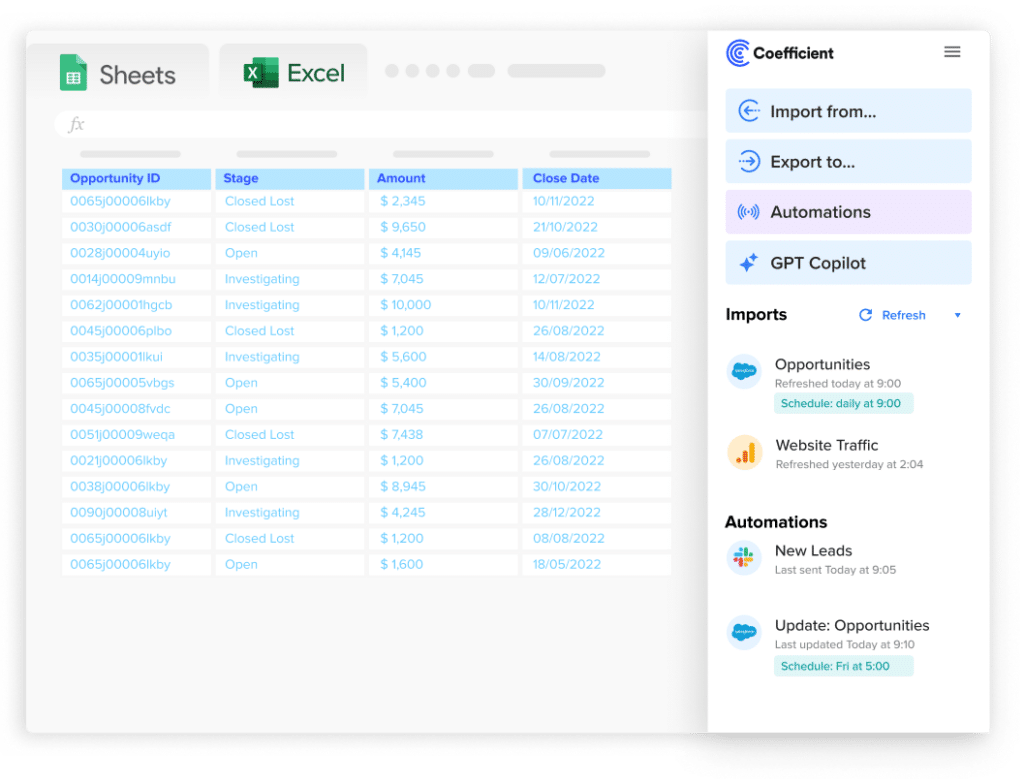
Stop exporting data manually. Sync data from your business systems into Google Sheets or Excel with Coefficient and set it on a refresh schedule.
Get Started
Common features between Coefficient and Datarails
- Excel integration – Both platforms work natively within Microsoft Excel with add-in capabilities
- Automated data refreshes – Scheduled updates keep spreadsheets current with source system data
- Data consolidation – Ability to combine multiple data sources into unified reports and analyses
- Cloud storage – Secure cloud infrastructure for data processing and collaboration
Unique features of Coefficient
- Transparent pricing – All costs published upfront with no hidden fees or required sales consultations
- Broader data ecosystem – 70+ integrations spanning marketing, sales, finance, and operations beyond just financial systems
- AI Sheets Assistant – Powerful AI assistant helps build formulas, create visualizations, analyze data patterns, and generate insights—completely absent from Datarails
The cost difference is substantial. Datarails’ typical implementation costs $24,000-60,000+ annually plus setup fees, while Coefficient Pro delivers superior functionality for $1,188 annually—a savings of over $50,000 yearly for comparable capabilities.
For growing businesses, Coefficient eliminates the financial planning bottleneck by making enterprise-grade data capabilities accessible to entire organizations, not just finance teams with substantial budgets.
Datarails customer reviews and testimonials

Datarails faces mixed customer feedback, with satisfaction varying significantly based on implementation success and ongoing support quality. The platform maintains reasonable scores on major review platforms, but customer comments reveal consistent concerns about cost, complexity, and vendor dependency.
Review platform scores
- G2: 4.6/5 stars
- Capterra: 4.5/5 stars
- Gartner Peer Insights: 4.1/5 stars
Positive customer feedback
Excel integration strengths:
- “Finally, a solution that doesn’t force us to abandon Excel completely”
- “The data consolidation works well once properly implemented”
- “Good for traditional finance teams comfortable with spreadsheet-based workflows”
Professional services quality:
- “Implementation team was knowledgeable and helped customize our models effectively”
- “Support team understands complex financial planning requirements”
Common customer complaints
Cost and transparency concerns:
- “Pricing was much higher than expected, with lots of additional costs not mentioned upfront”
- “Implementation took twice as long and cost 50% more than originally quoted”
- “Annual contract with limited flexibility makes it expensive to test or scale down”
Complexity and maintenance issues:
- “Setup was incredibly complex—took 6 months and required constant consultant support”
- “Excel performance degrades with large datasets, frequent crashes and slowdowns”
- “Any changes to our models require professional services, can’t make adjustments ourselves”
Limited scope and integration challenges:
- “Only works well for financial data—had to buy other tools for marketing and sales analytics”
- “Integration with non-financial systems is clunky and expensive”
- “Feels outdated compared to modern business intelligence solutions”
Coefficient customer contrast
Coefficient customers consistently praise transparent pricing, rapid setup, and comprehensive data access. Reviews frequently mention “getting started in minutes” versus Datarails’ months-long implementations. The self-service approach eliminates vendor dependency while delivering broader business intelligence capabilities.
Why growing businesses choose Coefficient over Datarails
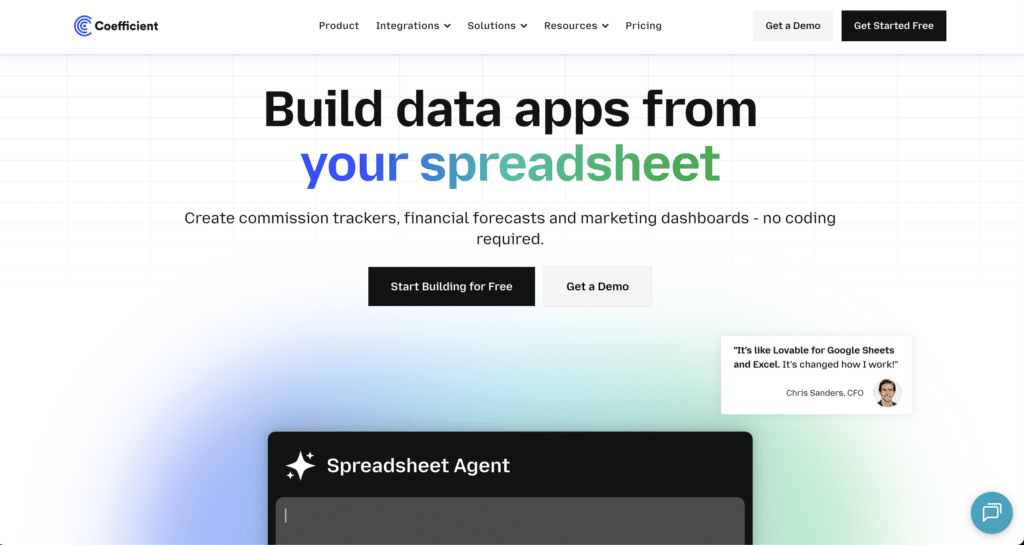
After evaluating Datarails’ complex pricing and narrow focus, thousands of finance and operations teams have discovered a more practical path forward. Coefficient delivers comprehensive business intelligence with transparent, affordable pricing that scales naturally with growing organizations.
The economics are compelling. Datarails’ typical implementation costs $30,000-75,000+ annually including services, while Coefficient Pro provides superior data coverage, AI assistance, and self-service flexibility for $1,188/year. You get broader capabilities for 95% less cost, plus predictable expenses without surprise consulting fees.
Beyond pricing, Coefficient’s modern approach shows in everything from instant setup to intuitive interfaces. While Datarails customers struggle with lengthy implementations and consultant dependencies, Coefficient users connect data sources and build automated reports within hours of signing up.
The business intelligence landscape has evolved beyond finance-only, Excel-centric solutions requiring major service investments. Modern organizations need agile, comprehensive platforms that democratize data access across all teams and functions.
Start your free trial and experience the difference modern, accessible business intelligence can make for your entire organization.
Frequently asked questions
How does Datarails pricing compare to Coefficient?
Datarails uses custom pricing starting around $500-2,000+ monthly for base licenses, plus $10,000-50,000+ for implementation services. Total first-year costs typically range from $30,000-75,000+. Coefficient provides comparable functionality for $1,188 annually with no setup fees.
Is there a setup fee?
Yes, Datarails typically requires professional services engagements costing $10,000-50,000+ and taking 3-6 months to complete. Coefficient offers self-service setup that takes hours, not months, with no additional fees.
Which plan is best for small businesses?
For small businesses, Coefficient Starter at $49/month provides comprehensive data integration with 3 data sources, while Datarails’ minimum implementations typically start at $500-2,000+ monthly plus substantial setup costs, making it prohibitive for smaller organizations.
How does pricing scale with team growth?
Datarails pricing increases significantly with team size through per-user licensing ($100-300+ per user) and expanded implementation complexity. Coefficient scales more predictably with transparent per-source pricing that grows naturally with business needs rather than penalizing team expansion.