Integration headaches are real. Manual data entry between your accounting software and other business tools wastes hours and invites errors. Accounting APIs transform this chaos into seamless automation, connecting your financial data across platforms instantly.
Let’s explore the top solutions that make financial integration effortless.
Feature comparison table
| API | Row/Export Limits | Data Sources | Builder License Cost | Viewer License Cost | AI Functionality | Refresh Frequency | Alerts | Security |
| QuickBooks Online API | 500 requests/min | Comprehensive accounting entities | Free (usage fees for 10K+ calls/month from July 2025) | N/A | Limited | Real-time sync | Via webhooks | OAuth 2.0 |
| Xero API | 60 requests/min | 40+ endpoints | Free with subscription | N/A | AI Toolkit with OpenAI SDK | Real-time webhooks | Instant notifications | OAuth 2.0 |
| Sage Business Cloud API | 5,000/day, 100 results/min | Core accounting functions | Free for developers | N/A | Sage Copilot ($20/user) | Standard REST | Limited | OAuth 2.0 |
| NetSuite API | Enterprise-grade | Full ERP/CRM suite | $99/user + modules | Included | Generative AI API | Real-time | Advanced workflows | OAuth 2.0 |
| FreshBooks API | Standard REST limits | Invoicing, time tracking, expenses | Free with subscription | N/A | Limited | Real-time | Automated reminders | OAuth 2.0 |
| Zoho Books API | Custom thresholds | Full accounting + Zoho suite | Free with subscription | N/A | Limited | Real-time | Custom API alerts | OAuth 2.0 |
| Microsoft Dynamics 365 API | Enterprise scalable | CRM/ERP comprehensive | $50-195/user | Varies by plan | AI-powered features | Real-time | Advanced automation | OAuth 2.0/Azure AD |
QuickBooks Online API

QuickBooks dominates small business accounting. Their accounting API connects to thousands of applications, providing comprehensive financial data access through RESTful architecture with JSON responses and batch processing capabilities.
Highlights of QuickBooks Online API
QuickBooks offers two standout features. First, their SQL-like query language enables complex data retrieval without multiple API calls. Second, batch operations process multiple actions simultaneously, dramatically reducing integration time for high-volume operations.
Pros
- Massive ecosystem advantage. QuickBooks integrates with over 750 apps through their marketplace. This means your accounting data flows seamlessly into project management, CRM, and e-commerce platforms without custom development.
- Zero API fees (mostly). Unlike many enterprise platforms, QuickBooks keeps API access free for standard usage. You only pay for the accounting subscription itself, making it budget-friendly for startups and small businesses.
- Developer paradise. Comprehensive SDKs, sandbox environments, and detailed documentation accelerate development. Their active developer community provides solutions to common challenges, reducing troubleshooting time significantly.
Cons
- Pricing bombshell incoming. Starting July 28, 2025, high-volume users face new API fees through the App Partner Program. Applications making over 10,000 monthly calls will see unexpected cost increases that could impact profitability.
- Performance bottlenecks plague users. Slow loading times during peak hours frustrate both developers and end-users. API response times can spike unpredictably, requiring additional error handling and retry logic.
- Support feels like sales. Customer service representatives often push upgrades instead of solving problems. Technical issues get minimal attention while sales pitches dominate support interactions.
Pricing
As of February 2025, QuickBooks Online costs $35/month for Simple Start, $65/month for Essentials, $95/month for Plus, and $200/month for Advanced plans. API access remains free for most users, with usage-based fees applying only to high-volume applications after July 2025.
What do users say about QuickBooks Online API?
Patrick M., Chief Accountant, praises the platform: “QuickBooks Online offers features that enables me to streamline processes such as invoicing, time tracking on projects and billing. Among all the online accounting software that I use, QuickBooks Online is the most robust and easy to use yet flawless.” [Source: User Review]
Tanya D., President, expresses frustration: “The cost. Pricing keeps increasing and the most recent price increase has been the largest increase. Every so often Quickbooks will contact you to try to get you to upgrade your software and make it seem like it’s urgent or necessary.” [Source: User Review]
Support
QuickBooks provides 24/7 technical assistance for premium partners through their Intuit Developer portal. Resources include comprehensive API documentation, multiple programming language SDKs, sandbox testing environments, and advance notice of API changes through developer communications.
Xero API

Xero delivers cloud-based accounting with style. Their accounting API provides 40+ endpoints covering everything from invoicing to inventory, enhanced by real-time webhooks and newly launched AI integration tools for advanced automation.
Highlights of Xero API
Real-time webhooks instantly notify your applications about invoice updates or payment receipts. The new AI Toolkit, featuring OpenAI Agents SDK and LangChain integrations, enables sophisticated automation beyond traditional accounting workflows.
Pros
- Developer-first mentality. RESTful design with clear documentation makes integration straightforward. Multiple SDKs, consistent API versioning, and excellent learning resources reduce development friction compared to legacy accounting systems.
- App marketplace powerhouse. Hundreds of pre-built integrations in Xero’s App Store eliminate custom development needs. Users leverage proven third-party solutions while developers build upon existing integration patterns.
- Analytics that actually help. Customizable dashboards and real-time financial insights drive better decisions. The API provides programmatic access to these analytics, enabling custom reporting solutions tailored to specific business needs.
Cons
- Rate limits crush scalability. Just 60 requests per minute per organization severely restricts high-frequency operations. QuickBooks allows 500 requests per minute, making Xero unsuitable for real-time synchronization needs.
- Documentation doesn’t match reality. Tracking categories lack accessible IDs, forcing name-based matching that impacts performance. These inconsistencies between UI, API behavior, and documentation create unnecessary development complexity.
- Contact system confusion. Customers and suppliers aren’t clearly distinguished until after transactions occur. This unique approach requires additional development work and complicates standard accounting workflows.
Pricing
As of February 2025, Xero pricing increases to $25/month for Early, $55/month for Growing, and $90/month for Established plans in the US, effective October 1, 2025. API access comes included with all paid subscriptions without additional fees.
What do users say about Xero API?
A developer shares positive feedback: “Xero’s accounting API is probably one of the most comprehensive, advanced, and well-documented out there. It’s an incredibly rich source of data that has been developed over time.” [Source: Developer Review]
An API user highlights limitations: “Your competition, QuickBooks Online, allows 500 calls per MINUTE, compared to Xero’s 1000 per DAY. If you had their API limits… this makes this non-workable.” [Source: API User Feedback]
Support
Xero offers comprehensive developer support through their Developer Portal with detailed documentation, SDKs, and code samples. The Developer Growth Program provides increased promotion opportunities, marketing support, and direct developer assistance for certified partners.
Sage Business Cloud API

Sage targets SMBs perfectly. Their accounting API uses standard REST principles with OAuth 2.0, offering free developer access and essential accounting functionality including multi-currency support and VAT handling for international businesses.
Highlights of Sage Business Cloud API
Free registration gets developers started immediately with complete documentation at developer.sage.com. Multi-currency support with automatic exchange rate handling simplifies international transactions without complex currency conversion logic.
Pros
- Integration made simple. RESTful architecture with JSON responses follows modern web standards. Developers familiar with standard HTTP methods can integrate quickly without learning proprietary protocols or complex authentication schemes.
- Budget-friendly pricing. Starting at just £12 + VAT monthly for basic plans keeps costs manageable. Free API access eliminates integration fees, making Sage attractive for cost-conscious small businesses.
- SMB features that matter. VAT submissions, cash flow forecasting, and multi-user access address real SMB pain points. The platform scales appropriately without overwhelming smaller organizations with enterprise complexity.
Cons
- Volume restrictions hurt growth. Daily limits of 5,000 requests with 100 results per minute restrict high-volume applications. Businesses with extensive transactions or frequent synchronization needs hit these ceilings quickly.
- Forced migration ahead. API V3 deprecation on July 31, 2026 requires mandatory migration to V3.1. This creates development overhead and potential business disruption for existing integrations.
- Documentation behind paywall. Comprehensive API documentation requires fees, unlike competitors offering free access. This barrier complicates evaluation and proof-of-concept development for potential adopters.
Pricing
As of February 2025, Sage Business Cloud Accounting costs £12 + VAT monthly for Start, £26 + VAT monthly for Standard, and £30 + VAT monthly for Plus plans in the UK. The AI-powered Sage Copilot add-on costs £20 per user monthly.
What do users say about Sage Business Cloud API?
A Shopify user notes: “App does as advertised, sends invoices to Sage as purchases happen. Would like it if it could also invoice Shopify-based expenses (shipping, apps, etc.)” [Source: Shopify App Store]
A technology evaluation reveals: “Sage Business Cloud Accounting supports 35 of these features to some extent, with a weighted support percentage score of 84.29%. QuickBooks supports 19 features.” [Source: Technology Review]
Support
Sage provides developer support through their Developer Portal featuring API documentation, migration guides, and step-by-step tutorials. Support includes developer team access, comprehensive reference materials, and partner journey programs for commercial integration development.
NetSuite API

NetSuite powers enterprise operations. Their accounting API through SuiteCloud Platform enables extensive customization using JavaScript ES6, supporting complex business processes across finance, CRM, and operations with enterprise-grade scalability.
Highlights of NetSuite API
JavaScript ES6 works consistently across server and client-side code with platform-specific methods. The new SuiteScript Generative AI API integrates Oracle Cloud Infrastructure’s large language models for advanced automation capabilities.
Pros
- Customization without limits. Build single-page applications, create custom record types, and modify existing forms extensively. JavaScript as a first-class citizen simplifies development compared to platforms requiring multiple programming languages.
- Enterprise architecture excellence. Multi-company structures, advanced workflow automation, and sophisticated reporting handle complex operations. High transaction volumes and extensive scalability options support growing enterprises effectively.
- Innovation keeps coming. Regular updates introduce AI capabilities, enhanced security, and improved development tools. NetSuite’s modernization commitment ensures long-term viability for custom integrations and business growth.
Cons
- Budget-breaking implementations. Typical deployments cost $25,000-$100,000+ initially with $200,000+ annual subscriptions. Total ownership costs often exceed expectations, making NetSuite unsuitable for mid-sized businesses.
- Learning curve from hell. Platform-specific methods and complex governance models require extensive training. Unclear error messages, slow responses, and complex permissions create integration nightmares.
- Licensing maze confuses everyone. Per-user pricing at $99 monthly plus module costs ($399-$999) creates unpredictable expenses. Scaling costs become difficult to forecast as businesses grow.
Pricing
As of February 2025, NetSuite starts at $99 per user monthly with modules ranging from $399-$999 monthly. Mid-sized implementations typically cost $200,000-$460,000 first-year including licensing, implementation, and support.
What do users say about NetSuite API?
A retiring developer with 8 years experience shares: “I find NetSuite incredibly extensible. As a developer, you are free to write your own single page apps, meaning you can inject custom pages anywhere in NetSuite… The sky is the limit!” [Source: Developer Review]
An integration analysis warns: “Unfortunately, integrating with NetSuite is far from easy. You may not get the 429 Too Many Requests error message when you reach your rate limit. In fact, you might get an alternative error message, which can lead your team to go the wrong path in troubleshooting the issue.” [Source: Developer Experience Analysis]
Support
NetSuite provides comprehensive support through SuiteCloud Development Framework including detailed documentation, SuiteScript samples, and dedicated developer tools. Professional services assist with complex implementations while developer communities share solutions and best practices.
FreshBooks API

FreshBooks simplifies service business accounting. Their accounting API delivers JSON-based REST integration focusing on invoicing, time tracking, and expense management with the user-friendly design that makes FreshBooks popular among freelancers.
Highlights of FreshBooks API
Clean, well-documented REST API mirrors FreshBooks’ intuitive interface philosophy. Robust time tracking with mobile integration perfectly suits consultants and service-based businesses requiring accurate billable hours management.
Pros
- User experience excellence. Visual invoice calendars and seamless time tracking earn consistent praise. The API maintains this simplicity, making developer-built applications equally user-friendly and accessible.
- Support that actually helps. Award-winning team with 4.8/5 ratings across 120,000+ reviews provides knowledgeable assistance. Developers receive comprehensive documentation and responsive technical support without department transfers.
- Service business perfection. Project profitability tracking, automated time-to-invoice workflows, and client portals address specific pain points. These specialized features solve problems generic accounting software ignores.
Cons
- Advanced features missing. Complex accounting needs, multi-entity management, and reporting customization hit walls quickly. Simplicity prioritization limits growth potential for businesses with sophisticated financial requirements.
- Price hikes hurt loyalty. Users report substantial subscription cost increases impacting small business budgets. The platform’s maturity brought less competitive pricing compared to newer alternatives.
- Integration gaps frustrate users. Bank connections and third-party software integrations require workarounds. The API’s good design doesn’t compensate for missing complex integration capabilities.
Pricing
As of February 2025, FreshBooks costs $6.30 monthly for Lite (5 clients), $11.40 monthly for Plus (50 clients), $19.50 monthly for Premium (unlimited clients). Special promotions offer up to 90% off for the first 3-4 months.
What do users say about FreshBooks API?
An agency user celebrates efficiency: “The designer and copywriter logged their hours on their phones, and the client’s invoice updated automatically. I could review and send it out in minutes. For the first time, I saw creative and financial operations run in sync, without miscommunication or surprises.” [Source: Agency Review]
A user notes limitations: “Since we manage multiple service lines, I wish there was a way to generate reports that break down billable hours by service and customer. The reporting works, but it doesn’t allow for much customization.” [Source: User Review]
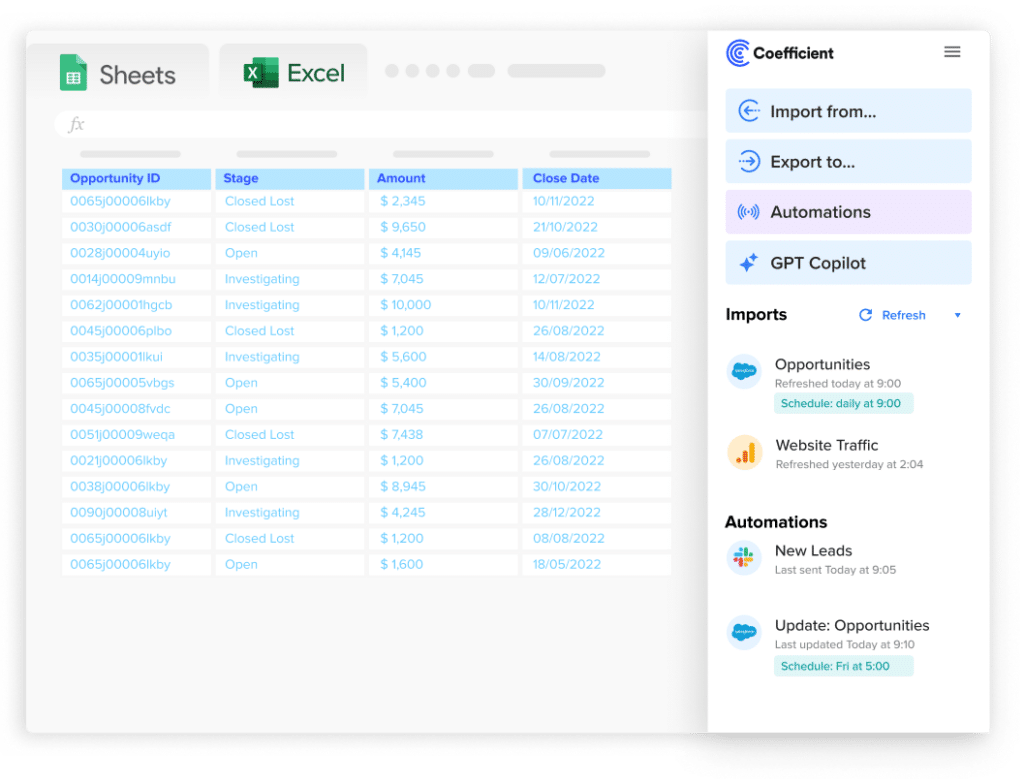
Stop exporting data manually. Sync data from your business systems into Google Sheets or Excel with Coefficient and set it on a refresh schedule.
Get Started
Support
FreshBooks provides comprehensive developer support through their API documentation portal with detailed endpoint references and authentication guides. Their highly-rated customer service team assists with integration challenges and app marketplace submissions.
Zoho Books API

Zoho Books delivers value. Their accounting API offers cost-effective automation within Zoho’s ecosystem, featuring comprehensive free tier access, project management tools, and seamless integration with CRM and other business applications.
Highlights of Zoho Books API
The free plan includes 1,000 annual invoices, expense tracking, and bank reconciliation. Detailed API usage monitoring with custom threshold alerts prevents unexpected service interruptions while optimizing performance.
Pros
- Unbeatable value proposition. $15 monthly Standard plans with comprehensive features beat competitor pricing significantly. The substantial free tier supports startups and micro-businesses without compromising functionality.
- Ecosystem integration magic. Native Zoho suite connectivity creates powerful automation opportunities. CRM data flows into invoicing, HR information supports project costing, and marketing insights enhance customer understanding.
- Developer tools that work. Open API with webhook retry policies and custom usage alerts shows commitment. Monitoring and optimization tools help developers build reliable integrations efficiently.
Cons
- Automation falls short. Workflow capabilities disappoint compared to marketing promises. Sophisticated automation features found in mature competitors require manual intervention for routine tasks.
- Scaling hits roadblocks. Data transfer between Zoho versions requires manual transaction imports. Merging platforms or consolidating entities becomes unnecessarily complex for growing businesses.
- Advanced features limited. Cost-effectiveness comes with restricted accounting functionality and reporting customization. Complex accounting needs hit frustrating limitations quickly.
Pricing
As of February 2025, Zoho Books ranges from free (1,000 annual invoices) to $240 monthly for Ultimate. Standard costs $15 monthly, Professional $40 monthly, Elite $120 monthly, with Enterprise features included.
What do users say about Zoho Books API?
A long-term user recommends: “I used Zoho Books for my own practice for 3 years+ for a few of my Clients. It’s fast and reliable, and developers are improving it very regularly – adding new features constantly. I would highly recommend using it especially in the businesses that would also use other software from Zoho.” [Source: Long-term User Review]
A business user expresses disappointment: “The overall experience with Zoho Books has been disappointing. We were told that they were capable of so much more than what they seem to be able to deliver on. There’s no real good workflow capabilities and no real way to automate processes that the user imports over and over again.” [Source: Business User Review]
Support
Zoho Books provides developer support through comprehensive API documentation and usage monitoring tools. Community forums, regular feature updates, and the broader Zoho Developer Community program assist integration development.
Microsoft Dynamics 365 API

Microsoft brings enterprise power. Their accounting APIs provide multiple integration types including Web API (REST), Organization Service API (SOAP), and Client API (JavaScript) for sophisticated CRM/ERP functionality within Microsoft’s ecosystem.
Highlights of Microsoft Dynamics 365 API
Multiple API types serve different use cases from data integration to UI customization. OData v4 standard implementation ensures broad compatibility across programming languages and platforms.
Pros
- Enterprise features dominate. Sales, customer service, field service, and finance functionality with sophisticated automation handles complex processes. Simple accounting solutions cannot match this comprehensive capability.
- Microsoft ecosystem synergy. Seamless Microsoft 365, Power Platform, Teams, and Azure integration creates automation opportunities. Organizations using Microsoft technologies benefit from reduced complexity and unified authentication.
- Scalability without limits. Enterprise-grade infrastructure supports high-volume operations with advanced customization. Multi-entity management and complex workflows scale from mid-market to large enterprise seamlessly.
Cons
- Costs escalate quickly. Basic plans start at $50-65 per user monthly with enterprise features reaching $195. Implementation costs exceeding $100,000 make Dynamics unsuitable for smaller organizations.
- Complexity overwhelms users. Enterprise focus creates unnecessary overhead for smaller organizations. Simple tasks require multiple steps while configuration and maintenance demand specialized expertise.
- Pricing confusion reigns. Base users, additional users, and module-specific pricing complicate predictions. Organizations discover unexpected expenses as usage scales or requirements evolve unexpectedly.
Pricing
As of February 2025, Microsoft Dynamics 365 costs $50 monthly for Customer Service Professional, $65 for Sales Professional, with Enterprise plans at $95-195 per user. Business Central increases to $80 monthly for Essentials, $110 for Premium from October 2025.
What do users say about Microsoft Dynamics 365 API?
A developer guide explains: “Microsoft Dynamics 365 has many types of APIs designed for different use cases, with uses that range from integrating data to customizing the UI… The Web API can be used to implement OData v4 protocol. It is broadly used as a standard protocol for constructing and consuming RESTful API.” [Source: Developer Integration Guide]
Users express pricing concerns: “The price of any optional Xero add-ons will not change. Pricing is subject to change at any time, on notice to you, as per our terms of use.” [Source: Pricing Review]
Support
Microsoft provides extensive developer support through Microsoft Learn training materials and API reference documentation. Community forums, learning resources, and professional services assist with complex implementations and custom development needs.
Transform your financial data workflow
Manual data entry is dead. Accounting APIs eliminate the tedious copy-paste marathon between your financial systems and business tools. Whether you’re syncing invoices, tracking expenses, or generating reports, these seven solutions deliver the automation your team needs. The right API transforms scattered financial data into unified, actionable insights.
Ready to supercharge your spreadsheet workflows with live accounting data? Get started with Coefficient and connect your accounting systems directly to Google Sheets or Excel.
Frequently asked questions
What are APIs in accounting?
Accounting APIs are programming interfaces that connect accounting software with other business applications. They enable automatic data transfer between systems, eliminating manual entry and ensuring real-time financial information flows seamlessly across your technology stack.
What is API in accounting terms?
In accounting terms, an API acts as a digital bridge between your accounting system and external applications. It allows programs to request financial data, create invoices, update transactions, and synchronize information automatically without human intervention.
What are the four types of APIs?
The four main API types are: Open APIs (publicly available for developers), Partner APIs (shared with specific business partners), Internal APIs (used within organizations), and Composite APIs (combining multiple data sources). Accounting APIs typically fall into partner or open categories.
What are the 7 types of accounting?
The seven accounting types include: Financial Accounting, Management Accounting, Cost Accounting, Tax Accounting, Forensic Accounting, Governmental Accounting, and Auditing. Modern accounting APIs support all these types by providing flexible data access and reporting capabilities.